A Preview of the Next Cuba / 14ymedio, Manuel Cuesta Morua, Reinaldo Escobar

  • Interview with Manuel Cuesta Morúa from Constitutional Consensus
  • Options under discussion: Change the 1940 Constitution, the 1976 update or create a new constitution
  • The Project involves most of the relevant organizations from the civic and political community, inside and outside Cuba
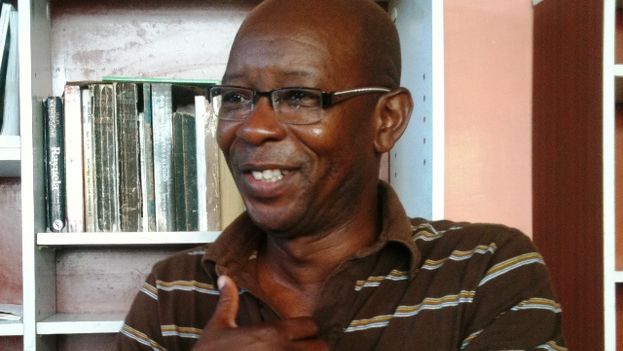
Manuel Cuesta Morua
Manuel Cuesta Morúa

Reinaldo Escobar, Havana | May 23, 2014

Question. What is the objective of the Constitutional Consensus project?

Response. To convene civil society and citizens to work for constitutional change, and to create a new Cuban constitution that is based on three key realities and requirements: citizen control of the State, which is the premise of democracy; the rule of law, which ensures that no one is above the law; and the limitation of power, without which there is no respect for fundamental freedoms. This is the central objective, seen through three integral and interdependent paths.

    We are still governed by what is probably the last Constitution in the Soviet mold still in existence in the world continue reading

There is another collateral purpose, basic to the consistency of a society and a constitutional state. This purpose is the cultural empowerment of Cubans with regard to laws, citizenship and the rule of law, accompanied by and based on the contributions of the independent organizations of Cuban jurists. As experience shows, the best constitutions sleep the sleep of the righteous if they are not based on a culture of rights and law. And the issue of constitutional culture in Cuba needs to be tackled hard for two main reasons: the first is that as the so-called Revolution has been and is the quintessential source of law, we Cubans are not familiar with the law and its value for coexistence; the second is that we are still governed by what is probably the last Constitution in the Soviet mold still in existence in the world — I do not know if you remember the Russian Constitution of 1936 that became the model for the current Cuban constitution — and as you know, it has nothing to do with our traditions and culture.

Q. What organizations sponsor you?

R. Constitutional Consensus is a horizontal proposal without hierarchies or rigid organizational charts. Participating are the majority of the most relevant organizations of the civic and political community, inside and outside Cuba. At www.consensoconstitucional.com you can see a list of all the sponsors, which I am not mentioning here because the list should continue to grow.

Q. At what stage are you now, and when (not in terms of a date but in signs) will you consider you have fulfilled your purpose?

A. Right now we are preparing Constitutional Initiative Discussions across the country, and we are preparing for the various meetings to be held outside of Cuba. In late May, between 8 and 10 people will meet in each of these Constitutional Initiative Discussions with the purpose of bringing us to a reasonable point for constitutional change: if is it the Reformed Constitution of 1976, if it is the paradigmatic Constitution of 1940, or if it is a new constitution. We first want to find a consensus that focuses on public legitimacy, unfortunately it cannot be among all Cubans, and then start designing a draft that will be drawn up by the Constitutional Initiative Committees, formed by lawyers and specialists in various law-related materials within a constitution.

These meetings will also be held in Madrid and Puerto Rico, and in July multiple organizations will come together in Miami at Florida International University (FIU).

We will have achieved our purpose, and for now I’m being a minimalist, when we have drawn up this draft that reflects the consensus of all participants, when we have collected up a critical mass of citizens’ signatures demanding a new constituent process, and when we have managed to stabilize Constitutional Initiative Discussions in each municipality as permanent spaces for interaction and exchange with citizens throughout the legal process. If we citizens do not set up a monitoring program over the quality of laws, compliance with legality, and the arbitrariness inherent to all immune and unpunished power, it’s worthless to have the best constitution. We had the Constitution of 1940 and Cuba finds itself rating less than zero on constitutional and legal culture.

There is, of course, a maximalist goal: to have a constitutional and legal system that is an expression of our needs, of our rights and of our demands to coexist in a truly civilized way. Uncivil behavior is the deepest reality of our country, from top to bottom. Fromthe powers-that-be to society. The rules of the game require a constitution that includes all Cubans. Inside and out of Cuba.

The Constitutional Consensus is to define the what, not the who. We care more about the nature of power than the individuals who exercise it.

Q. Do you believe that the country’s leadership has an essential quota of good faith that is required for the project not be aborted or even treated as a hostile action intended to overthrow the government?

R. The Cuban government is not characterized by good faith. The logic of power is not born able to understand the rational tie with the rest of the mortals, but is one of pure and hard domination. So there can be no good faith. However, this government shows capacity for pragmatism precisely because it wants to retain power. Reality force, and hopefully in this case, that of the constitutional change, the facts will impose themselves. In Latin America there is a strong movement towards constitutional reform that can and should include Cuba. Moreover, there is always an unspoken consensus, at times explicit, on the need for reforms in the laws.

Promoted from other spaces, albeit with an elitist viewpoint, is the need to reform the current constitution. And the designated President himself has expressed this direction. Our proposal, on the other hand, is not conceived with the mentality of toppling those up above. We care more about the nature of power than the individuals who exercise it. So there is no hostility towards power, but an attempt to define new rules of the game from where it is exercised. If among them citizens decide that the government should be in the hands of the same people who hold it today, I won’t like it but I have to respect those rules that contributed to defining it along the rest of the citizens. The authentic and interesting thing from this constitutional perspective is that the next be of the citizens.

A Cuba where citizen safety and effective control over the uncertainties allow the defense of fundamental freedoms and the creative explosion, in all directions, of Cuban society.

Reaping the Whirlwind / 14ymedio, Yoani Sanchez

Today, while I publish this text, thousands of students from Havana are sitting in front of their Mathematics exam. The schedule for admission to the University has had to incorporate a new test date for this subject, after a scandalous case of fraud. The leaking and selling of the questions ended with the cancellation of the previous test results, three teachers arrested, and an unknown number of students investigated.

Although fraudulent practices are common in Cuban schools, this case has provoked a profound reflection in our society, including in the official press. We have seen on our small screens dozens of interviews with people who repudiate cheating by copying another, and the lie of procured knowledge you don’t have. Few, if any, reflect on the environment of hypocrisies, double standards and simulations in which these teenager, now between sixteen and seventeen, have come of age. continue reading

This batch of students has been educated under educational experiments such as the so-called “emerging teachers.” Is it a greater fraud to put someone at the front of a classroom and call them a teacher when they possess neither the ethical values nor the knowledge to exercise such a worthy profession? How can we ask them to be honest, if the TV screen from which they receive their tele-classes never managed to transmit adequate moral codes? It is these kids, at this very minute seated in front of the math test, the children of my generation, who are surrounded by artificial academic results and inflated credentials.

It is worth remembering that for decades the schools and teachers whose classes failed to achieve grades of ninety or almost one hundred, were scolded, stripped of their credentials, and even administratively and materially penalized. Those were the days when from the dais Fidel Castro read the academic results of the high schools with their elevated promotion rate, knowing–in his heart–that this was a huge lie created for him.

It turns out that the teachers often dictate the exam questions in advance, walking among the desks of those who take longer, to whisper the answers to them or, simply, leave the room so the students are left alone to copy the answers from each other. Those of us who studied hard were always frustrated by the complicity of so many teachers and education experts with the practice of academic fraud. We are the parents of this generation that is today being evaluated in Havana’s classrooms. How could they have turned out differently? How can we ask them not to do what they have seen done?

Yoani Sánchez, Havana | 26 May 2014 | 14ymedio

Everyone Deserves Freedom / 14ymedio

Inalkis Rodriguez Lora, Havana | 23 May 2014

The lives of birds are wonderful, especially when they are free.

But in Cuba, being free is hard, thanks to the human predators. For example, the Cuban grassquit, an endemic bird, is now captured at such a high rate that we fear its future extinction.

Another bird injured in this subject of prisons is the mockingbird, which is not endemic but lives permanently in our country. They say that if someone catches a mockingbird chick, takes it home and, of course, locks it in a cage, the parents of the captured chick, if they find it, bring it poisoned food so that it will die immediately because they would rather see it dead than a prisoner for life. In this country story, true or not, there’s a love for freedom. continue reading

Humans also go after parakeets, parrots and bullfinches, doomed to be amusements for human beings, as if their vocal qualities or plumage were a terrible crime. And it doesn’t give people any pangs of conscience. On the street in Camagüey it’s common to see, in broad daylight, the cages hanging with their prisoners for life.

It seems that certain people like to run roughshod over nature. I remember my grandfather, to whom I owe all my love for the natural world, was a passionate and jealous caretaker of flora and fauna, to the point that no one on our farms and its surroundings dared to hurt even the least plant or animal. If some little boy thought to pull out a slingshot in front of him, he immediately grabbed it and threw it in the kitchen fire, while giving the boy a good talking to about why he should care for nature.

And today, are there no people or laws in Cuba to stop the unjustified abuses against nature and freedom, like my grandfather did on his farm?

Our First Day / 14ymedio

14ymedio is blocked in Cuba within a few minutes of its birth

14ymedio, Havana | May 22, 2014

At 8:20 in the morning on Wednesday, 21 May, this digital daily was born. Like a miracle, everything worked as we had hoped. A greeting signed by several personalities from the media and literature welcomed us. Two Nobel Prize winners, Lech Walesa and Mario Vargas Llosa, headed the list of signatories. The news of the appearance of a new medium immediately popped up in the publications of several countries and generated large displays of solidarity.

A few minutes later, when someone tried to enter from the Cuban networks, instead of our homepage another web page appeared. The attack consisted of redirecting our URL to another site where one could only read texts dismissing and insulting Yoani Sánchez. Sadly, the information on our site was supplanted on the Island by the tactics of personal rejection used so often in the official discourse. continue reading

It doesn’t take much imagination to discover the identity of the aggressors but, as we have no proof, we can only conjecture that it is someone with the technological resources, access permissions and prior information, rather than animosity.

Throughout the day the telephone calls and text messages from friends congratulating the newborn never ceased. When it had already been twelve hours since someone somewhere in the world first clicked on to read us, a group of collaborators and the entire 14ymedio team celebrated the occasion watching on the screen as the pages opened through an anonymous proxy. In this way, with the PDF version and the email bulletin, we will be read in our own country. Censorship is not the most difficult obstacle we have to overcome.

Blocking 14ymedio could become a failed strategy if the objective is to silence us. Nothing is more attractive than the prohibited.

Letter to Obama Sparks Controversy / 14ymedio

14ymedio, Havana | May 23, 2014

A letter published this week, signed by more than forty American personalities, asked Barack Obama to ease measures toward Cuba. In an unusual gesture of consensus, former senior U.S. politicians, military, analysts and businessmen advocate relaxing the embargo on the Island. Among the signatories are Republicans and Democrats who regard this as a good time to support Cuban civil society and entrepreneurs.

The missive includes a set of specific requests, such as expanding remittances, easing travel to the largest of the Antilles from the United States, and strengthening business relationships between the two countries. As explained in the text, it is a petition to Obama to carry our “specific actions.” Without falling into “ideological debate,” the signers clarify, with these measures they hope these measures will contribute to a “significant change” in Cuba. continue reading

During 2009 and 2010, the U.S. Administration pushed some relaxations such as increasing remittances, expanding family travel and academic exchange. However, this policy ceased when the Cuban government sentenced the American contractor Alan Gross to fifteen years in prison.

Ending the embargo requires congressional approval, so this letter asks the president to approve executive orders that circumvent congress.

Once the document was published the controversy erupted both inside and outside Cuba. Raul Castro’s government has barely mentioned it and the official media just outlined it with a brief note lacking details. However, this hasn’t stopped the issue from being debated in many social sectors.

Voices have been heard in two directions. There are those who believe these relaxations will reduce the Cuban government’s control over society, while others insist that their implementation would provide economic oxygen to maintain the regime in power longer.

Is a unilateral lifting of the sanctions, without asking for anything in return or demanding prior compliance with human rights and citizen liberties a good idea? That is the question 14ymedio asked several opponents on the Island.

Berta Soler (Ladies in White): Now is not the time to do business with the Cuban government because it’s not going to help the people at all. We aren’t thinking about profit, but rights.

Martha Beatriz Roque (opponent): At this point it doesn’t matter, relaxation or no relaxation. The news of what happens in Cuba is presented by the regime itself, the dictatorship, and there is a total destruction, there is no organization, there is a break in the chain of command. Sooner or later the problem will explode and there’s no want they can avoid it.

Manuel Cuesta Morúa (Progressive Arc): I agree with every easing from the United States toward Cuba, my position is against the U.S. Embargo. However, I notice that the letter barely mentions the issue of freedoms. It misses an opportunity to send a message in both directions: to to the American government and to the Cuba government. This could backfire because an opening without an interior strengthening could compromise any national project.

Dagoberto Valdés (director of the magazine Coexistence): This contributes to the exchange between peoples and what John Paul II said about “Cuba opening itself to the world and the world opening itself to Cuba.” There are human rights that are universal and that should be enjoyed by both Americans and Cubans. This exchange will strengthen Cuban civil society and will allow the world and American society to be more aware of the Cuban reality.

José Daniel Ferrer (Patriotic Union of Cuba): We support whatever brings improvement to the Cuban people, but we insist that the approach also improves the situation with human rights. Whatever is done should consider our nation’s need for human rights.

Felix Navarro (former political prisoner): There are many private interests in that letter and I doubt that it puts the critical situation of Cuban civil society at the forefront.  The government will use the economic oxygen it receives to grease the wheels of the machinery of repression.

30 Ladies in White Arrested / 14ymedio

Police Mount an Operation to Prevent a Meeting in Havana

14ymedio, Havana | May 23, 2014

As of midnight Thursday, the police deployed a strong operation around the headquarters of the Ladies in White in Havana. Once a month these women gather in a house on Neptune Street, for what they call a “literary tea.” This activity is frequently under pressure from State Security and groups organized by the government, who shout slogans and place loudspeakers facing the house.

In conversation with 14ymedio Berta Soler, leaders of the Ladies in White, described the situation they are facing at this time. “This is the 129th Literary Tea and we planned to have a reading of poems and letters, but the street was already closed off from the night before,” said Soler. According to her, “They had already detained some thirty women and others were blocked from getting here.” continue reading

This newspaper’s reporters confirmed the closing of Neptune Street and the diversion of traffic to surrounding roads. At least two buses with uniformed as well as plain clothes personnel had been  brought to the surrounding area. Groups usually used in the so-called acts of repudiation were stationed in the capital’s Trillo Park.

Several neighbors consulted confirmed that the police forces began arriving in the early hours of the morning. “We can’t live in this neighborhood any more,” said an elderly woman who lives in Hospital Street. According to her, “When there are so many police there are a ton of things you can no longer do. Not even the pushcart vendors want to sell here.” She was referring to the roaming sellers of fruits and vegetables who pass through the city’s neighborhood’s with their merchandise.

The Ladies in White are a peaceful women’s movement created after the 2003 Black Spring, a time when Fidel Castro’s government condemned 75 dissidents and independent journalists were condemned to long prison terms.

Our Terminology / 14ymedio

Screen Shot 2014-05-21 at 4.49.49 PMReinaldo Escobar, 14YMEDIO, Havana | May 21, 2014

The economic restrictions imposed by the United States on the government of Cuba are called “embargo” in one political pole and “blockade” in the other one. The country where such measures originate can be called “the imperialism” (or “the empire”), or by its actual names: United States, USA, and North America. The team of people that makes the main decisions in Cuba is called “the Cuban government,” “the authorities” or the “Castroite regime,” as well as other flattering names such as “the Revolution’s historic generation” or unflattering ones such as “the Castro brothers’ dictatorship.”

The term “revolution” is sometimes written with a capital R, mostly if it has another name attached to it: French Revolution, Industrial Revolution, Cuban Revolution. In the 1980s, in order to refer to the process that Lenin headed in Russia in 1917, it was almost mandatory to use the following formula: “The Great October Socialist Revolution.” In fact, this was the name given to a sugarcane combine factory in Holguín. In our case, one can opt for the most affected formulas, such as “the process initiated in 1959” if one does not want to use the noun “revolution.” continue reading

Those of us dedicated to writing about Cuban topics are constantly subjected to the scrutiny of our critics based on the terminology that we choose. What should I call Fidel Castro Ruz? Should I call him “our invincible commander in chief”? The simple and loving “Fidel,” or the distant “Castro”? Once, in the middle of a brainstorm, someone suggested “the hyena of Birán” and the suggestion stood as a joke. Perhaps it would be appropriate to call him “the Cuban ex-president,” but neither extreme likes it.

Now that we face the prospect of beginning a new journalistic experience with intentions of objectivity and moderation, we find ourselves trapped in the damned circumstance of terminology that, like water to the island, surrounds us everywhere. It is easy for a panel member on the Round Table[1] to use labels such as “the Miami terrorist mafia,” “the media war against Cuba,” and others lacking as much imagination as they lack any sense. They are paid to do that.

Nevertheless, how could we capture in one word the millions of Cubans who for varied reasons have decided to live outside their country? Should we say “exile,” “emigration” or “diaspora”? It is obvious that we will not say “scum” no matter how unexpected (treasonous) was their leaving this oven (melting pot), where we were manipulated (formed) as trash (the New Man).

In this launch, full of mishaps and emotions, we would like to make clear that each author owns his or her own terminology, as long as it does not trespass the most elementary limits of respect. This space can accommodate passion, all passions, but not insult. To the most sensitive, we beg for tolerance, for words can be the material wrappings of thought, but not the prison of ideas.

[1] The Round Table or la Mesa Redonda de Reflexión is a political “orientation” TV program in Cuba.

A Newspaper is Born in Cuba / 14ymedio

Screen Shot 2014-05-21 at 4.49.49 PMJournalists and intellectuals sign a statement of support for 14ymedio.

14YMEDIO | 21 May 2014

“Today we welcome a new communications medium, a digital daily that is born in a country without freedom of the press: Cuba.

“The creators of this risky enterprise, directed by blogger Yoani Sanchez, share our democratic values. In their declaration of principals, the 14ymedio team is committed to promoting ‘truth, freedom and the defense of human rights, without ideological or party ties.’

“Cubans look to the future and need information media that opens respectful spaces for debate on the Island. We are sure that this initiative will contribute to the peaceful and democratic transition and the construction of a new country.

“The undersigned, writers and journalists from different countries, call on the Cuban government to respect the right of this medium to exist and be distributed. And we ask that it not limit the freedom of expression and the right to information of its citizens.”

  • Mario Vargas Llosa, writer, Perú / Spain
  • Rosa Montero, writer and contributor to El País, Spain
  • Fernando Savater, “Claves de razón práctica” Magazine, writer, Spain
  • Fernando Trueba, movie director, Spain
  • Arturo Ripstein, movie director, México
  • Paz Alicia Garciadiego, scriptwriter, México
  • Arcadi Espada, journalist, Spain
  • Arsenio Escolar, journalist, director of 20minutos, Spain
  • Pablo Hiriart, journalist and conductor of Noticiero 40, México
  • Moisés Naím, columnist for El País, Estados Unidos
    Rafael Pérez Gay, writer and journalist in Milenio. México
  • Lech Walesa, ex-president of the Republic of Poland, Poland
  • Vicente Molina Foix, writer, Spain
  • Edward Seaton, director of The Mercury, United States
  • Fidel Cano, Director of El Espectador, Colombia
  • Jaime Mantilla, director of Hoy, Ecuador
  • Carlos Salinas, journalist of Confidencial, Nicaragua
  • Nuria Claver, editorial coordiantor of CLAVES de Razón Práctica en PROGRESA, Spain
  • Juan Malpartida, Escritor and director of Cuadernos Hispanoamericanos, Spain
  • Martine Jacot, journalist for Le Monde, Francia
  • Pedro Zambrano Lapenta, director of El Diario, Ecuador
  • Roger Bartra, sociologist and essayist, México
  • Esteban Ruíz Moral, artist, Spain
  • Adam Michnik director of la Gazeta Wyborcza, Poland
  • Maciej Stasiński, journalist for la Gazeta Wyborcza, Poland
  • Carlos Alberto Montaner, journalist, writer and politician. Cuba/United States
    /Spain
  • Mirta Ojitos, Cuban journalist at Columbia Univeristy, NY. Cuba/United States
  • Dagoberto Valdés, director of the magazine Convivencia, Cuba

Math Exam for University Entrance to be Repeated / 14ymedio

Screen Shot 2014-05-21 at 4.49.49 PMLeaking of the contents forces the Ministry of Education to cancel the results and repeat the test.

14YMEDIO, Havana | May 21, 2014

The Ministry of Higher Education and the National Admissions Committee decided to cancel the results of the Mathematics Exam for Admission to Higher Education for students in the city of Havana. The move came as a result of the leaking of the test contents, which many students in Havana had access to.

The official notice states that the exam will be repeated at 9:00 AM on 26 May. The news has caused consternation among young people who already completed the 12th grade, because access to the university requires passing exams in Mathematics, Spanish and History. Most of these students have been preparing for months, including studying with private tutors. continue reading

The exam was held on 8 May, and shortly afterwards it was learned that several of the capital’s high school students had previously obtained the questions. “Unscrupulous people stole the exam, despite the measures taken,” according to the statement by the Ministry of Higher Education.

“We have to pay for their sins,” a girl from Havana’s Nuevo Vedado neighborhood said. She had barely passed the test without having known the questions ahead of time. “Now  they’re going to ‘toss a pea,’” she added, using teenage slang to suggest that the second test will probably be harder than the first.

The investigations uncovered the involvement of at least three teachers who participated in the preparation of the test; severe penalties await them. As an additional measure, the History and Spanish tests are also being modified at the last minute, for fear that they, too, could have been leaked.