I invite you to visit a new blog written from Cuba. It’s called “Rafael’s Lamp” and the author is my husband. So those who want to explore the different aspects and views of the Cuban reality, have a new alternative. I thank you in advance for your solidarity.
He has drawn a table and put a patched plate on the worn paper: there is no canvas nor oils because of the scarcities. Even the air is going hungry, and the brushes go back and forth over the watercolor in an effort to hypnotize the spiritual asthma that such poverty provokes. He loves his Casablanca so much that he wants to go far away, where the nostalgia won’t force him to dream of it and he won’t have to live in his abandonment.
He waits for success with his brushes and a degrading sign — that they profaned with white — that he rescued from his big neighborhood. Long ago he left off the practice of painting bars. Now he draws on the potholed pavement and broken sidewalks, his alienated steps back to what he will remember if he does not return.
It is not that we lack courage, it is that we are overwhelmed by repression. Bad leaders spew hatred and contempt and make us sick with the violence to which they subject their people.
Regina is my friend from years ago. We finished primary school together and she went to the Camilitas, following the steps — and the marches — of her military father, but on her weekend passes we met and visited in her house or mine, went to the movies, the park, or wherever our parents and ages allowed us.
When we had secret boyfriends we went out with them together, and when they were allowed, we did the same. Over time we replaced the visits with phone calls, but we always had each other: a friendly voice who promised to come to our aid at the first sign of trouble.
Gina — as we affectionately call her “in the family” — is a highly skilled professional who managed to graduate with honors in a career in letters. But in the 1990s she left her job, because the meager salary the state paid her wasn’t enough, and at the height of the decade, after more than thirty years of the same government and the coming of the Special Period, the excessive politicization seemed stale, and the buses felt like cages used to transport livestock.
She began “to fight” clandestinely with the family car — transporting people in the city for 10 or 20 pesos each — eventually changing the route to avoid attracting the attention of the police. One day she thought it would be better to open a small business in the name of her retired mother, because she, being a college graduate, would not be given a license.
They cut through the fence and put a counter on the sidewalk. Her mother was the visible face and she the rearguard in the kitchen performing gastronomic diligence. She became an excellent collaborator of the opposition organization to which she belonged, but was unwilling to commit herself too far, and to risk her affiliation with the mass organizations, “just in case.”
A few years later, her husband joined to a joint venture in Cuba and became a top executive. I called because I hadn’t heard from them recently, and learned from a stranger that they had moved. Due to the economic solvency they now enjoyed, they “resolved*” an exchange of money for a residence in Miramar.
I called their new telephone number and her treatment was not cordial. She spoke to me briefly of banal topics and that she had to prune some plants on the patio that she didn’t like. she gave me their home address reluctantly, and told me they spent little time there, because she had started to work in the same foreign firm as her spouse.
On Sunday I called and she barely talked to me. The told me she was busy seeing to the garden who had been contracted to fix the yard and cut the plants they didn’t like. It turned out they were ciguarayas. As I know they’re atheists, I asked if they have had already been removed and she told me no, they were leaving them there “just in case.”
Ciguaraya: meliaceous plant used in medicine and industry. People in the religions of African origin such as the Rule of Ocha and Palo Monte, also attribute magical powers to it, and assert that to cut it, you have to ask permission from the Orishas.
*Translator’s note: “Resolve” is the verb Cubans use to describe the daily activities of survival.
The Sixth Sexology Congress convened in Havana on January 23rd and will conclude on the 26th. It was announced that the director of the National Center for Sex Education (CENESEX), Mariela Castro, would offer a session about sex education in the process of social transformation. The cameras and journalists have focused on her and pursued her since 2006 looking for a scoop, an interview or, simply to augment and update their library. She always looks at them with great satisfaction and as if she is enjoying her frequent appearances in the media and in academia.
I support the project she leads like every other mortal because — fortunately! — modernity has brought us greater equality in the legal system and we are increasingly those who defend the rights of all, respect diversity and oppose any discrimination. I do not approve that this graduate in pedagogy and sociology, 49 years old, limits her cognitive tools to her specialty in CENESEX. That she disregards the rest of the rights inherent in a person; it’s a slip that affirms her fear of losing her share of power and privileges that she surely enjoys.
Perhaps her behavior responds to an “inclusive” design –I’m an optimist — drafted from the Cuban political zenith that implies a transformative process of several stages. But, how, what and to what point? Diversity is not delineated from the state with an elitist theory, but with pluralism and the participation of all. I consider the fight for the rights of our gay, lesbian, bisexual, intersexual and transsexual compatriots a good cause, but better still is to work and fight for the rights of the Cuban community in its totality. This is a process more congruent with the concept of respect for diversity which the daughter of the Cuban president advocates with ambivalence.
On the occasion of the conference “Cuba: Changes in the Cuban process?” sponsored by the Konrad Adenauer Foundation and CADAL (Center for the Opening and Development of Latin America), held last December 4th through the 6th, I was invited to participate, along with other Cubans on the island, on Panel 5, about human rights, and I sent them the letter I publish here.
In Cuba, the topic of fundamental rights and freedoms has been the subject of constant debate and controversy, not only because our country is a signatory to the Universal Declaration of Human Rights of the United Nations, but also because it was a sponsor of some of its provisions, which were extracted from the Cuban Constitution of 1940. But during the last five decades, our society has been subjected to repeated and systematic, indeed systemic, violations of its human rights. The transgression most obvious to any observer: no political system is democratic with a single party. A single-party system, which undermines plurality, the fundamental bulwark and pillar of democracy, triggers other offenses.
It is true that acts violating societal rights also occur in democratic countries, but the majority of these stem from the nature of the repressive bodies themselves, not state policy, as is usually the case with totalitarian regimes. In our country the evil practice of violating the rights of people is ongoing because there is no legal body established by legislation charged with preserving these rights, to insure they are respected and to fight for them.
Down the years, we have borne witness to how human rights have been violated for those who have denounced the offenses of the authorities in this aspect, and how excessive prison sentences were handed down to them, up to and including the death penalty. Today’s government, due to international pressure, has found itself obliged to stop applying it, although it hasn’t been repealed. Also with globalization, the world in general acts with greater interdependence and swiftness.
With the development of computers, the people seek access to information, and by alternative means society knows what happens on the globe and now cannot maintain itself isolated as it has until just a short while ago. The sultanistic Cuban model doesn’t want to accept the values and principles which govern today and even holds itself to totalitarian practices which have fallen into disuse in the modern era.
The world has changed, nonetheless Cuba declines to change and respect human rights because it doesn’t accept the will of the majority. And this is the essence and origin of her violation of human rights, for if respect for political diversity doesn’t exist across the spectrum of national life, there is no chance of participation of minorities in the debate that must arise about this matter at the center of peoples’ lives. Cuba sustains the propaganda of its successes in rights to life, health, and education, these being the weak footing on which it erects its body of rights to maintain immobilization in this sense.
The appearance on the public scene of the Ladies in White and their courage in taking the streets was something unexpected that the repressive bodies and the authorities in general saw themselves obliged to accept. For them, they succeeded in the release of their relatives from prison and a significant number of political prisoners. But more important than the result was the fact that for the first time the streets were taken by a group of citizens who weren’t aligned with the government and to its habitual campaign of propaganda and immobilization. In that case, they were simple citizens who demanded the liberation of their relatives, but the spark couldn’t veer off its course into a claim of civil and political rights through this same form of non-violent struggle.
As well, the strike in Santa Clara of the independent journalist Guillermo Fariñas, for the death of Orlando Zapata Tamayo, and the demand for the liberation of twenty-six Cuban political prisoners had an unprecedented result: creating interest in the international community for his health and to demand with him the release of the prisoners. This made it attractive that the authorities should liberate the prisoners in an interplay with the Spanish government and the Catholic Church to prevent the death of the striker.
The negative of the Cuban authority’s permission at whatever cost that individuals from the independent civil society should “take the streets” actually creates environments of hostility and social tension in certain sectors of the Cuban archipelago, although this independent civil society hasn’t yet managed to impose its presence nor has it massively mobilized the population.
The changes that until now the Cuban government has been making since the last Party congress by means of the approval of the Guidelines of Economic and Social Policy of the Party and the Revolution only refer to the economic spheres, not to the political ones. The authorities continue privileging societal control at whatever price to maintain power and transfer it to its successors designated by themselves.
In the Cuban present, the alternative civil society finds itself engrossed in this dilemma: shall it maintain itself in the scope of protest, denouncement, and analysis as much in the spheres of intellectualism, art, alternative or independent movements, etc; or shall it take the citizen’s initiative in the environment of proposing to the authorities from their own mobilized capabilities? The decision for the power of a better outcome for all would be the implementation from the law of the political plurality. From that statute forward, a process of indispensable rebirth of the full dignity of the human person, who surely will put us on course toward a National Democratic State of Rights, of justice and peace.
He was a boy who was accustomed to ask permission for everything; that they should take him by the hand and sometimes lead him through dangerous streets, and as a matter of education, they’d chew him out and impose punishment on him if he misbehaved. When he was an adolescent, he understood that you have to listen to wise advice from experienced people; that you couldn’t go everywhere because danger lurks and you have to behave well to escape punishment. Now he is a man and expresses without permission that he wants no advice nor company to go wherever he’d like. He discovered that the hand that guided him has been and is his executioner, and that this is the larger punishment.
For over five decades, they have violated the rights of Cubans and of our artists, as part of this society, there have been no exceptions. Residents living abroad have also failed to completely avoid the long arm of the officialdom in power and have been victims of the injustice that blocks them from visiting their homeland. But in recent times there has been a boom and increased travel for local Cuban artists going to the United States. They perform for some of those who left and reside in Miami, where a large part of the Cuban émigré society is located.
I would like to be able to see them there, sharing with other artists who jumped the wall of water and salt and who now live in freedom and who do not undervalue or despise their fellows who were left behind; or others who until recently were sympathetic to the government, or those who were afraid to mention those who “escaped” from State control and from art with chains.
Everyone should have the same rights, regardless of where they have taken residence. But I would like to see them together here, in a theater or on national television, without seeing myself forced to surreptitiously swap CDs like a trafficker in the narcotics of culture and Cuban identity. Consistent with the norms of international law. it is unlawful for them to prevent recognized members of our artistic and cultural heritage located abroad who want to enter their own country to work for their compatriots.
I don’t give up hope of attending, without the police stopping me, a concert in the Plaza of the Revolution — built during the government of Fulgencio Batista — to enjoy a performance by Cuban artists living outside of our soil. To see them singing along with our own from here, the most beautiful song of all: that of reconciliation and respect among all Cubans, without any government or party in the way.
To those here, as to those of other countries, earning a living wage that allows them to be travel around the world and to enjoy the freedom to do so without the disgraceful exit permit. Legalizing the recordings of successful Cuban programs overseas to be displayed on the screens here to nationals who want to watch them, and to go through the inescapable mill of the history of a group of dictators who call their fellow countrymen “anti-Cuban” for the crime of emigrating and thinking differently.
The chess-playing brothers of the Cuban Council of State spend almost all their time in separate presidential seats moving pawns. Eventually they leave scars, but they smear them with the Honey of Power with great healing properties, so they are healed quickly and turn into keys proof against replacement. They have an excessive and unattainable ELO rating in the game, so the international association (known as FIDE by its acronym in French: Federation Internationale des Eschecs) has left them incorrigible. They play with their own rules on a different board, with fewer squares for their subordinates and more squares for themselves. They have no queens and only one knight, but still they call it chess.
These chess players do not participate in international tournaments because they refuse to be examined by FIDE and, at home, they do not care to submit to anyone’s judgment their capabilities and titles of grand masters of the scientific game that they did not invent, but their consider their own, and they and are unwilling to expose it to the scrutiny and service of others.
Ignacio Ramonet. Taken from wwwunmundoperfecto.blogspot.com
Ignacio Ramonet is a Spanish journalist working in France who was, for 18 years, editor-in-chief of the French edition of Le Monde Diplomatique. Nobody doubts that his journalistic skill or his comprehensive general knowledge. To his name there are several books, many articles, essays and lectures. He is also the driving force of the Social Forum of Porto Alegre.
In the Granma newspaper from 16th December I read the article on his most recent visit to my country he had given a talk in the Cuba Pavillion for the Festival of Latin American Cinema. There he spoke about journalistic ethics, of ‘truthful information in the media’ -he didn’t mention the true media or the biased press-, ‘of the repercussions of Wikileaks and the scope of new technologies in the world order, amongst other things’. What other things? Whilst totalitarian models of government exist which ‘supervise and orient the press’ and manipulate and discriminate against their own citizens’ access to new technologies to avoid any of them ever being able to self publish their own opinions in a blog, the above quote is diluted in the muddy insipid waters of talk. As a result it seems immoral and propagandistic to talk about the US recession in Cuba when here the people have not been given independence in this area and it has permanently been subjugated -still worse when it lost its Russian rock- during the long continuance of the Cuban regime.
In his speech also referred to the movement of the outraged. In Cuba, Mr. Ramonet, there are also outraged, only instead of turning to the streets, they are frightened by the ferocity — induced from the powers-that-be — of the political police. They choose to “march” to the embassies of any country to emigrate or to put their lives on the line to cross the Straits of Florida.
Of course, as is natural, the lecturing friend of the elite of the Cuban power structure does not question why there are no strikes in our country, nor legally recognized political parties nor a legitimate independent press, nor why the institutional means of dissemination are only in the hands of State.
The professor’s position is a very comfortable one, as he has, among many other freedoms, the freedom to travel and to come to our country to speak about the issues with which the omnipresent State media saturates us every day as bombastic as a reggaeton chorus.
He alluded in addition to the idea that the movement of the outraged “(…) has the slogan that politics, as it is practiced, does not work” and that “(…) we can criticize the way of doing politics, but we not can change things without going through politics.”
Ramonet discovered the warm water, but I agree with him on that maxim of universal application that indirectly challenges the emerging socio-economic reforms being introduced by the Cuban government ignoring the rights and legitimate interests of our nation.
Rodney is a mischievous and happy child who is a little confused, because since he became a pioneer in October he does not fully understand the slogan “We will be like Che!” It is true that he has incorporated it like the rest of his classmates and repeats it as if he had a sensor that operates at certain stimulus. His parents and grandmother say that Che is the black spot appears on T-shirts, posters and on national television; that it is the poster of a photo that made him famous. they tell him he is also a martyr, but what does a child of six years understand about a champion? How many times will they have to repeat that the neck-scarf is not a rag for him to use to wipe his snot?
Last week, the school principal summoned his parents, because an extremist teacher ‘saw him’ stick gum on the bust of Marti that is in the patio. It really wasn’t her, it was another student who discovered the rubbery polymer in his hand and told her about it, but it is for her to “take on the case” because she is an educator and knows that the father of the student speaks ill of the government loudly.
As if it were a profanation, she was the highest authority with the information and so obliged to proceed, and she threw out the grave threat of “elevating it” to a higher level. So the parents came to the school and the director raised the issue with repeated interventions, and threatened to go to the police specializing in juvenile matters, and this mention set off the dissident father who ended the meeting.
This all set off such a commotion that Raul Fidel, the boy who really put the gum on the apostle’s face, arrived home terrorized and told his parents and grandparents, who know that an insignificant childish prank will not define the adult.
He told them that at the end of recess, he was fixing the velcro on this shoes and that he raced back to the classroom, spitting the gum out into the wind. His father and paternal grandparents have a long record in the Revolutionary Armed Forces (FAR) and the Ministry of Internal Affairs (MVD) — the father entered the Camilitos (the Camilo Cienfuegos Military School) when he finished sixth grade — and all hold high military rank.
So they put on their uniforms, hung all their badges and medals on them, and set off for the school. They were gang under the direction of the leader and they called the teacher on the carpet who apologized and praised “our glorious combatants of the FAR and the Interior Ministry.”
The surprise in her face, the gesturing excuses, the throwing aside of educational culture, anything not to look for trouble or a stain on her work record. That was the burial of an “ethics education” that saved Rodney from being wrongly accused because his father expresses himself freely in a country where we walk morally herniated due to the shackles of slavish thinking and the weight of words.
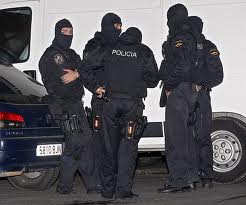
Sunday, November 27, we woke to the “red” news of a death in the neighborhood. On the Goicuría block between Freyre de Andrade and Espadero, in Vibora, Havana, they stoned a man whom they said had a bad social attitude. I couldn’t find out much, because the neighbors — given the secrecy of the National Revolutionary Police (PNR) — were unaware of the details of the case. The surrounding population did not show much interest in the event, because they were upset that the eggs hadn’t arrived at the shop and they weren’t going to come the following day, either. So I went from shock to outrage in the blink of an eye.
My neighborhood is fairly quiet — with the well-known exception of a person they extradited from the United States some years ago and who today is in hiding for having stabbed the sector chief of the PNR — so the lack of repercussions from this event among the local people came as a surprise. Two or three hours sufficed to spread the news of this Pedro Navaja*; after which interest waned in the search of something to put on the lunch plate, the required protein (or something like it) and some other vegetable to accompany it, along with the Sunday movie.
Some might think Cubans are lazy, but that’s not the case. It’s that we don’t have any time to look around when so many of our problems are not resolved and the majority of society is worn out by the fight for daily survival and almost no incentives exist beyond the horizon.
When we have a government whose leaders — with few biological-strategic changes — are the same ones we’ve had for half a century, helping the rest of the world while neglecting their own national home. The government has “instructed” us to ignore the events of the capitalist tabloids in order to put us to sleep with their own daily social, caudillo, and political chronicle. However, I hope that some day we can have a free press where events such as these can be told, among the many others that interest the population, and that we will have the option to “turn the page” to another through our own election, as we finally pass beyond the history of this long political process that has been imposed on us.
I hope to be there then, although surely — by repeated practice of my freedom of conscience — the variety and focus of the topics dealt with won’t be any different than they are today.
*Pedro Navaja is the title of a song from the Panamanian salsa singer Ruben Blades, who was very popular in the ’70s.
The news was published on November 30 on page 4 of the newspaper Granma, in “hilodirecto” and I’m happy for those who will benefit. The Union of South American Nations (UNASUR) recognizes the benefits and reach of new technologies and puts them at the service of their peoples. The interconnection of the entire region through the Internet, is seen with the construction of a “regional ring” of fiber optics to extend the service, increase bandwidth and lower prices for connectivity to the mega-web.
And Cubans of the archipelago? Through their spokespeople, Cuban officials say they are in favor of new technologies, but only if they conform to their interests and their excessive and enslaving control. Until January 2011, the leaders and spokesmen of the government, claiming that the U.S. blockade against Cuba forced them to access the Internet only through satellite connections, to which they added servers to provide connectivity — usually to foreigners living in Cuba and to a minority of those chosen by the government — which ostensibly slow connectivity and made it impossible for them to extend it to the whole society.
But since February this year, with the advent of cable from Venezuela, hopes are envisioned for the Cubans and enthusiasm was evident in the mass media, in many people who appeared on our national television and also emphasized by the 2011 Computer Fair and the Cuban personnel participating in this event. Many “believers” in patient waiting confided that “the noble state,” despite the U.S. embargo against our country, would look for an alternative to defend the right to information of Cuban society.
Another note on the same day — November 30 — from the Moscow agency “RIA Novosti,” reports that Cuba plans to buy a whole chain of production of ammunition for Kalashnikov assault rifles, which will go to the “Comandante Che Guevara Military Industrial Company, though no information was provided on the cost of machinery.
A few months ago, we learned from the international press that the Cuban government had bought the telephone company, ETECSA, and the amount of investment ranged between 300 and 500 million dollars. That purchase information caught our attention, because the authorities had been withholding, for several years, the capital from foreign investors “for lack of liquidity”, as pointed out. Where, then, did these millions come from for this business? Was it another financing from the Bolivarian [Venezuela] country-pocket?
A news dispatch from December 1 publicly exposes it, one more time, the leaders of the Cuban government. “The Pilots” gave the task of telling us to the Foreign Minister Bruno Rodríguez — not the responsible minister of Informatics and Telecommunications — as a recurring strategy to introduce a statement to society “with Vaseline” and expect the same reaction.
Speaking at the workshop “Alternative media and social networks”, held with participants from 12 countries on November 29 in the Conference Center, he asked for “new political strategies” to organize an “active cyberdefense” on the web and expressed his concerns about “the risks” associated with the internet.
Months ago, the manipulative government gurus had launched a campaign on what they call “a cyberwar against Cuba,”and presented audiovisuals and continuous mentions in the press written about the “hostility of the media” toward Cuba — you have to remember that for 53 years only they are patriots and Cubans — while showing fear of social networks and the origins of the protests that were starting to arise in some countries.
Once again, the interests of the old ruling class called on “the game of war.” But they have been in power so many years repeating the same strategies that they fool almost no one. Any hint of freedom for the population, makes censorship under the guise of the enemy convenient for them. How many millions of pages are hosted on the internet? Do they all talk about Cuba? It’s ridiculous to say they’re biased — in favor of an inalienable right.
The government can’t mask the malignant scourge of censorship. I don’t believe in the official message that Cuba “is not in the condition” to finance “access for all Cubans” to the internet: the truth is they don’t have the political will to do so.
Still, I am struck by the statement of the Foreign Minister that “the media played a lethal role in Libya.” Is he comparing the Cuban government with the ousting of Gaddafi?
In the coming month of February we will blow out a candle in silence for the first year of the arrival of the fiber optic cable to Cuba, which should have brought internet access to all Cubans. It will be a commemoration, not a celebration, because in the matter of connectivity, just like in our freedoms and fundamental rights, we remain the shameful exception in our hemisphere.
Downloaded from: portalcomarcal.es2011 is over. It’s a fact that for 365 days we follow the year’s coffin until its official burial on the last second of December the 31st. In our own private assessment, we generally make an evaluation of our passage through those 12 months and weigh up the personal, professional and familial results. We look at the national ones as well, because for those of us involved in the fate of our country, the repeated Cuban practice of thinking about our country and for it, we have created the habit not only of monitoring and condemning the problems that concern us, but also the responsible practice of offering possible solutions to them.
With respect to our archipelago, last year left us with the taste of a certain success for the Cuban opposition. Although slight and without anyone’s direct or tacit recognition — but rather the exact opposite — the Cuban authorities themselves, every time they introduce reforms — as obscure and timid as they are — they guarantee and ratify whatever the opposition has pointed out and proposed for years. It is the evidence of the effectiveness of those who propose and protest against the official intolerance, intolerance which hates and makes enemies.
It’s certain that the government distorts these protests with the smoke screen of moving public interest onto other issues, with the clear aim of intelligently erasing the opposition class in Cuba. The old ruling class octopi and their professionals of subterfuge and intrigue extend their tentacles with their plan to divide and extinguish Cuba’s passive opposition and remain in power. But although it seems that they have ignored our protests with proposals for years, it is in these that serve as reference to those — adjusting them to their interests — to set the emerging update of its failed model on its course. It’s worth stressing that to apply fixed reforms they are falling into a contravention of their own constitution. Will they soon have written a revised, updated Magna Carta?
In their global plan of ‘face washing’, they seem to be at the helm of social restructuring with a ‘mutated reconciliation’ (mutatis mutandis) towards their self-seeking interests. I imagine that if they continue down this road we will soon see NGOs, which usually support dissident organisations on the archipelago, withdrawing troops and switching their support to Cuban investors — although many are themselves the government officials responsible for the farcical state of the country — to help Cuba to come out of the systematic crisis which is ruining us. After all, one must forget the ‘peccadilloes’ of ineptitude which broke down our economy and divided us as a nation in favour of trying to spend future decades ‘trying to fix’ what the present system cannot, or has any real interest in resolving.
I accept that in the state domino the actions and dialogue of the opposition — incongruous with the arguments with which the governance show them as enemies of the fatherland — might be out of harmony with their programme to seduce the international community with their stuffy reconciliation. Up until the present they’ve chosen to secretly promote their agents by use of the media, and to keep those aligned to the beliefs of radical transition conventionally ‘besieged’. On this platform I suspect that they count on places of relevance which have been hoarded (not only in Cuba); and I worry that it will happen as in the 60s, in that in the end State Security led almost all of the armed organisations which fought against the — at that time — young socialist government.
At the moment I will remain a proactive observer, and I support any movement destined to eliminate the injustice — however insignificant they may seem — that limit our ability to exercise our fundamental rights and freedoms and prevent us from being the owners of our dreams and destinies. Because of the urgent need for improvements for our long-suffering people, I remain dissatisfied, but optimistic, about those who back the cautious steps which the government is taking. This is the visible goal currently within our reach to start walking towards.
She grew up in the so-called Cuban revolution. Her father was sympathetic to the regime and her mother was politically apathetic, but they both brought her up with love for the figure of the “maximum leader”, in whom is contained, by official design, the concepts of country, state and nation.
Perhaps because of being an only child she got out of much of the housework, but she absorbed the unconditional support for the system that “made us free” and they encouraged her to participate actively in the “revolutionary” school tasks.
During junior high and high school she never missed going to “the school in the countryside,” nor was she intimidated by the distance from home, or the cold milk for breakfast without coffee, which tasted like smoke.
Her mother strained her back carrying heavy shopping bags of food to those farm schools so she would not go hungry, while her father accumulated volunteer hours and diplomas for standing guard, hoping to win a trip to the socialist countries to vacation with his family.
They always worked themselves excessively, because they lived in the house of her maternal grandparents in Nuevo Vedado, surrounded by privileged officials of the state Nomenklatura, whose children, dressed in clothes and shoes bought abroad, associated with “the girl” in the neighborhood and school.
“You will have a better future,” said her mother, who carried the trauma of being taken to Camarioca when she was eleven by an uncle, to watch the leaving of her parents, who died a few years later in an accident in the United States.
While in high school they made her give up her first love, because the boy had “ideological problems”; he was studying English and spent his time dreaming of travel. They still remembered the time of the subversive music of the Beatles, the long hair — that the paramilitaries cut off in the street — and the persecuted peace signs. The period when the devil screamed and God whispered in secret, that damaged us with Soviet-style intolerance.
Cuban artists were banned for wanting to emigrate and censored foreigners were listened to quietly in the house of someone who had a turntable and LPs. Thus, they conditioned her to be fearful and hesitant in her personal freedoms, thinking and acting according to what the authorities approved in the totalitarian system.
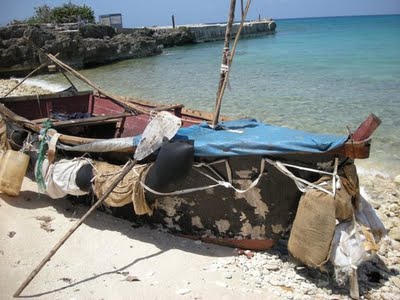
In the summer of 1994, she went to the beach to see her cousin and dearest friend leave, and after many tearful hugs and kisses, she raised her hand in farewell to that dark vessel floating away like the Titanic, dismembering her family and taking away her dearest friend, sharer of her common history, with whom she would no longer live.
She kept waving until the hulk became a black point on the horizon. She exchanged letters with her alter ego, a “hello!”, an occasional bright photos, and a “bye” at the end, with dot dot dot ever more filling her universe of sound.
It was the first time she’d questioned anything, and it made her discard one of the deformed concepts she’d learned as a girl, finding herself puzzled and confused — with sand in her eyes: Freedom is not won by submission, but by going beyond the horizon.
She left the university in her first year because they assigned her a career she did not like. She devoted herself to the study of English and looked hard for work, but they offered her only jobs in construction and agriculture.
She was the girlfriend of a leather worker who made shoes and learned to “make money” without union meetings or excessive politicization. But after nearly two years, by official order, they were arrested and fined by the police, who confiscated their tools and all the raw material they had in the workshop.
Her partner, who had suffered the same abuse twice before meeting her, devised with her the plan of going to a country that respected the private sector and where citizens have rights and institutions that safeguard them. Joining forces, they sold their motorbike and paid for the illegal sea passage to a better future.
She tired of looking for her cousin after a long time; but her mother still goes to the door when she knows it’s time for the mail carrier to come by.