August Sees the Highest Number of Protests in Cuba since 11 July 2021

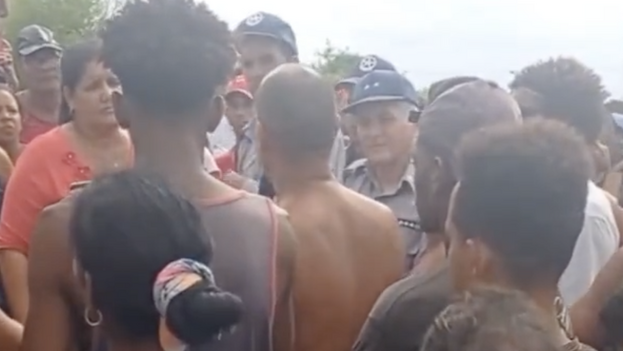
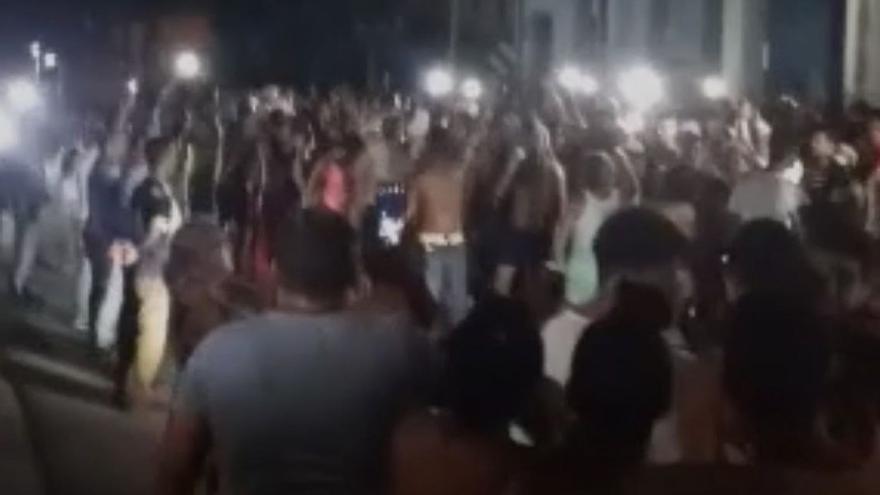
Demonstration in Nuevitas, a town in Camaguey province, on August 18. (Screen capture)

14ymedio bigger14ymedio, Madrid, 2 September 2022 — There were a total of 361 demonstrations in the country, according to the latest report by the Cuban Conflict Observatory (OCC), which was released on Thursday. This is the second highest number of protests recorded by the US-based organization, which began tracking them in September 2020.

The main reason Cubans took to the streets in August was to protest blackouts. The report notes that were as many as 79 protests of different kinds, 41 of which were cacerolazos.*

According to the OCC most protests fell into one of two categories: those for political and civil rights, and those for economic and social rights. It explains that it had to apply “selective criteria” when classifying cacerolazos, which began over a social grievance — a shutdown of the electrical power supply —  but broadened over the course of the month to include political demands.

There were 219 protests over political rights and 142 over economic rights.

The report states, “The number of cacerolazos increased 145%, from 20 in June to 49 this month.” Artemesia province saw the greatest number, with eight such protests, followed by Cienfuegos with seven, then Holguin and Camaguey with six each.

The most notable of these occurred in Nuevitas on August 18 and 19, when hundreds of people took to the streets to demand not only that electrical power be restored but also to call for freedom. continue reading

The report states that protests directly criticizing the government for mismanagement grew from 85 in July to 172 in August. Although it states that many of the protests demanded the Diaz-Canel government be replaced, they also demanded the socialist system be replaced.

It mentions an increase in violent actions by unknown perpetrators as described by anonymous reports on social media. These include arson attacks at state recreation centers and stones thrown at display window of state-owned hard-currency stores.

To deal with this, the organization claims the government “apparently wanted to try an active measure by claiming there had been a firebomb attack on a state building. The fabrication of disinformation on the alleged operation was extremely crude and national public opinion immediately dismissed the news as a police stunt.”

The OCC says the number of demonstrations having to do with economic rights may also have been growing. These involve not only those related to power blackouts but also to “the collapse of the healthcare system in response to the growing dengue epidemic, shortages of food and medicine, inflation and garbage collection.”

In this monthly report, the OCC states, “Cuban protests now take a wide variety of forms: collective prayers in public places, graffiti, civic campaigns with flyers and posters, provocative religious services, and hackings of official websites and the computers of hotels associated with the military-business group GAESA

The OCC report also highlights the Matanzas Supertanker Base. Referring to it as a “disaster,” it decries “the lack of foresight on the part of the leadership and the inefficiency of the system of governance to provide internal stability, which exacerbates the crisis of legitimacy and the credibility of the government.”

The OCC argues, “Though expressions of discontent or dissent with respect to current policies are widespread, what is undeniable is that never since 1959 have they been of such size, permeating the most diverse layers of society with the exception of a tiny oligarchy, which benefits from them.” It concludes, “If the intransigence of the powerful elites persists,” this trend will be unsustainable “in the short or medium term.”

*Translator’s note: A form of popular protest which consists of a people making noise by banging pots, pans, and other cooking utensils to call attention to their grievance.

____________

COLLABORATE WITH OUR WORKThe 14ymedio team is committed to practicing serious journalism that reflects Cuba’s reality in all its depth. Thank you for joining us on this long journey. We invite you to continue supporting us by becoming a member of 14ymedio now. Together we can continue transforming journalism in Cuba.
Due to Lack of Resources, Only 23 Sugar Mills Will Process Cane in Cuba in the Next Harvest

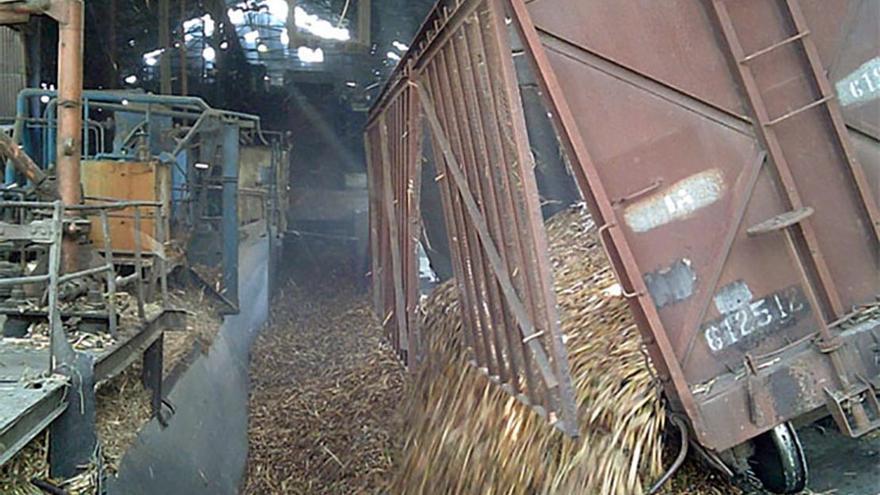
The planned harvest is half the goal of the last campaign and lower than that achieved. (Granma)

14ymedio bigger14ymedio, Havana, 2 September 2022 — The Cuban authorities have set themselves the goal for the next harvest at even fewer tons than were achieved in the previous one, which was the worst in the history of the Island. It’s true they have called it small, but it’s difficult to understand why they call it “efficient” since in no case does it even cover domestic demand.

Julio Andrés García Pérez, the General Manager of Azcuba, a group of companies in charge of sugar production, announced that 455,198 tons of sugar must be produced for the ’family basket’, tourism, medicines, industrial production and exports. It’s too little sugar for so much demand, if we take into account that domestic consumption requires around a half million tons, and, last year, 411,000 tons were committed to foreign sales.

The plan wasn’t achieved last year, since 911,000 tons had been projected and barely 473,720 were obtained. This year, therefore, officials adjusted their forecasts according to the poor production recorded in 2022, and even a little less. The figure is more realistic, although it remains to be seen if it is reached, in the midst of the current economic and financial debacle, lack of fuel, blackouts and a planting that has already started badly.

The campaign will begin in mid-November, which on this occasion will involve 23 sugar mills. In the past there were 36, but only three fulfilled their production plans, according to the authorities, who already warned that for this year the number of sugar mills would be reduced to 26. In the end, the number is even more modest.

In the meeting held yesterday between the leadership of Azcuba and the Party leadership, García Pérez explained that “it’s a matter of planning the harvest so it’s objective, flexible and, although small, with good practices, concentrating resources in fewer sugar mills to achieve greater efficiency.” continue reading

Deputy Prime Minister Jorge Luis Tapia Fonseca, who emphasized “discipline,” recalled that this year “there will be no more subsidies for losses in the sector” and fiercely placed the responsibility on the workers, whom he asked to be aware of how much they will achieve each day, because “if the mill doesn’t mill, the economic results won’t be good.”

“Indicators of efficiency are the main weapons of this harvest, which will be the beginning of the recovery of sugarcane in the country,” said Tapia Fonseca, to the astonishment even of the readers of the official media, Cubadebate.

“One of the most serious problems we have is triumphalism, which then dissolves into sad realities,” says a commentator in the article, entitled “Cuba is getting ready for a small, but more efficient harvest.” And another spits out, “That title is repeated every year.”

Meanwhile, a reader who has reviewed the accounts of the previous campaign says regretfully: “That means that the sugar production in the next harvest (455,198 tons) will be lower than in the last (480,000 tons in round numbers, the lowest production in more than a hundred years). We keep moving forward like the crab. We are already announcing that we will break the record we had ’achieved’ in the last harvest. And when I woke up, the directives were still there.”

The warning has also caught the attention of the Spanish-based Cuban economist Elías Amor. “Knowing that the economic situation is very serious, they no longer try to hide the disaster but broadcast it before it happens, so that people can prepare. It’s a change of strategy that, in the case of sugar or blackouts, is now set,” he says. The expert describes the adjective “efficient” as “a macabre joke” for the coming harvest.

Elías Amor has dedicated numerous analyses to the resounding fall of the sugar industry, which has gone through times of glory. In 1959, Cuba had 156 operational factories that produced 5.6 million tons of sugar. During the years of the Soviet subsidy, although without reaching the mythical 10 million announced by Fidel Castro, record figures were reached that exceeded eight million tons in the best harvests, between 1970 and 1989.

The root causes of the debacle in recent years are, for the authorities, the lack of fuel, breakage in machinery and transport and industrial failures, in addition to the humidity of the fields and COVID-19. According to the economist’s analysis, the greatest burdens are the absence of financing (due to the lack of access to financial markets), the impossibility of attending to domestic consumption and the little technology available to obtain sugar production byproducts* – “which is where the profitable sugar lines are.”

These causes explain the failure of one of the industries that contributed the most money to Cuba in history, well ahead of tobacco, but there will also be consequences. The lack of sugar for export will prevent the much-needed acquisition of foreign currency, and its absence for the domestic market will force the State to spend amounts of money that it doesn’t have. Meanwhile, the street finds a new reason for discontent.

*Translator’s note: The four main byproducts of the sugarcane industry are cane tops, bagasse, filter muds and molasses.

Translated by Regina Anavy

____________

COLLABORATE WITH OUR WORKThe 14ymedio team is committed to practicing serious journalism that reflects Cuba’s reality in all its depth. Thank you for joining us on this long journey. We invite you to continue supporting us by becoming a member of 14ymedio now. Together we can continue transforming journalism in Cuba.

Biden Extends the Embargo Against Cuba and Díaz-Canel Calls it a ‘Crime’

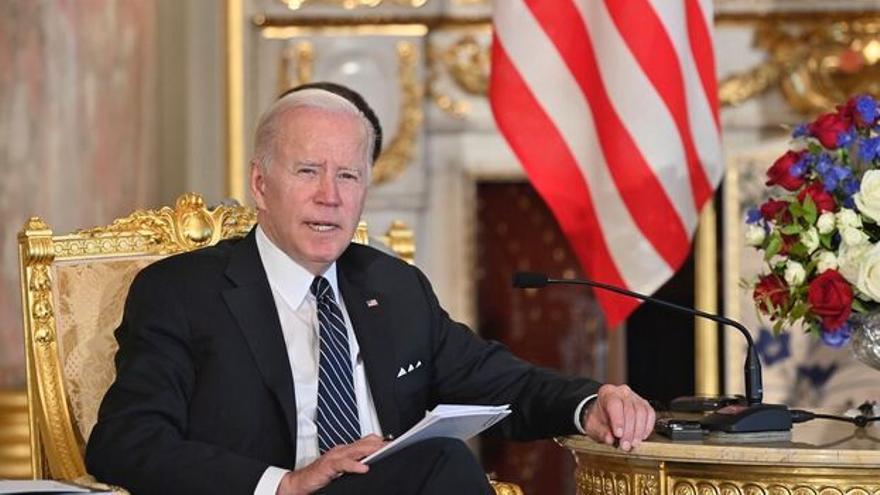
U.S. President Joe Biden. (EFE)

14ymedio bigger14ymedio/EFE, Havana, 3 September 2022 — The president of Cuba, Miguel Díaz-Canel, criticized the U.S. president, Joe Biden, on Saturday for renewing the Law of Trade with the Enemy, a statute of 1917 that underpins the economic embargo on the island.

“Biden didn’t dare to take away the ’pretext’ from us and signed for the continuity of the blockade,” the Cuban president wrote on Twitter, referring to the memorandum that extends that policy until September 14, 2023.

Díaz-Canel added that “the crime has lasted too long, but the Cuban Revolution will survive it.”

In the same vein, the Cuban Foreign Minister, Bruno Rodríguez, said that “Biden becomes the 12th president of the United States to ratify the framework that supports the policy of abuse against Cuba and its people.”

The policy, the Minister of Foreign Affairs added, “is rejected by almost all member countries of the international community.”

Then president John F. Kennedy resorted to the statute in 1962 to impose the economic embargo on Havana, and since then it has been renewed, year after year, by the following presidents.

Cuba is currently the only country in the world sanctioned under that law that authorizes the president of the United States to impose and maintain economic restrictions on states considered hostile. continue reading

The embargo has been widely criticized internationally and rejected since 1992 by a large majority of countries in the UN General Assembly.

Systematically called “the blockade” by the Cuban authorities, the embargo is the reason used by the regime to justify the shortage of food, medicines and other multiple problems, even though there is a law that allows Cuba to buy basic goods from the United States, as long as it pays in advance, in cash.

Most of the chicken that Cuba imports come from the United States; in the last 20 years, the United States has exported 2.78 million tons of chicken to Cuba — 39.5%  of that in the last five years — for a cumulative value of 2,368 million dollars, according to data from the beginning of 2022. In addition, the Island also buys other products from the US, such as soy, fruits, coffee, ketchup, fresh vegetables and pet food.

Translated by Regina Anavy

____________

COLLABORATE WITH OUR WORKThe 14ymedio team is committed to practicing serious journalism that reflects Cuba’s reality in all its depth. Thank you for joining us on this long journey. We invite you to continue supporting us by becoming a member of 14ymedio now. Together we can continue transforming journalism in Cuba.

Spinning with the Failure of Foreign Investment in Cuba

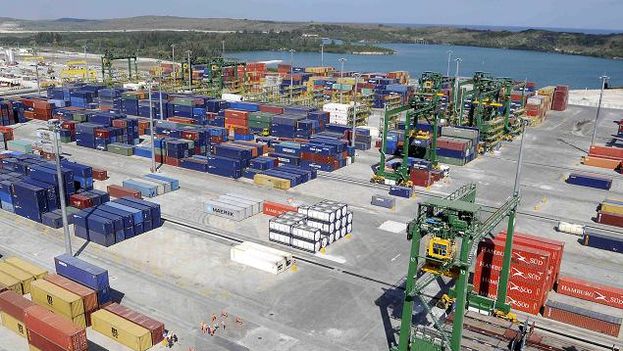
Mariel Special Development Zone – ZEDM

14ymedio bigger14ymedio, Elías Amor Bravo, Economist, 4 September 2022 — Cuban communists have failed dramatically with foreign investment. They were wrong to believe that an interventionist law and not guaranteeing property rights were going to serve to promote investment. They were wrong about the Mariel Special Development Zone, which has not been special, nor anything close. They were wrong about the devices for hiring labor, the design of joint ventures or the absence of funding. They were wrong in everything; hence, the failure.

And now, the State newspaper Granma published an article entitled “Lend a hand” to national industry and economy with foreign investment. Wouldn’t this be like going for the jugular? Nor would putting the national infrastructure that is still state-owned at the service of foreign investment make it possible to patch over a pothole that has its explanation in the desire to apply the communist model to foreign capital, an erroneous pretense that doesn’t have a leg to stand on.

The foreign investor wants freedom to decide what to do with his money. The hands of the state, the farther away, the better. This is something that the Cuban communist regime cannot understand, and that’s how it goes.

Contrary to what is stated in Granma, analysts emphasize that the framework of foreign investment in Cuba continues without undergoing the necessary changes to achieve its increase, and the recent decisions of the regime have passed without pain or glory, because they don’t go to the heart of the problem. But with these decisions, the communist state intends to solve critical problems that throw the Cuban economy into a situation of extreme weakness, such as with food or electricity, and in these matters, foreign capital seems to have little interest. continue reading

The regime intends for foreign capital to enter to operate in wholesale distribution, but this stumbles over the legal framework in Cuba. On one hand, there is no guarantee because this activity is subject to control by the regime, and on the other, why dedicate itself to distribution when the problem is that there are not sufficient products or goods?

The two vectors point to a scenario in which no matter how hard the authorities try, they won’t find a foreign distributor to provide the technology and experience that will achieve radical changes in the gray commercial landscape of the communist economy. You don’t build a house from the roof down; you need a solid foundation. As much as Minister Gil tries at the National Hotel to convince representatives of embassies, national and foreign businessmen and officials from agencies of the State, he knows that this initiative won’t go very far; and in any case, if it happens, the government will have a partner subject to communist decisions who, sooner or later, will abandon the business.

Likewise, Gil claimed the new scenario according to which, currently, both the private and state sectors have a demand for resources to produce, backed up by imports, which means a space for the participation of foreign capital in wholesale trade. But in this, he also didn’t tell the truth, since while the state sector agrees to dollar-to-peso exchanges at the rate of 1×24, others, the non-state, must get used to the semi-official rate of 1×130, or resort to the informal market rate of 1×150, and rising.

Gil said that the country has an infrastructure that is above production levels, and this is false, according to the results of 2021, but by disagreeing with it, he refused to accept the technological obsolescence of numerous sectors and companies in sugar, electricity, manufacturing, transport, etc. The minister is wrong to say these things, and the foreign investor is attentive to all this when making decisions.

It’s not surprising that other Caribbean countries, such as the Dominican Republic, benefit from this black hole of the Castro regime, which aims to trap unsuspecting investors so that they place their capital in warehouses or factories whose cost of reactivation is much higher than putting it into operation from the beginning. If you think not, look at the estimate of 255 million dollars to update the electricity sector.

Haste has never been a good adviser in economic policy decisions. In reality, attracting foreign capital to Cuba simply requires another model, another economic structure, another legal framework, and that doesn’t happen overnight. Going around in a vicious circle doesn’t lead anywhere.

Therefore, when the minister declares that he is willing “to make national infrastructure available to foreign investment,” he should clarify how he intends to do it, in terms of what model, with what instruments and within what deadlines, because that being said, in open terms, he will not be able to attract anyone; on the contrary, he will scare off foreign capital. The lost foreign exchange income in the country, which is more than 3 billion in a very short period, will never come within the current framework of foreign investments.

The minister abandons the idea of international investors deploying their structures to produce and generate employment in Cuba, seeing that this is impossible, and therefore, he now wants to make it easier for foreigners to bring products into the country, taking advantage of their experience, their financial facilities, their technology and for this, to take advantage of the communist state infrastructures. They aren’t going to be successful, not in the wholesale trade and much less in the retail trade. There are many countries to attend to first, with promising markets. Cuba lags behind in this international competition, and for Cubans things are getting worse and worse.

As always happens in these business forums, such as the one held at the National Hotel, ministers participate in the road show to present business opportunities to foreigners who then, when studied in detail, end in nothing. The five proposals offered by the director of foreign trade of Havana, Luis Carlos Góngora, surprised the attendees. First, the possibility of wholesale and retail production and marketing of consumer and intermediate goods in the capital, which are in high demand, associated with the activity of breadmaking and pastry, artisanal and industrial productions of candies and other jams, and the processing and preservation of food.

He stressed that there is a market for this, due to the growing number of micro, small and medium-sized companies that are engaged in these activities, in addition to the fact that these products and raw materials are for widespread domestic use, in family food, which also justifies a retail market. And among the products to be marketed, he mentioned sugar, salt and flour, in addition to specific mixtures, gluten-free flour, packaging, fats, oils, yeasts and dyes, among other raw materials.

The business director of the Ministry of Industries, Tomás Oviedo, proposed several areas for foreign investment; for example, the marketing of tires and rubber articles, as well as inputs and equipment related to these productions. The proposal would be in the form of a wholesale marketing company, and the opportunity lies in the high unmet demand, with potential customers such as the ministry itself, MITRANS [the Minstry of Transport], the construction sector or any other branch of the economy that owns automotive transport.

From the chemical industry, there was talk of the creation of a wholesale entity that markets flat glass and items of this material, supplies and equipment for the respective factories, which would  meet the demands of that market, acquire new technologies for the development of this industry and recover and make the most of the capacities already installed.

In the field of agriculture, it was proposed to develop a chain of wholesale and retail stores, no less than five, to offer a variety of products and commodities with national reach, supported by wholesale warehouses. This proposal would be supported by a high demand in the sector for raw materials, tools and accessories, among other things, and as another potential it added the existence of underutilized logistics capabilities, with a network of establishments that are out of stock.

The question that appears in all this list of opportunities is the same: Why haven’t the Cubans done this themselves, and why do you have to resort to foreign capital? Or more importantly, why doesn’t the state do it with its state companies?

On the other hand, it abounded in several conditions and guarantees of operation, such as the “Single Window,” created to accompany investors and facilitate the entire process.

Castroite leaders have thrown in the towel, aware that the communist model can’t go on, except to highlight interventionist nonsense such as the portfolio of opportunities or the one-stop-shop. They speak of a more favorable environment for foreign investment, but they don’t realize that the current times, due to a serious global economic crisis caused by Cuba’s partner, Putin, will bring with it a collapse of markets and financing. It’s unfortunate that Cuban leaders are going to look for investments just when it can become more complicated. Always swimming against the current.

Not even letting businesses operate in foreign currency, which means taking them away from the reality of a weak and increasingly fragmented domestic market, will manage to interest any foreign investor. No one trusts these types of decisions that, at any time when the conditions of the economy change, can be reversed, and then it’s over. This lack of guarantees is what worries many investors.

The eternal bureaucracy is also frightening investors, so, when the flexibility in the requirements for proposals was announced, the reduction in the content of the documentation that is required today for approval, some rejoiced, but sadness returned when it was seen that the required paperwork remained the same and that the multiplicity of partners again casts shadows of doubt.

Finally, no one told Minister Gil and his colleagues that in order to attract foreign capital for business opportunities in the sectors of the economy, something must be done first, and that it’s very important.

And that is to pay off the debts. No attendee said anything about this issue. It’s an annoying matter for those who haven’t paid the Paris Club and other creditors for two years. And so, with that data about non-payment, they want to attract investments? Good luck with that.

Translated by Regina Anavy

____________

COLLABORATE WITH OUR WORKThe 14ymedio team is committed to practicing serious journalism that reflects Cuba’s reality in all its depth. Thank you for joining us on this long journey. We invite you to continue supporting us by becoming a member of 14ymedio now. Together we can continue transforming journalism in Cuba.

Cuba: Fidel Castro’s Tantrum with Gorbachev

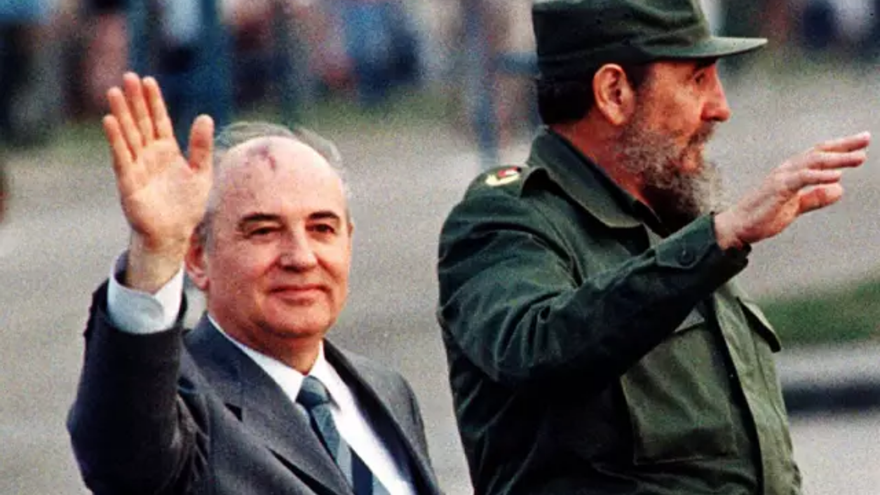
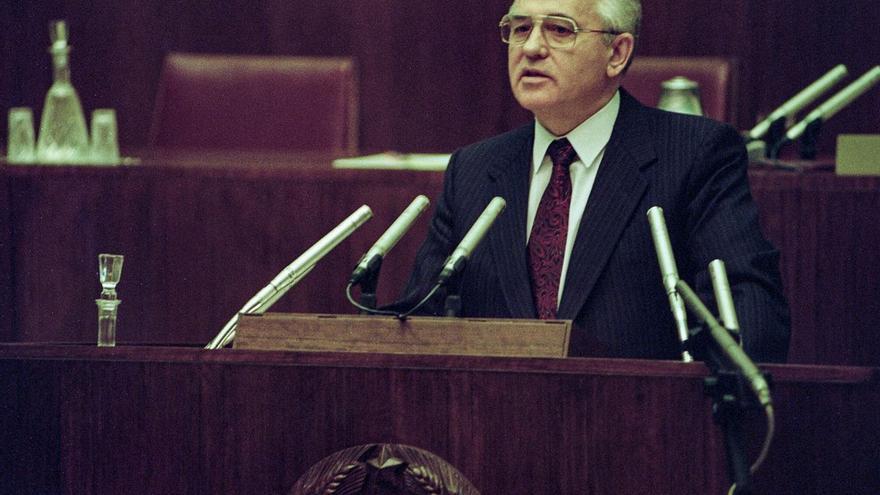
During Gorbachev’s trip to Cuba in 1989, he and Castro could not hide, despite high levels of diplomacy, the abyss that separated their ideas. (EP)

14ymedio bigger14ymedio, Frank Calzón, Miami, 3 September 2022 — Mikhail Gorbachev, the Soviet leader who wanted to salvage communism with his reforms and openings known as glasnost and perestroika, could not convince Fidel of the pragmatism of these reforms during his visit to Cuba in 1989. Fidel did not like the interest generated by the Russian — younger than he — among Havanans, nor did he like his ideas of renewal.

Now, the state-run press in Cuba has limited itself to succinctly informing about his death, which has been the subject of hundreds of articles and commentaries in the most important press outlets around the world.

In an article this week in the Washington Post, Nathan Sharansky, a human rights activist and former political prisoner in the USSR, wrote that Gorbachev, “expressed regret that the U.S.S.R. had fallen apart, but also emphasized his personal achievements, including the promotion of political and religious freedom, the introduction of democracy and a market economy, and, of course, the end of the Cold War.”

In his book titled Perestroika, published in 1987, Gorbachev — who would become the leader of the Soviet Union the following year — wrote that “the world is not what it used to be, and its new problems cannot be solved by the inherited concepts of centuries past.” Gorbechev did not want continuity. continue reading

Those ideas and his willingness to cooperate with the United States were anathema to Fidel Castro, who always wanted to be the leader of a grand anti-American coalition. The immediate result was that Havana banned the distribution of Russian publications, such as Sputnik and Novedades de Moscú [News from Moscow], and began to repatriate the Cubans who lived in Russia to avoid contagion with the dangerous reformist virus.

Among those who were later disgraced for favoring the reforms were General Arnaldo Ochoa, a national hero decorated by Fidel Castro himself and later executed on the dictator’s orders following a sham trial for drug trafficking.

Regarding Ochoa’s case, the Los Angeles Times stated at the time that “it is possible that Arnaldo Ochoa will be spared from a firing squad by his old friend and leader Fidel Castro, but . . . Castro has decided that his Island’s future lies in . . . Stalinist Communism including purges and show trials for those unfortunate apparatchiks who stray from the party line.”

After the Soviet Union disappeared, Irina Zorina, an intellectual, and a group of Russian dissidents founded the Russian Committee for Human Rights in Cuba and the Russian Embassy in Geneva responded to a call from Carlos Franqui and Freedom House, sponsoring a session to hear the grievances of former Cuban political prisoners who were visiting the United Nations Commission on Human Rights in the Swiss city.

The session was also attended by diplomats, journalists and representatives of human rights organizations. Cuba’s State newspaper Granma ran an editorial commentary illustrated with rats, vodka bottles and American flags, alleging they wanted to convert the Russian diplomatic mission into a tavern.

Sharansky’s Washington Post article comments that during Gorbachev’s, “first trips to the West. . .Gorbachev discovered that the Soviet Union had paid a heavy diplomatic and economic price for its treatment of dissidents. As a result. . .he began to release political prisoners and long-time refuseniks (Jews fighting for their right to emigrate to Israel.) ”

Shanasky also wrote in his book, The Case for Democracy, that “three things are necessary for people to achieve freedom: people on the inside willing to suffer to achieve it; people on the outside to help them; and for democracies to condition their political, economic, and cultural relationships on the regime’s implementation of specific reforms, beginning with the release of political prisoners.”

Translated by: Silvia Suárez

____________

COLLABORATE WITH OUR WORKThe 14ymedio team is committed to practicing serious journalism that reflects Cuba’s reality in all its depth. Thank you for joining us on this long journey. We invite you to continue supporting us by becoming a member of 14ymedio now. Together we can continue transforming journalism in Cuba.

Of Spontaneous Leadership and Popular Protests in Cuba

“Let us do with our lives what we want,” demands the shirtless man in the center, before the strict faces of officials and police in El Cepem, Artemisa. (Screen capture)

14ymedio bigger14ymedio, Yoani Sánchez, Generation Y, Havana, 31 August 2022 — A shirtless man stands up to officials and police to prevent them from confiscating the rafts with which a group of residents of El Cepem, Artemisa, want to get out of the Cuban “socialist paradise.” A woman sits in front of her phone in Santiago de Cuba and launches an acid criticism against stores that only take payment in foreign currency. An old man walks the streets of San Antonio de los Baños shouting slogans against president Miguel Díaz-Canel. Hours before those actions, no one would have believed that either would become a leader, no one would have singled them out as ringleaders of the outrage on this Island.

For decades, Cubans have been waiting for anointed protagonists who will confront power directly and, in the style of Joan of Arc, come to immolate themselves if necessary for the cause of all. Waiting for these bold and magnetic messiahs, many citizens have parked their own civic actions. The demands from outside and within the national borders for these determined and authoritarian caudillos to appear, feared by the ruling party and loved by the people, fascinating and good orators, have also delayed change in this country.

However, life has shown that the leader emerges where forced by circumstances, that the leading role passes from one to another as reality dictates. That momentary chief is the biggest headache right now for the Cuban regime, which, when it finishes putting out the flame of rebellion in one area of ​​the country, another more sophisticated and stronger popular fire appears. In El Cepem, a poor community near El Salado beach, Castroism faced another problem this Monday, its own lack of charismatic figures and solutions to national problems.

A man, with a speech that borders on the philosophical heights, and whose address lacks a single obscenity, has struck the Cuban system to the heart. “If they don’t want us, because we are an illegal community, if we don’t fit in this country because our wages are not enough to buy in hard currency stores, if there is no oil for the thermoelectric plants to work,” then “let us do with our own lives whatever we want,” demands this father of an eight-month-old baby in front of the strict faces of officials and police.

Microphone in hand, while another resident of El Cepem holds the speaker on his shoulder through which his flat and firm voice is heard, this man displays all the arts of a true leader: he summons, unites, protects and confronts those who want  to do harm to his group, his neighborhood. What is his name? Where did he learn all those truths that he shoots like argumentative arrows, accurate and irrefutable? It is not necessary to know. The political police will now invent a past for him that is tailored to the campaigns to assassinate his reputation, to which they have appealed so often for more than 60 years. But, for a few minutes, he was the undisputed leader of national despair.

Let’s stop waiting for “the voice.” Any of us, at any given moment, can be chief, director, rector, general or president.


____________

COLLABORATE WITH OUR WORKThe 14ymedio team is committed to practicing serious journalism that reflects Cuba’s reality in all its depth. Thank you for joining us on this long journey. We invite you to continue supporting us by becoming a member of 14ymedio now. Together we can continue transforming journalism in Cuba.

Cubans Confront the Police to Let Them Leave the Island by Raft

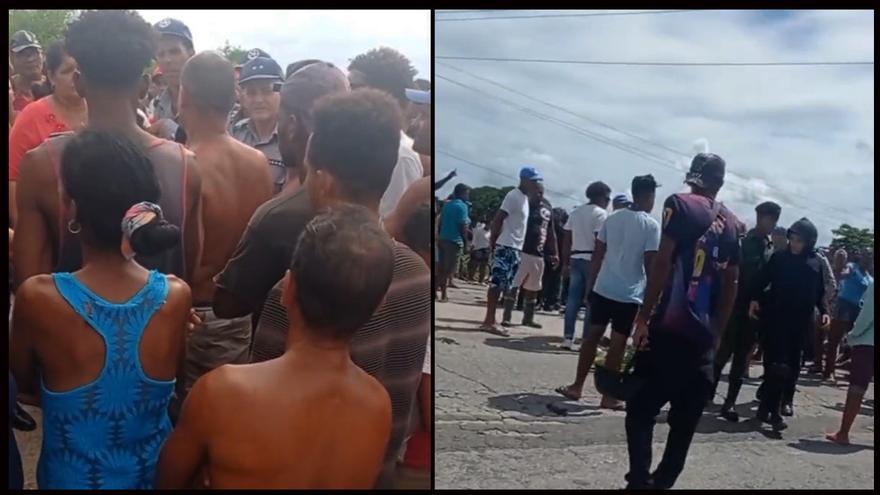
Imágenes de las protestas de pobladores de un asentamiento en Playa Baracoa. (Collage)
Images of the protests of residents of a settlement in Playa Baracoa. (Collage)

14ymedio bigger14ymedio, Havana, 30 August 2022 — Despite the repression in each of the places where demonstrations have taken place in recent days, dozens of Cubans staged a new protest this Monday. On this occasion, it was in the town of El Cepem, of the Costa Norte People’s Council, Caimito, in Artemisa, after the police tried to prevent the departure of several illegal rafts. The place, which has taken its name from the acronym of a nearby military unit, has become an illegal settlement with precarious housing and heavy threats from officials to punish the residents with evictions.

“If they don’t want us, because we are an illegal community, if we don’t fit in this country because our wages are not enough to buy in hard currency stores, if there is no oil for the thermoelectric plants to work, let us make the decisions for our own lives,” said one of the neighbors acting as a spokesman for the attacked residents of the place.

In a video broadcast by the exiled Albert Fonse, the moment in which special troops violently burst into several homes is observed, provoking the indignation of the residents. The altercation ended in a confrontation that left several people injured and at least six arrested, according to reports from witnesses to the events.

In the transmitted images, a man is seen who, on behalf of the residents, stood up to the officials, as was captured in another video. “Don’t treat us that way,” the neighbor tells uniformed police officers. “You are like parents who take care of the child and do not let him learn to go out in the street, so when he does go out in the street the child does not know how to express himself.” And he adds: “Allow us the opportunity to decide for our own lives.”

The man, who describes himself as the father of an eight-month-old girl, insists that they are not stealing anything from anyone, and that when they find continue reading

“one of those artifacts,” referring to homemade boats, they represent thousands of pesos raised by each family to be able to go “We don’t want to go against you, we don’t want those people to come and attack us and we have to have this response,” he reiterates.

This Cuban insisted on his request that they not be attacked when they are “making a boat, that what they should do is give us a medal… What they should make is a monument to the rafters,” making it clear that the departure of Cubans represents remittances for the Island.

The flow of rafters responds to the worsening of the humanitarian and economic crisis that the island is experiencing, with a resurgence of repression and economic deterioration, which includes a rise in the cost of living, the devaluation of the Cuban peso and an increase in uncertainty about the future. In the last ten months, almost 178,000 Cubans have entered the United States by land, surpassing the figures recorded in the Mariel Boatlift in 1980 and the Rafter Crisis in 1994.

____________

COLLABORATE WITH OUR WORKThe 14ymedio team is committed to practicing serious journalism that reflects Cuba’s reality in all its depth. Thank you for joining us on this long journey. We invite you to continue supporting us by becoming a member of 14ymedio now. Together we can continue transforming journalism in Cuba.

Pablo Milanes Calls for ‘New Voices and New Ways of Thinking’ in Cuba

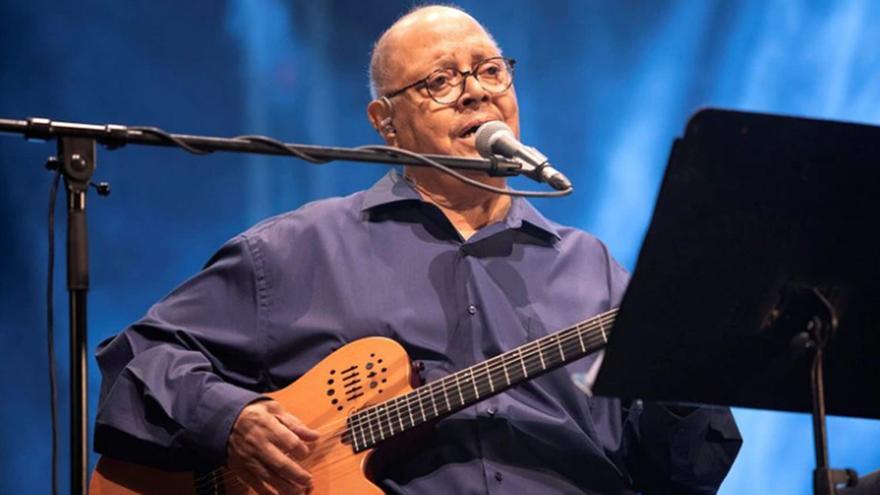
The musician Pablo Milanés in an undated photo. (EFE)

14ymedio bigger14ymedio, Havana, 31 August 2022 — Famed singer Pablo Milanés announced in a Facebook post on Monday that he had signed the Cuban Civil Society Manifesto, a document drafted by a group of Cubans, some living on the island and others overseas, which calls for change in the country.

He added a dedication “to all those who fight for freedom, and for social and economic change in Cuba.”

He goes on to note, “As I have indicated in my most recent public statements, its proposals meet the requirements of what could serve as a non-partisan effort, one without regard to trends, to old and new disagreements, which would only lead to disunity and inconsistency in any future achievements, which can only be achieved through the unity of all Cubans.”

He encourages others to read the text “in depth” to  appreciate “the essential idea” of what the country needs: “new voices and new ways of thinking, which demand new laws, new freedoms, new active participation within the current society, which would lead us to a dialogue of peace and an achievable future given the dire conditions in which people find themselves, with no apparent way out.”

He reiterates his support for “this and any other manifesto that might encourage change in a spirit of sovereignty, inclusion and respect for human beings, their dignity and most basic aspirations,” no matter from where they might arise, “without prejudice and without political-ideological conditioning of any kind, to achieve what we all seek through different paths.”

The manifesto, which was released last week, calls for “profound and urgent change to wrench the country out of an unprecedented crisis and avoid confrontation.” It adds, “The state has meaning only when it represents the interests of all the citizenry, for which a consensus of Cuban civil society has a superior moral force.” continue reading

It places blame for the country’s “alarming situation” on “business centralization by the state, a source of inefficiency and corruption by bureaucratic classes, which have been dragging the population into a disastrous situation for more than two decades.” It also blames “systematic coercion of essential rights such as free oral and written expression as well as artistic creativity, the right to free, peaceful association, to free movement  — in particular, the right to be able to leave one’s own country and return to it — and to citizens’ free, independent economic entrepreneurship.”

The manifesto can be signed by emailing concordiaencuba@outlook.com. It is open to those “currently living inside or outside of Cuba since the Cuban nation extends beyond the Cuban archipelago to any part of the world where there are Cubans who identify with the collective aspirations of their compatriots.”

So far more than a one hundred eighty* people have signed it. Among the signatories in Cuba are opposition figure Manuel Cuesta Morua, writer Angel Santiesteban, activist Dunia Medina Moreno and journalist Maria Matienzo. Among those from overseas are musicians Willy Chirino and Paquito D’Rivera, editor Felipe Lazaro, historian Ariel Hidalgo and activist Elena Larrinaga.

It is not the first time Milanés has spoken out against the Cuban regime. The artist, who has lived in Spain since 2004, is among former supporters of the Cuban revolution who have spoken out strongly against the repression of demonstrations that took place throughout the country on July 11, 2021.

His stance, which has been much more critical than those of other members of his generation, notably Silvio Rodriguez, raised huge expectations for his June 12 concert in Havana.

Faced with protests after it was revealed that most of the two thousand tickets to the scheduled performance at the National Theater of Cuba had been sold to government “agencies,” authorities moved the show’s venue to Havana’s Sports City Coliseum.

Officials’ fear that Milanés would repeat on stage what he had posted on social media clouded the event. There was also fear that there would be a repeat of what happened at Carlos Varela’s concert on May 29 when some in the audience chanted “freedom” on several occasions during the performance. A heavy police presence and a very thorough check of bags and cell phones overshadowed the emotion of the audience, who that had not heard one of its most iconic musicians perform live for several years.

*Note: Signature numbers updated as of posting this translation.

____________

COLLABORATE WITH OUR WORKThe 14ymedio team is committed to practicing serious journalism that reflects Cuba’s reality in all its depth. Thank you for joining us on this long journey. We invite you to continue supporting us by becoming a member of 14ymedio now. Together we can continue transforming journalism in Cuba.

Silivio Rodriguez Criticizes the Cuban Government for Blocking the People’s Protests Over the Blackouts

Cuban singer-songwriter Silvio Rodríguez has once again made statements questioning the Díaz-Canel government. (La Tercera)

14ymedio bigger14ymedio, Havana, 29 August 2022 — The troubadour Silvio Rodríguez has once again used his blog to complain to the Executive of Miguel Díaz-Canel about its attitude towards the protests, particularly the most recent ones, against the lack of light and constant blackouts. “I think that our government makes a serious mistake when it prevents the people from taking actions for relief. That contradiction will have to be resolved or the people will end up confronting the government,” warns the artist.

Rodríguez publishes in Otra Cita, the continuation of his previous blog, Segunda Cita, a post by the Cuban official economist Humberto Herrera Carlés. It analyzes the supposed effects of the US embargo and how these have worsened, according to his thesis, since Donald Trump expanded the sanctions.

“The blockade is what prevents us the most, what delays us the most, what confuses us the most. Because constant pain blinds us. Knowing that, they made torture a law, so that not even the torturers themselves could stop it,” Rodriguez argues in a comment.

Despite this, the artist demands that Cubans can cry out against whomever they want, which they can no longer do. “I defend the right of everyone to explode and say what they feel,” he adds.

Rodríguez attacks the way of managing that has been imposed in Cuba and stresses that, from his point of view, the country is not socialist. “Socialism is a more equitable concept of wealth distribution. It has nothing to do with the government hoarding everything. All monopolies are undesirable and even more so the absolute ones,” he points out. continue reading

Although the singer-songwriter emphasizes that the workers are striving to carry forward an energy system that is moving rapidly towards collapse – “inventing, taking even from where we don’t have” – his diagnosis is that radical changes will be necessary.

“It is obvious that our way of generating energy has no future. I think that, as it is a strategic issue, of survival, in this sense we have to be radical and even make sacrifices, because our lives depend on it. There is no other way than to put ourselves body and soul for renewable energies,” the artist states.

Despite a devastating criticism that joins the many he has made in recent years toward the Díaz-Canel government and even to the Cuban communist model, Rodríguez softens his speech at the end and asks that the world be viewed positively with the aim of mobilizing against discouragement. “It is going through so much anguish, and what we could and could not do annoys us so much, that the temptation to blame the Government for everything is latent. (…) The haters also realize it and are trying to make sure Cuba is not given the slightest respite. Let’s not help them,” he adds.

On the same day, Díaz-Canel, during a visit to the Máximo Gómez thermoelectric plant in Mariel, and the Ernesto Guevara de la Serna plant in Santa Cruz del Norte, accused the Cubans who recently demonstrated against the blackouts of behaving “indecently,” since, in his opinion they respond to the interests of the “enemies of the Revolution” by creating discouragement and uncertainty. Unfortunately, there are people who, with quite indecent vandalism, lend themselves to such actions.”

The president was referring especially to the recent demonstrations in Nuevitas, which brought hundreds of citizens to the streets on August 19 and 20. In them, the neighbors banged on pots and pans, sounded horns and raised their own voices against the current situation of hunger and crisis, as well as the lack of freedoms. Those protests were suppressed and several people arrested.

____________

COLLABORATE WITH OUR WORKThe 14ymedio team is committed to practicing serious journalism that reflects Cuba’s reality in all its depth. Thank you for joining us on this long journey. We invite you to continue supporting us by becoming a member of 14ymedio now. Together we can continue transforming journalism in Cuba.

Cuban President Diaz-Canel and the Blackouts: Enemies On All Sides

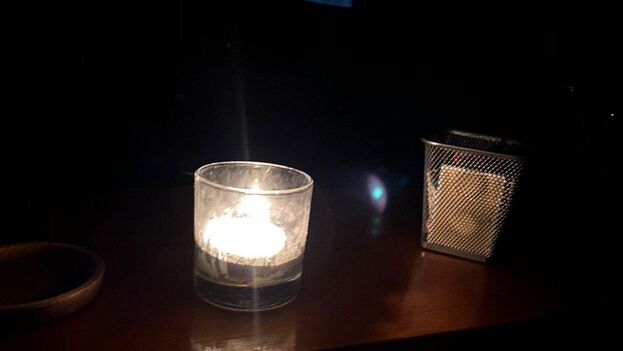
Cubans are frequently reduced to using candles as their only source of light. (Yoani Sanchéz)

14ymedio bigger14ymedio, Elías Amor Bravo, Economist, 29 August 2022 — It is one thing to say that Cuba will overcome the current energy crisis; what Díaz-Canel did is quite another matter, he insulted the Cuban people who are fed up with so many lies, and with waiting for “The New Man” who will never arrive. Even Silvio Rodríguez spoke up.

During his trip to two power plants — the Máximo Gómez plant in Mariel and the Ernesto Guevara plant in Serna, Santa Cruz del Norte — the communist ruler provided details of the strategy to overcome the national electricity system’s situation which has resulted in continuous blackouts over several months. But also, according to some, he’s freaking out. What is happening to Díaz-Canel?

Who would have predicted it? Once again the embargo or blockade appears as the justification for all the maladies that accumulate on Díaz-Canel’s agenda. That is,  Cuba’s communist ruler, after acknowledging that the energy crisis has nothing to do “with enemy activity, nor with any bad behavior of the thermo-electric plant employees” he launched harsh attacks against the United States, faulting the blockade [i.e. the US embargo] for “the systematic effects it has provoked, which left the country without possible financing to carry out the maintenance work, repairs and the new investments needed in that sector.” Up until this point, nothing new.

Once again, taking the Doberman out for a walk. Maybe one of the state newspaper Granma’s journalists should have reminded Díaz-Canel of the Soviet-communist origins of the power plants that are still in operation, with several issues of obsolescence. No. Putin, Díaz-Canel’s principle associate, certainly would not like to receive this type of critique of his technology. continue reading

Without taking responsibility for a single one of the events, Díaz-Canel found a new argument, blaming some “presumed enemies of the revolution” for the whole situation, which is being taken advantage of to “create discouragement, uncertainty, to call for vandalism, to promote disorder. Sadly there are people who, with vandalism, indecent behaviors, lend themselves to these activities.” Inconceivable. What is the communist ruler acknowledging publicly?

Not content, he added that this type of behavior should be separated from “the doubt that the population may have at a certain point, of its demands or of the concerns that are channeled through the [communist] party’s system of services, the government, and the revolution’s institutions.” In fact, he did not realize, or he does not want to realize that it is the same, and he is running out of credit. On this, even Silvio Rodríguez agrees with this blog, which is not usually the case.

In addition, Díaz-Canel should understand that when faced with the dissatisfaction that exists, no party line will suffice, it’s simple, get the electricity to work. Problems are not fixed by covering them up, but rather by resolving them.

When Díaz-Canel wastes Cubans’ time by talking about “the hypocritical, double standard, genocidal, inhumane policies to which they subject the country through unjust sanctions and an intensified blockade” he only wastes energy on an argument which not even he still believes. And all he has to do is resolve, as quickly as possible, a problem which cannot last days, nor weeks, nor months because it could all blow up. When he least expects it.

To simplify Cuba’s communist leader’s statement during his trip to the two power plants in Mariel and Santa Cruz del Norte, “today we have a process of accumulated technological deterioration which cannot be resolved in short order.” And how did we arrive at this situation?

The whole situation corresponds to the communist state-run media’s new propaganda campaign which insists, once again, to a people tired of so many promises and lies, that ” Cuba will overcome the current energy crisis created by the effects over several years of the United States blockade.” Then it remains calm because, with that, it intends to buy time and return to the essence of the revolution, which they have not moved away from in 63 years. Meanwhile, Cubans are fleeing the island in one of the largest exoduses of the last 20 years.  [Translator’s note: In fact, ’largest ever’.]

Díaz-Canel observed during his trip to the power plants “intense work, under very difficult conditions, over many hours and with enourmous determination on the part of the power plant employees to recover the power generation capacity as soon as possible and of course, provide more stability, and get us away from these very complex and unpleasant situations which affect our entire population.”

None of that can be criticized, far from it, but did he really expect anything else to happen? Díaz-Canel knows and the plant employees also know that this energy crisis will not be resolved overnight and that its effects will continue, unless a 180 degree turn changes everything.

Díaz-Canel recalled his television appearance in June, during which he said there would be a strategy to eliminate the blackouts by summer, and which Granma described as “a well conceived design.” However, it is evident they must have been talking of another country because this summer, which is not yet over, has been one of alumbrones* more than blackouts and the entire country has been affected by the lack of electricity.

Clearly, it is due to the “accident in the Felton 2 boiler, when the bearing at Felton 1 broke and due to the instability with which CTE Antonio Guiteras, in Matanzas, functions and we have not been able to maintain it to the degree necessary.” Events which they try to present as accidental but which have a peculiar background which should, in any case, be the subject of further investigation.

Somehow, it seems Díaz Canel is crying out for that investigation commission to establish where the responsibility lies when he declared that “for the country’s electrical energy system to function in a stable manner, it is necessary for the hard core where it is generated, which are the Felton and Guiteras plants, to be functioning at full capacity.” If this is known, then what game is he playing?

None. Selling smoke which will dissipate just like the Matanzas fire. Trying to convince Cubans fed up with the situation, that the umpteenth update to the strategy aimed at getting away from the blackouts in the shortest time possible “before the end of the year,” to develop, in 2023, an investment and maintenance group that will stabilize the system and change the energy matrix. And Cubans look at each other knowing that this blah blah blah is more of the same and the way things are going, the problems will continue.

They will continue because the electricity crisis is not resolved with strategies, but with actions. With money, which instead of being dedicated to the hotel industry, should be directed at the capital development of the economy in proportion to the GDP. If this basic infrastructure development indicator, which in Cuba barely reaches 15% compared with 25% in Latin America, there is nothing to do. It is an issue of money and profitability that cannot be repaired with a patch of a few replacement parts. Electricity is either managed profitably or it goes under. Like the rest of the sectors of the Cuban economy.

Financing, once inaccessible, now seems to come mostly to recover unforeseen thermal and distributed generating capacity; in a group of new technologies for generation. The same question then arises, why wasn’t that financing available earlier, and most importantly, from where does it come? Beware of indebtedness, these aren’t the best times for risk-taking ventures.

Díaz Canel neither takes responsibilities for this electricity disaster, nor those of his predecessors, the Castro brothers, who really did very little in all of this. One of communism’s great failures in Cuba has been forecasting, and therefore, the current situation of instability of and decline in electricity supply has not been an isolated event, but rather has been a long time coming. What happens is that when these unforeseen events arise, there is no other option but to see that the social communist system of organization does not have the capacity to confront them.

The response is to continuously follow up on the maintenance and repairs, “to prove how the capacities are being incorporated, how the rest of the system behaves, and which electricity generation results have been achieved.” That is, more of the same as always: bureaucracy and hierarchy, hopefully it will not occur to them to create an OSDE [Organization of Direct Business Services} for all of this. That would be the limit.

What was said does not have a response and now the attacks come from all directions. It’s bad.

*Translator’s note: “Alumbrones” is a word coined in Cuba in the 1990s during the so-called Special Period, to refer to the unexpected moments when the lights came ON, versus the long periods without electricity.

Translated by: Silvia Suárez

____________

COLLABORATE WITH OUR WORKThe 14ymedio team is committed to practicing serious journalism that reflects Cuba’s reality in all its depth. Thank you for joining us on this long journey. We invite you to continue supporting us by becoming a member of 14ymedio now. Together we can continue transforming journalism in Cuba.

Cuba’s Enemy is in the Plaza of the Revolution

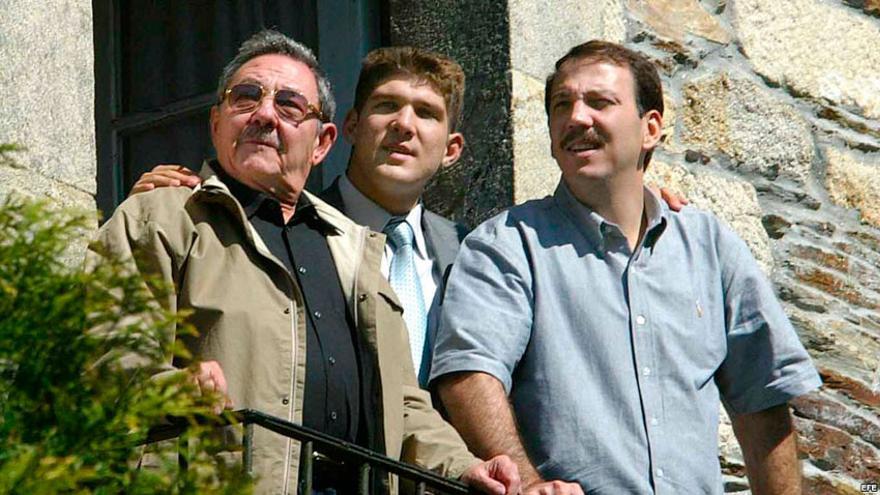
Raúl Castro placed his son Alejandro (on his left in front of his grandson Raúl Guillermo) in what he called the Commission for Defense and National Security. (Cubanet)

14ymedio bigger14ymedio, Yunior García Aguilera, Madrid, 31 August 2022 — If we take into consideration that the security of any country is based on the notion of stability, peace, development, as well as in the strategies to achieve these objectives, there is no doubt that the authoritarian powers on the Island constitute the main threat to National Security.

This concept emerged in the United States shortly after the end of World War II. In the context of the Cold War and facing the threat of nuclear weapons, the term focused on prevention, on the capacity to predict danger and strategies to mitigate its effect. Over time and as globalization erodes borders, the term has acquired other connotations.

Today, a state’s National Security does not only depend on external threats. Included in that concept are common delinquency, mafias, environmental risks, pandemics, catastrophes or uncontrolled migration.

In Cuba, Raúl Castro positioned his only son within something called the Commission for Defense and National Security. As usual, none of the delegates asked uncomfortable questions and no one questioned whether placing Alejandro Castro Espín in that area on a whim was in response to a true national interest or only had to do with having a colonel with the last name Castro mindfully watching over (with his only eye) the monarch’s sacred Family Security. continue reading

It is extremely difficult to define the Cuban system. It is not communist because communism does not exist, pure fiction, something which has never been nailed down anywhere on the planet. Socialism, on the other hand has so many definitions, it would be vague or imprecise to describe Cuba as a socialist state, especially when taking into consideration that on the Caribbean island, laborers are not a force with any political weight, nor do they have the opportunity to propel change in any way.

This small portion of the world has been a territory controlled since 1959 by a clan of individuals who have monopolized decisions, development strategies, and the notion of national security. Since then, Cuba has remained under the yoke of a gang which has used the ideologies of the day at whim to justify its empowerment. This caste has already failed precipitously in the country’s economic development, the conquest and guarantee of individual and collective rights, in achieving the wellbeing of the population and even in the state’s own survival.

The situation becomes more complex when the chiefdom, self-legitimized as a result of historical events, biologically disappears, in addition to the elimination of its contrarians or the best press any generation has had. But they’ve been replaced by a gang of legendless bureaucrats. The replacements (tombs in guayaberas) do not appear in the history books read by schoolchildren,  nor have they worked a day in their lives, and no dove ever posed on their shoulder. The forced replacements did not inherit the charisma of their models, they cannot count on popular support, they don’t even have the benefit of the doubt.

The current situation in Cuba is the worst it’s been in decades because, beyond the inflation, lack of bread, or the 18-hour blackouts, people are no longer willing to keep silent. We are the country in Latin America with the most political prisoners, we are at the bottom of most development list, and we compete with the worst countries in rankings of human rights violations.

However, the gang that has recently moved to Siboney refuses to accept democratic solutions. They continue to blame a “blockade” which collapses every time a Cuban buys chicken “made in the USA” in a freely convertible currency (MLC) store. They insist on the threat of foreign military intervention, which even the most recalcitrant opponents in Miami completely discard. They repeat like parrots that all demonstrations of discontent are paid for by the CIA, which must be bankrupt with so many accounts to settle. Officials of team Diaz-Canel beg ordinary residents for sacrifice, babble slogans that seem like tongue twisters, demand “creative” resistance. They appeal to the people to endure face slaps from police, beatings of 11-year-old girls, and all this for a bright future in which no one believes.

Silvia Rodríguez had a point when he predicted that the people will end up confronting the government. It has done so with flowers, songs. . . or stones. Tomorrow could be worse. The main threat to national secuirty is the system itself.

Translated by: Silvia Suárez

____________

COLLABORATE WITH OUR WORKThe 14ymedio team is committed to practicing serious journalism that reflects Cuba’s reality in all its depth. Thank you for joining us on this long journey. We invite you to continue supporting us by becoming a member of 14ymedio now. Together we can continue transforming journalism in Cuba.

Journalist Ricardo Fernandez Asks for Asylum in Germany with his Family

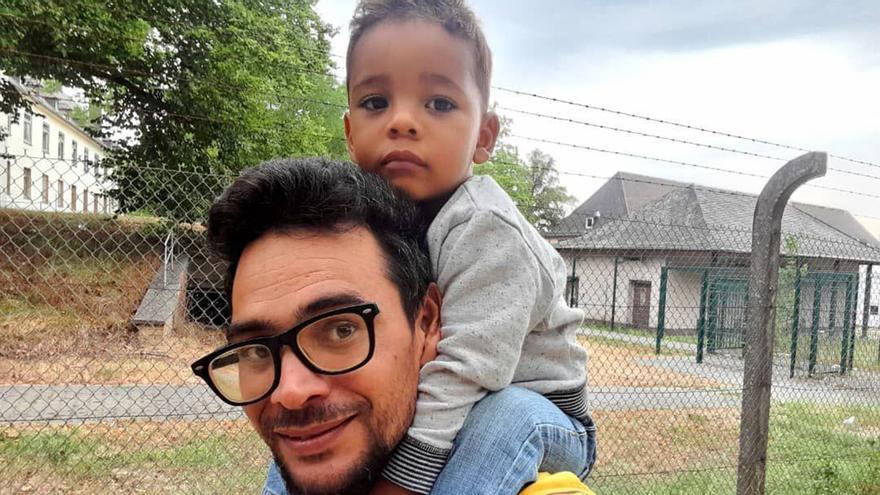
Ricardo Fernández has been in Germany with his family since last August waiting to obtain political asylum. (14ymedio)

14ymedio bigger14ymedio, Havana, 1 September 2022 — Independent journalist and collaborator of 14ymedio Ricardo Fernández has been in Germany with his family since last July waiting for political asylum. The reporter, who suffered an intense siege from the political police, recognizes that so much pressure has left him with a damaged soul.

Fernández has lived through years of harassment and arbitrary arrests. Now, from a refugee camp in Zirndorf in the state of Bavaria, he details the pressures he felt in recent months. “Until that moment I had been the one who had put myself at risk for my ideals, but since the beginning of 2022, the new objective of State Security was my wife, my mother-in-law and my eldest daughter.”

By the month of May, “the situation had already become unsustainable, and I couldn’t sacrifice my family members for a struggle that they didn’t choose.” Fernández recognizes that he didn’t have the “right to offer the lives of others” because of his personal determination to practice independent journalism under a regime allergic to freedom of information.

Once the decision was made to leave the Island, they began the procedures to obtain passports and put family matters in order. “When State Security learned that we were in that process, the harassment multiplied.” A three-hour arrest at the third Camagüey Police Unit, on July 14, confirmed the need to leave as soon as possible.

It was not the first time the reporter was arrested. In July 2019, he spent nine days in a dungeon for the simple fact of visiting the headquarters of the Ladies in White Movement in the Havana neighborhood of Lawton. From that arrest he came out with a warning report for being “illegal” in the Cuban capital, a document that he refused to sign. Last July, he also received new threats.

“I was given the ultimatum that I had a month to leave the country. I am sure that in previous years they would not have told me that way, because I would have categorically denied it, but when they saw me start the process they threw themselves at me like dogs against an injured animal.” Even so, the political police retained the family’s passports and only handed them over at the end of July. continue reading

Boarding the plane, feeling it take off and flying over the Atlantic were bittersweet moments for Fernández, his wife and his three children. On the one hand, they felt relief at leaving the police threats behind, but on the other, the question opened up to them of what would become of their lives from that day on. They didn’t carry a single euro with them.

“The asylum process in Germany, after being approved by the police authorities in charge of carrying out the express deportation of those who cannot present evidence of persecution, is quite simple, and the organization is impressive,” he explains to this newspaper. “There is a large volume of requests for refuge, mainly from Ukrainian families fleeing the war.”

In the refugee center where the reporter is waiting for a response to his case, there aren’t a lot of Cubans. The days take place there in a peculiar way: “Because of the difference in schedule with Cuba and the desire to talk to our loved ones, there is little sleep at night. During the day we are engaged in adapting to this reality.”

Although the surprises before everything new seem to have no end, Fernández and his relatives have also realized that they are “broken inside.” “When we meet to share a coffee, strained precariously, we laugh at our own wounds and compare the hoarding habits that we carry in our souls.”

“Some keep boxes of bottled water; others sleep with the goodies that they accumulate. Everyone stores what they can as if there were no more tomorrow. That’s what we laugh at, avoiding the issues that break our souls. Finally, night comes and everyone retires to connect with their loved ones who were left behind.”

Now, the emergency list is very clear to the reporter: “My priority is to get my family to heal from the psychological damage it has suffered for years of persecution, while supporting my homeland in everything that can serve it.” In the midst of the uncertainty of what will happen to him and his family in the coming days, he avoids thinking of an option in which he doesn’t receive asylum and bets that “the hope of a life in peace will flourish.”

Translated by Regina Anavy

____________

COLLABORATE WITH OUR WORKThe 14ymedio team is committed to practicing serious journalism that reflects Cuba’s reality in all its depth. Thank you for joining us on this long journey. We invite you to continue supporting us by becoming a member of 14ymedio now. Together we can continue transforming journalism in Cuba.

Instead of Facilitating the Import of Flour, the Cuban Government Lashes Out Against the ‘Resellers’

The Government has already released a pack of inspectors throughout the province, with instructions to “detect any illegality.” (Cubadebate)

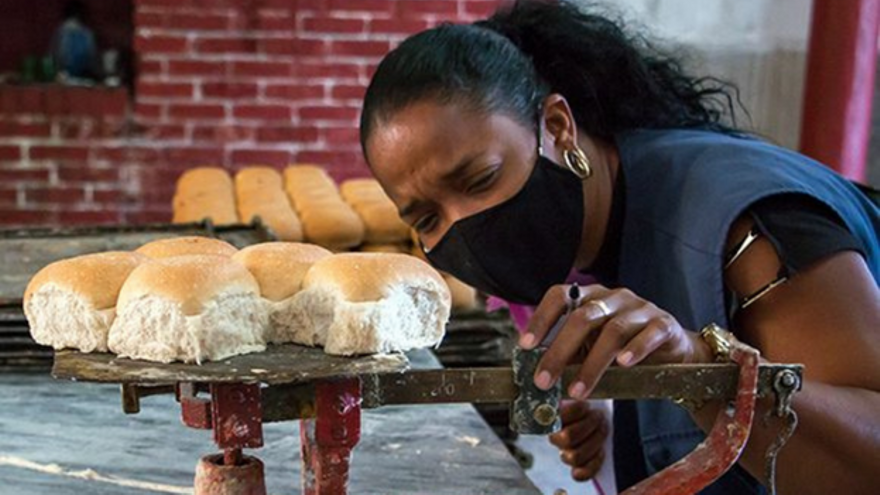
14ymedio bigger14ymedio, Havana, 31 August 2022 — The shortage of wheat flour in Cuba, with the consequent increase in the price of bread and cookies on the market, has quickly reached its critical point. In addition to the difficulties in making the products, there is the absence of an effective mechanism for the import of the necessary raw material.

However, without offering solutions to the problem of hunger, which will be further aggravated by the arrival of the new school year, or facilitating imports for the self-employed, the Cuban Government, more inefficient than ever, has concentrated its efforts on a raid against food vendors.

“Any small or medium-sized business (SME) can, in theory, import products,” a cookie producer in Sancti Spíritus tells 14ymedio. “Of course as long as you can find them. What you can’t do is go to another country and bring a container of flour, for example, to sell here to producers who need it for their businesses.”

“A month ago,” he continues, “when the disappearance of flour began, I went to Cubaexport to request the import of the quantities I needed. But they can only supply small amounts, so dealing with them doesn’t work. The same thing happened to me with other state import routes: they’re a problem.”

From Havana, they told him about someone who sold flour in quantities: “They told me it was legal, but of course you always know what’s happening.” continue reading

The producer says several of them met and went to the Government to request permission to import a container of flour that they would later distribute among all. “The officials straightened us out,” he laments. “The justification was that you can make contract as a SME or self-employed person, under the terms of the Government, but that collectively you can’t. “That’s reselling,” they told us.

The sellers of Sancti Spíritus have begun to approach the official reporters on the street. “Now they say that from next week we will not be able to sell any product with bread or wheat flour. Do you know about this?” they asked the author of a chronicle published in the newspaper Escambray about the shortage of flour in the province.

The journalist, who advances along Espirituano Boulevard overwhelmed by the “stratospheric prices of almost everything,” has to admit his ignorance when citizens demand explanations from him in the face of the unstable fluctuations in bread and cookie prices.

Another seller suspects that “the provincial government banned its sale and we don’t want to take risks.” At twenty or twenty-five pesos, the packages of cookies exceed 120, that is if you manage to “capture” some improvised merchant passing by on bicycle or on foot.

The rise in prices is an expression of doubt and insecurity on the part of the self-employed, the journalist recognizes, but when he must point out a culprit, he doesn’t look for him in the bureaucracy of state trade, but in the producers themselves.

Once the “enemy” has been identified, Escambray lashes out at the private sector: “What if because of the war in Ukraine, the price of flour went up on the black market, and people could no longer could get it so easily, and if the price of the dollar on the street exceeded 145 pesos…, in short, a string of excuses to justify the rise in price.”

Not satisfied with making the increase in price and disappearance of flour clear to the official culprit, the reporter goes to the provincial authorities. Ricardo García Hernández, coordinator of Programs and Objectives of the provincial government of Sancti Spíritus — the same person who declared the “innocence” of the officials who ordered the destruction of a patrimonial locomotive of 1917 in Jatibonico — makes his position clear: “There is no justification for private companies to continue raising prices.”

The Government has not issued any prohibition, he says. It’s rather a strategy of the private sector to “manipulate the people” and justify the rise in prices.

“Here we haven’t talked about prohibiting anything; we haven’t even restricted prices, although we draw attention to some abusive prices that we’ve detected in recent days with respect to cookies and bread,” says the official, washing his hands of the problem.

He warns, however, that the government has already released a pack of inspectors throughout the province, with instructions to “detect any illegality associated with the production of such food.”

After concluding his meeting with García Hernández, the reporter ignores or pretends not to know why food prices in Cuba are rising: “If the government of the province hasn’t banned the sale of bread, cookies, sweets or any product that contains bread or wheat flour, why then do some insist on constantly raising prices? Why is it so easy to keep squeezing the already battered pocket of the workers?”

As in Sancti Spíritus, other state media have turned to local governments to repeat the pantomime of an “official explanation.” In each of the cases, the official invokes the note published by the Ministry of Internal Trade on August 23: the shortage is due to an “intensification of the blockade [i.e. the US embargo], the current international logistics crisis and the financial limitations of the country,” which has limited its imports of wheat.

On the other hand, the authorities ask for more “creative resistance” and offer examples such as that of Gabriel Pérez, a young man from Guanabacoa who makes “alternative” flour. Together with his sisters, Pérez sold an apartment in Havana and bought a plot of land to “get into the flour business.”

The farmers of the area taught them some cultivation techniques that they then took advantage of to make their brand, Bacoretto. Its product, which the Government exposes as an emblem of self-ownership, manufactures flour from carob, rice, cassava, coconut and banana. “It’s the same thing that has always been done, many years ago, in the Cuban east and in the countryside,” Pérez says, to reassure his clients.

While the official press interviews “inventors” of flour and seeks to absolve the Government of all guilt, Cuban mothers are still concerned about the coming school year and the impossibility of offering their children bread to take to school as a snack. Families continue to buy bags of cookies at inconceivable prices, and producers try to maintain a “low profile” in front of inspectors who, more than criminals, are looking for scapegoats.

Translated by Regina Anavy

____________

COLLABORATE WITH OUR WORKThe 14ymedio team is committed to practicing serious journalism that reflects Cuba’s reality in all its depth. Thank you for joining us on this long journey. We invite you to continue supporting us by becoming a member of 14ymedio now. Together we can continue transforming journalism in Cuba.

‘El Toque’ Denounces Harassment Against its Journalists in Cuba

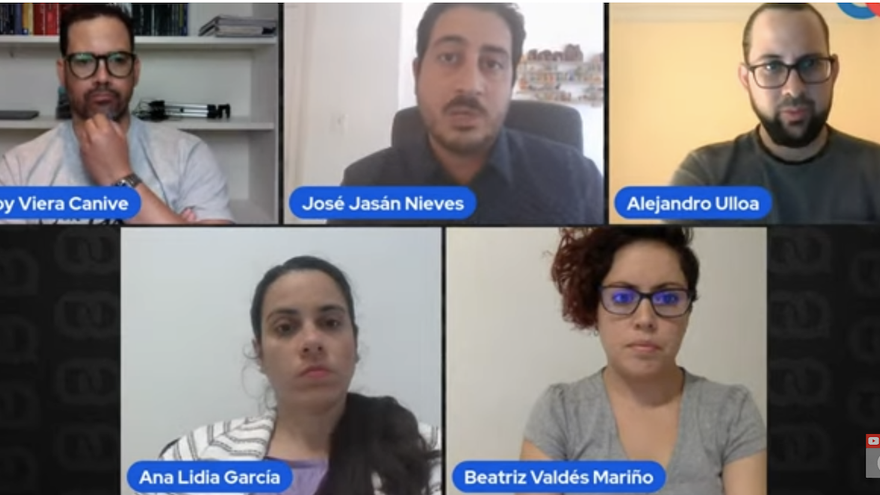
Members of El Toque during their virtual press conference this Wednesday. (Captura)

14ymedio bigger14ymedio, Havana, 1 September 2022 — The editorial team of the independent news source El Toque denounced on Wednesday, from its editorial office in Cuba, the harassment by State Security of nine young journalists, who, as a result, gave up their jobs.

During a conference broadcast on YouTube, the directors, residing abroad, answered the questions raised that same day by an editorial entitled “The night will not be eternal,” using a phrase from the opposition leader Oswaldo Payá.

Four of these young people, Mauro Díaz Vázquez, José Leandro Garbey, Aleiny Sánchez and Meilin Puertas, were “regulated” [Translator’s note: The term chosen by the regime to mean ’forbidden to travel’] before they were able to travel to Argentina, where they had been invited to participate in the Media Party, one of the most important regional journalism events.

José Jasán Nieves, director of the media, explained that on their ignoring the travel ban, State Security subjected them to “direct and indirect” pressure to give up their jobs.

Nieves describes the methods of the political police as “a mechanism of psychological torture,” a “term that may sound strong,” but perfectly describes the actions of the repressive bodies of the Cuban Government, which has declared an “open war” on anyone who contravenes official propaganda. continue reading

According to the report from these young people, they were asked to make public their resignation from El Toque, to film a video of “self-incrimination” that, Nieves alleges, has a lot to do with the famous Padilla Case for its “Stalinist resonances.” It was an exercise of “sadism,” he insists, which Humberto López or some other “person of the regime” will then use to carry out a ’disqualification’ campaign against them, that is a “character assassination.”

For his part, Eloy Viera, coordinator of the El Toque Jurídico space, mentioned that it’s difficult to “find legality” in the actions of the Cuban regime. “Only propaganda is admitted,” he said. The rest is not allowed, and there is a tendency to use the law as a mechanism to “legitimize human rights violations,” appealing to concepts such as national security.

After its denunciation, the editorial team took advantage of the moment to reflect on the context of independent journalism on the Island, from the complaints of the artists before the Ministry of Culture on November 27, 2020, and the protests of July 11 of the following year.

On the other hand, he discussed two points with which the Government usually disqualifies the work of this medium: the monitoring of currency exchange rates in the informal market and the financing of the page. On the first, he explained that transparent and public algorithms are used to reach the daily figure that is made known to users, and as for the economics of the medium, he explained that no program or institution has ever intervened in its editorial agenda.

It’s logical that “a power that needs us to live in an alternative reality” attacks the opposition “with all the repressive force of its apparatus,” added Nieves, who also lamented the exile into which the main directors of the medium have been forced.

“Thanks to technology, it’s becoming easier to continue reporting about Cuba even if we’re not in Cuba,” he said, and indicated that his team, which he described as “multilocated,” will find “ways” to communicate from abroad, “because they will not silence us.”

Nieves specified that the situation is not exclusive to El Toque, but that other media have experienced similar “repressive waves” in recent years, which “is nothing more than another expression of the circumstance and the general crisis that our country is experiencing.”

Translated by Regina Anavy

____________

COLLABORATE WITH OUR WORKThe 14ymedio team is committed to practicing serious journalism that reflects Cuba’s reality in all its depth. Thank you for joining us on this long journey. We invite you to continue supporting us by becoming a member of 14ymedio now. Together we can continue transforming journalism in Cuba.

My Private Gorbachev

Mikhail Gorbachev in 1991 during the final session of the Supreme Soviet. (EFE/EPA/Vassili Korneyev)

14ymedio bigger14ymedio, Reinaldo Escobar, Havana, 31 August 2022 — In April 1985 Mikhail Gorbachev appeared before a full session of the Soviet Union’s Communist Party Central Committee to present his initial proposals for what would ultimately be known as perestroika (restructuring). My friend, the poet and journalist Julio Martinez, was the first to warn me that what was happening in the USSR was unprecedented and could have repercussions for Cuba.

At that moment we became “perestroikos,” addicted to News from Moscow, a weekly publication that for years had been sold on news stands but which overnight became a source of revelations on the failures of Stalinism and what had been known as real socialism.

The fantasy that our own country could undertake a similar restructuring, and the informational transparency that came with it (glasnost), thrilled those of us who still believed in the myth of socialism with a human face. Though we were many, few dared to publicly align themselves with this experiment.

Gorbachev’s actions, almost 10,000 kilometers from the island, had a lasting impact on me. At the suggestion from my poet friend, I decided in early 1987 to leave my comfortable position as a journalist for Cuba International, a monthly magazine dedicated to sweetening our reality, to become an op-ed columnist for the newspaper Juventud Rebelde, from where — oh, how naive! — I tried to promote a kind of tropical perestroika.

At a historic meeting with students from the University of Havana’s School of Journalism at the headquarters of the Cuban Communist Party Central Committee, the then all-powerful Carlos Adana announced that there continue reading

would be no perestroika happening here and that it had been decided to suspend distribution of News from Moscow, Sputnik and New Times, the three Soviet publications that gave breath to Cuba’s pro-reform intellectual environment.

This was in October 1988. In December of that year I was fired from Juventud Rebelde and prohibited “for life” from practicing the profession of journalism.

The politician who has died at age ninety-one did not succeed in his goal to expand socialism. Instead he caused the fall of Eastern Europe’s communist bloc while managing to turn me into a free man. I am indebted to him and to my friend Julio Martinez, who ended up committing suicide in exile.

____________

COLLABORATE WITH OUR WORKThe 14ymedio team is committed to practicing serious journalism that reflects Cuba’s reality in all its depth. Thank you for joining us on this long journey. We invite you to continue supporting us by becoming a member of 14ymedio now. Together we can continue transforming journalism in Cuba.