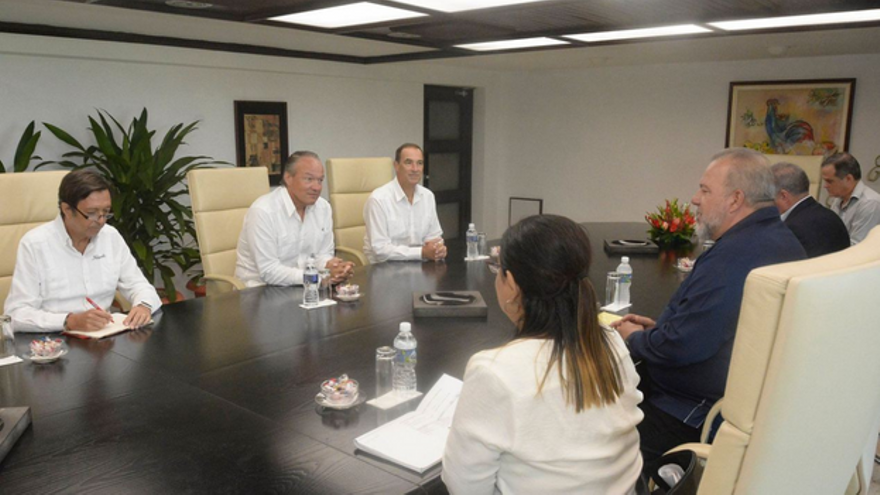
The collective maintains that it’s necessary and urgent to recover the republican project. (14ymedio)
14ymedio, Havana, 8 September 2022 — Members of the Cuban opposition inside and outside Cuba announced their support for “D Frente,” a group of “coordination of plural Cuban civil and political actors, whose central objective is to achieve the refounding of the Republic, guided by José Martí’s idea of building a country ’with everyone and for the good of all.’” This is how the collective is defined in a message made public this Wednesday on their Facebook page, in which they informed the public about their founding.
The united organizations in this “Front” and their representatives are Luis Rodríguez Pérez, from the Association of Mothers and Relatives of Political Prisoners for Amnesty; Ileana de la Guardia, from the Council for the Democratic Transition in Cuba; Enrique Guzmán Karell, from the Center for Studies on the Rule of Law and Public Policies for the Next Cuba; Yunior García Aguilera, from Archipíelago; Jorge Masetti, of the French Association for Democracy in Cuba; and Yanelys Núñez, of the San Isidro Movement.
D Frente highlights in its statement that it considers “democracy and the rule of law” as “the best way to achieve inclusion, political pluralism, the sovereignty of citizens and the civilized rules of coexistence.”
The document made public yesterday by D Frente establishes in its road map five fundamental ideas: amnesty for political prisoners and the decriminalization of dissent; work for the full recognition of popular sovereignty and the end of the Communist Party as the only leading force of society; the search for the effective rights of free expression, information, press, demonstration and assembly, among others; the promotion of a new electoral law; and the creation of legal, institutional, civic and cultural conditions that favor the convening of a constituent process.
In addition, the Front proposes the holding of a plebiscite “so that the people, in the exercise of popular sovereignty, decide.”
The collective initially established its principles, which include: respect for the full dignity of the individual and human rights; the condemnation of all forms of violence, including that of the State; the promotion of a pluralist dialogue and national reconciliation; the commitment to peaceful actions of social and political activism, resistance and negotiation; respect for all political and ideological creeds, religions and gender identities; respect for national sovereignty, non-interference and rejection of unilateral actions contrary to international law. continue reading
The new platform maintains that it’s necessary and urgent to recover the republican project in the face of an authoritarian regime that is apathetic about poverty, exclusion and violence: and for this it has appointed a Provisional Coordinating Committee that will prepare a proposal for statutes, a road map for action and other operational issues. The members are Elena Larrinaga, Manuel Cuesta Morúa, Boris González Arenas and Michel Fernández.
Yunior García Aguilera, one of the signatories on behalf of Archipíelago, tells 14ymedio that the initiative is still in a very preliminary phase and needs work, but that he joined the project because of its comprehensive vision. “What I find interesting is the breadth it has, with a wide range from one side and the other of the [ideological] spectrum, and, above all, because I think that the strategy within it for how to achieve these objectives is a little clearer.”
Aware that democratizing political initiatives have been and are multiple, some even with the same members, García emphasizes that this proposal has “an intent of balance, objectivity and search for realistic strategies to achieve democracy in Cuba. Now we’ll see what happens; it’s better that there are four or five attempts to coordinate than none, but it remains to be seen. We have work to do,” adds the playwright, currently exiled in Madrid.
The birth, however, has not been without controversy. Hours after the text was disseminated, Salomé García Bacallao, of the organization Justicia 11J, called for the inclusion of the signatures of four relatives of political prisoners who, in his opinion, had not wanted to appear on the list. D Frente claims to have received the list from the Association of Mothers and Relatives of Political Prisoners for Amnesty. But a Facebook user, the father of a prisoner, says he doesn’t know that group and wants information.
Translated by Regina Anavy
____________
COLLABORATE WITH OUR WORK: The 14ymedio team is committed to practicing serious journalism that reflects Cuba’s reality in all its depth. Thank you for joining us on this long journey. We invite you to continue supporting us by becoming a member of 14ymedio now. Together we can continue transforming journalism in Cuba.
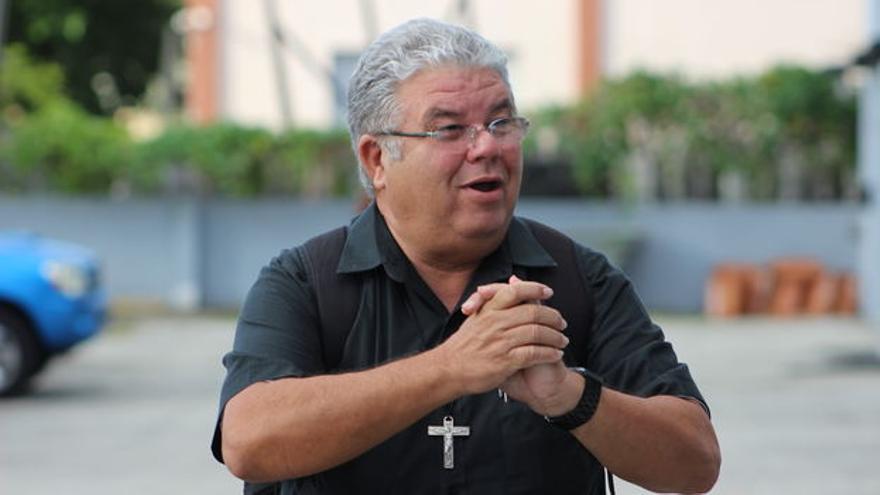
José Conrado Rodríguez, born in 1951 in Santiago de Cuba, is one of the most recognizable critical voices against the government in the Cuban ecclesial panorama. (Facebook/José Conrado Rodríguez)
During the celebration there will also be a prayer for “peace, justice, national reconciliation and freedom for all Cubans.”
Conrado, born in 1951 in Santiago de Cuba, is one of the most recognizable critical voices against the government in the Cuban ecclesial scene. Accustomed to harassment by State Security, he was the author of two open letters to Cuban leaders and several books that address the issue of faith and civil society within totalitarianism.
In 2021 and after several months without being able to leave Trinidad, the city where he works as a priest, Conrado gave an interview to 14ymedio about the “rise in social temperature” in Cuba. In his words, he attributed to the Cuban government a “very high share of responsibility” for the country’s misery, and pointed out that the authorities “are in no mood to listen, but that they will have to listen.” continue reading
This Saturday a “presidential decree” was issued to posthumously award six members of the Matanzas Fire Department who died in the fire
While representatives of various religious factions and civil society pay their respects to the deceased, the government has made their deaths a political cause.
This Saturday a “presidential decree” was issued to posthumously award six members of the Matanzas Fire Department who died in the fire, who received the June 6 Order, Second Degree.
The decoration was collected by relatives of the firefighters Dios del Nazco, Luis Ángel Álvarez and Pablo Ángel López, as well as the young recruits Leo Alejandro Doval, Adriano Rodríguez and Fabián Naranjo, who were completing their Compulsory Military Service at the time of the accident.
Since several relatives of the deceased, members of civil society and independent media denounced that young Military Service recruits had been sent to the front line of the fire, the Cuban government has done everything possible to rid itself of that responsibility.
The authorities have launched a national campaign to present the death of firefighters, who fell “in the line of duty,” as a “heroic epic.”. With medals, acts and speeches they have tried to cover up the negligence in the management of the fire and the death of several adolescents who did not have the training or the necessary equipment to face a disaster of this magnitude.
With 16 dead and 146 injured, according to official figures, the explosion at the Matanzas Supertanker Base has been described as the worst industrial disaster in Cuba’s history.
Although groups of skeletal remains were located after the fire was extinguished, the Cuban authorities admitted that it was impossible to identify them.
____________
COLLABORATE WITH OUR WORK: The 14ymedio team is committed to practicing serious journalism that reflects Cuba’s reality in all its depth. Thank you for joining us on this long journey. We invite you to continue supporting us by becoming a member of 14ymedio now. Together we can continue transforming journalism in Cuba.
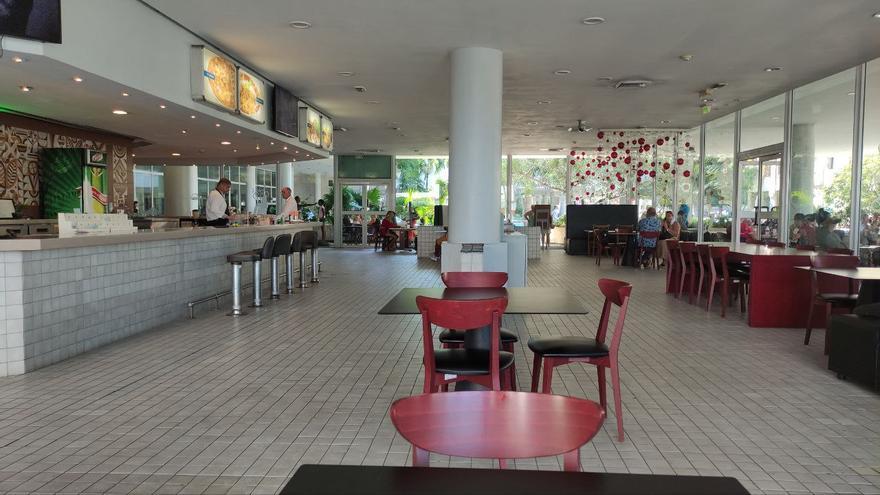
Located in the Habana Libre hotel, the La Rampa cafeteria has suffered the same fate as the establishment that hosts it and has become a small restaurant. (14ymedio)
14ymedio, Juan Diego Rodríguez, Havana, 7 September 2022 — The La Rampa cafeteria, with its terrace protected from the flow of 23rd street, has known better times. Located in the Habana Libre hotel, it has suffered the same fate as the establishment that hosts it and has become a small restaurant of little heritage, whose prices give no respite to the hungry citizen.
The old Hilton, destined to be one of the most luxurious on the continent, opened its doors in 1958 and was nationalized by Fidel Castro only two years later. Time and underdevelopment have reduced its category rating many times, but nothing, not even the resounding Special Period, compares to the debacle it’s going through today, which has already reached its dining establishments without adapting the prices to the poverty of the offerings.
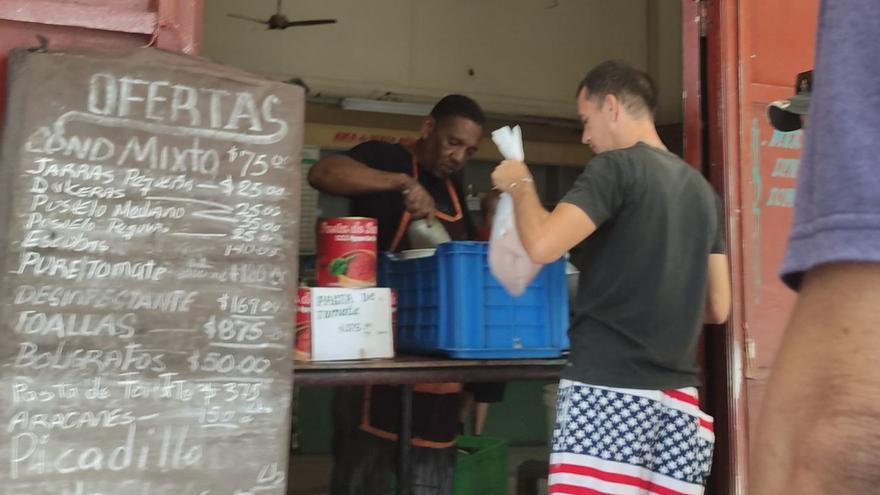
At the entrance of La Rampa, the clerks place a black, battered banner with the menu of the day written in chalk. A ham and cheese sandwich costs 250 pesos; a juice, 100; depending on the amount, the coffee will cost 30, 60 or 70; and for those who are in the mood at the time to buy a drink of 150 pesos, you can choose among a mojito, a daikirí and a cuba libre.
There’s nothing more. Inflation and the lack of products pull each other down, so that not only is supply expensive, but there is no supply at all.
A maid, very busy scaring away two foreigners who have chosen her space, is slow to write down the request of Cubans. “This table is dirty,” scolds the woman, “you can’t sit here.” “So clean it,” they reprimand her. For them, the state of the cafeteria is inconceivable.
At last it’s possible to request something to eat and when, after a long wait, the food arrives at the table, the Cubans devour it quickly and bitterly. The “natural” juice is actually an artificial preparation to which too much ice has been added; the tiny bread, baked with whole wheat flour, is pale and tasteless. The worst: the cook had no scruples about frying “chopped” sweet potato flakes, bitten by insects, and the little insect pieces leave a black border. continue reading
The total cost of a lunch is 400 pesos. As the hotel is partially managed by the Gran Caribe company and not by the all-powerful Gaviota, there is still the option of paying in cash. Otherwise, you would have to present a magnetic card that not all Cubans have.
But that’s not all. There are other examples of the sad decline of the Habana Libre. The 25th and L sweet shop, before full of exquisite sweets even despite the pandemic, offers empty refrigerators, and only a few small, lackluster pieces are offered. “Thanks for the four sweets!” exclaimed an ironic customer on Wednesday. “Now if I want to buy cake, I’ll have to come when you open.”
The El Polinesio restaurant, which was once the gastronomic pride of the hotel, follows the same route as the cafeteria and the sweet shop.
As soon as he approaches the entrance of the premises, the customer is hit by the smell of moisture and accumulated fats stored on the carpet. Where before was the roasting area for its mythical barbecue chicken, which diners could see while it turned golden on the firewood, now there is only one useless area full of dust. From the decor that recalled the wildlife of Polynesia, there are a few masks left on the wall and some wooden logs covered with flies.
Despite this, you need to make a reservation to eat at the premises. “You have to call on the phone or come the day before,” clarifies one of the waiters. After the culinary disappointment at La Rampa, reading the Polynesian menu is enough not to eat there. All dishes exceed 300 pesos, and the famous chicken reaches 500, although it has little to do with the recipe of yesteryear.
Ordering a coffee or a sandwich in a hotel cafeteria and hanging out in a different environment was something acceptable even for some Cubans capable of making the economic effort in exchange for escaping routine and the heat of Havana.
Inflation and the recent measures of the Ministry of Economy to capture as much currency as possible have made this option impossible for the majority of the population, for whom even several salaries are not enough to cover a lunch.
“Where does the rope break? On the weakest side,” a social networks user commented this Friday, attributing to the “crazy monetary reorganization” his decision not to consume again in the prestigious Manzana, Parque Central, Packard or Paseo del Prado hotels. “Bye bye, cubanitos; bye bye, terraces of Havana,” he wrote. In the case of the Habana Libre, you can pay for luxury, but you can’t find it.
Translated by Regina Anavy
____________
COLLABORATE WITH OUR WORK: The 14ymedio team is committed to practicing serious journalism that reflects Cuba’s reality in all its depth. Thank you for joining us on this long journey. We invite you to continue supporting us by becoming a member of 14ymedio now. Together we can continue transforming journalism in Cuba.
The foundation reported on Tuesday, through its social networks, that along with the Cuban, the award also went to the Brazilian Ailton Krenak, the Argentine María Medrano, the Egyptian May al-Ibrashy, the Moroccan Hassan Darsi and the Senegalese Alain Gomis.
The Dutch foundation explains on its website that the beneficiaries of this award “are promising leaders in their field” and “excellent models to follow,” who “have demonstrated transformative power, constant dedication and commitment within their contexts and beyond” and who “deserve much broader recognition.”
According to the institution, these awards are presented at a ceremony at the Royal Palace in Amsterdam and, also, in the respective countries of origin of the winners, in collaboration with the Dutch Chancellery, through the embassies of the Netherlands.
It’s not the first time that the Prince Claus was awarded to personalities of Cuban dissent: in 1999 it was awarded to the magazine Vitral, by Dagoberto Valdés; in 2008, to the artist Tania Bruguera, founder of the Hannah Arendt Institute of Artivism; and in 2010, to the director of this newspaper, Yoani Sánchez. continue reading
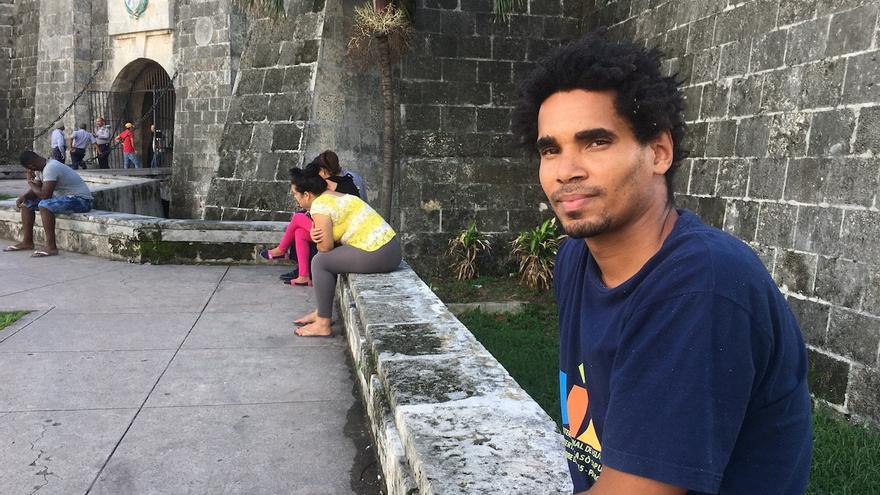
Via Facebook, the MSI congratulated Otero Alcántara, who is serving a five-year sentence in Guanajay’s maximum security prison for the crimes of outrage to the symbols of the homeland, contempt and public disorder.
The artist was arrested on July 11, 2021, before being able to join that day’s protest in Havana, and he was tried along with others, including rapper Maykel Castillo Osorbo, for several accusations that had nothing to do with the demonstrations of that day.
The rapper said a few days ago that he is willing to exchange prison for exile, a letter with which State Security has blackmailed him, to treat an illness that hasn’t been diagnosed in prison. In the case of Alcántara, he has made it clear, at least for now, that he “will not accept exile as an option under any circumstances.”
Both activists refused to appeal their convictions last July. Osorbo then declared, through his friends, that he would no longer lend himself “to that circus,” referring to the trial to which they were subjected.
“It’s been the independent artists who in recent years have continued to give prestige to Cuban art,” the Movement declared in its publication on Tuesday. “In the midst of censorship, repression, economic precariousness and the systemic violence of the Castro leadership, the art organization has managed to impose itself, at the same time that it offers emancipatory references to citizens.”
As an example of awards that have given prestige to Cuban culture in recent years, mentions include the two Latin Grammys obtained for the song Patria y Vida — of which Osorbo is co-author and in the music video Alcántara spoke — the Egeda prize awarded to Carlos Lechuga for his film Vicenta ,and the Special Mention awarded to Sergio Fernández Borrás for his film CubaandtheNight, at the 19th International Documentary Cinema of Madrid.
Translated by Regina Anavy
____________
COLLABORATE WITH OUR WORK: The 14ymedio team is committed to practicing serious journalism that reflects Cuba’s reality in all its depth. Thank you for joining us on this long journey. We invite you to continue supporting us by becoming a member of 14ymedio now. Together we can continue transforming journalism in Cuba.
Filmmaker Lester Hamlet, 51, was sanctioned by the ICAIC after not handing over the official passport. (Facebook)
14ymedio, Havana, 6 September 2022 — Cuban filmmaker and producer Lester Hamlet, who said two weeks ago that the Cuban Institute of Arts and Cinematography (ICAIC) prohibited him from returning to the Island, announced his arrival in the United States.
In a short video shared on his social networks this Monday, Hamlet appears at an airport walking towards a friend whom he hugs, visibly excited. The filmmaker doesn’t identify the place, but accompanies the images with the song “It’s a Beautiful Day,” by Michael Bublé, and the words: “Friendship and loyalty, above all things!” On his social networks, some of his relatives greet him: “Welcome to the United States.”
On August 24, Hamlet posted on Facebook that the ICAIC had imposed a sanction on him that prevented him from returning to Cuba in the next five years.
Immediately, the ICAIC responded with another post on Facebook, denying the sanction and clarifying that they had called the filmmaker because he had left Cuba for Mexico to attend an event in the state of Quintana Roo, with an official passport, which “is only valid within the dates for which it is requested.”
“In the exchange of WhatsApp messages between Lester and the ICAIC official, the latter asked him if he was already in the country. Lester asked to call him on the phone and, in the telephone communication, informs the official that he had not yet returned to Cuba and that his decision was not to do so,” Tania Delgado, vice president of the institution, said at the time. continue reading
In his wake, the Minister of Culture and Sports, Alpidio Alonso, also spoke up and said on Twitter that Lester Hamlet can “enter Cuba whenever he wants. It’s a constitutional right. Anything else they have said since the ICAIC Protocol is a mistake.”
However, the artist insisted that he was prevented from returning, because “they do not want at home those of us who have different ideas” about freedom and homeland. “I accept the gift with honor and embark on restarting my life elsewhere, at the age of 51, full of new dreams and under the impact of knowing exile in the first person,” he wrote on August 24.
Born in Havana in 1971, Lester Hamlet has directed short films of fiction, advertising, musicals and documentaries, and has received several official awards throughout his career, such as the Caracol Award of the National Union of Writers and Artists of Cuba.
Translated by Regina Anavy
____________
COLLABORATE WITH OUR WORK: The 14ymedio team is committed to practicing serious journalism that reflects Cuba’s reality in all its depth. Thank you for joining us on this long journey. We invite you to continue supporting us by becoming a member of 14ymedio now. Together we can continue transforming journalism in Cuba.
Electric generators need fuel, which is also currently scarce on the Island. (Facebook)
14ymedio, Havana, 6 September 2022 — Despair over the lack of electricity has provoked the first amendment to the package of measures “to save the Cuban economy” that, in reality, simply made the import of some non-commercial items to Cuba more flexible. The provisions of the General Customs of the Republic went into effect on August 15, allowing up to two electric generators with a maximum power of up to 15,000 watts to be brought to the island, upon payment of the 30% tax.
But the document provided for market prices very different from the real ones, so the Government has issued a new rule that rectifies the previous one, according to which units of up to 900 watts for 200 dollars, from 900 to 1,500 watts for 500 dollars and greater than 1,500 watts for 950 dollars were allowed.
“When assessing the effects on the residential sector that still persist, as a result of the energy deficit caused by the breakdowns in the national electro-energy system, it’s necessary to authorize, on a temporary basis, the import of generators with a power greater than 900 watts, whose reference value in Customs exceeds the maximum value of two hundred (200) US dollars allowed to be imported by air, sea, post and non-commercial couriers,” says the new resolution, published this Monday in the OfficialGazette.
The situation requires the government “to authorize, exceptionally, the non-commercial import, above the established value for air, sea, postal and courier shipments, of generators with a power greater than 900 watts, which are presented to the office of the General Customs of the Republic until December 31, 2022.”
In addition, a 30% fee will be applied for the payment of customs tax on the excess of the load to be taxed. continue reading
Currently, there are few offers under 500 dollars for generators that exceed 900 watts, neither in the markets of the United States nor in those of Panama, some of the most popular destinations for Cuban ’mules’ and travelers who go abroad to look for electronic or technological products that are absent on the Island.
The measure reflects the urgency of the Government to try to tackle the blackouts and power outages that are bringing so much discomfort and protest to the population. However, the “patch” has limitations.
The largest consumers of this type of device, with such high power, will not be so much households as small businesses that need to stay afloat in the midst of the growing crisis, but the shortage of fuel portends difficulties in supplying the equipment. There are many services that currently keep the sale of gasoline in containers limited, although it’s also not difficult to find workers who break the norm and provide the liquid in exchange for compensation, as long as it’s available. In addition, its storage is considered potentially dangerous and can cause fires if done incorrectly.
Furthermore, the high cost of the generators reduces the possibilities of buying and importing them. Even so, those who manage to do so will see their homes light up in front of those who lack any ability to do the same for themselves.
Translated by Regina Anavy
____________
COLLABORATE WITH OUR WORK: The 14ymedio team is committed to practicing serious journalism that reflects Cuba’s reality in all its depth. Thank you for joining us on this long journey. We invite you to continue supporting us by becoming a member of 14ymedio now. Together we can continue transforming journalism in Cuba.
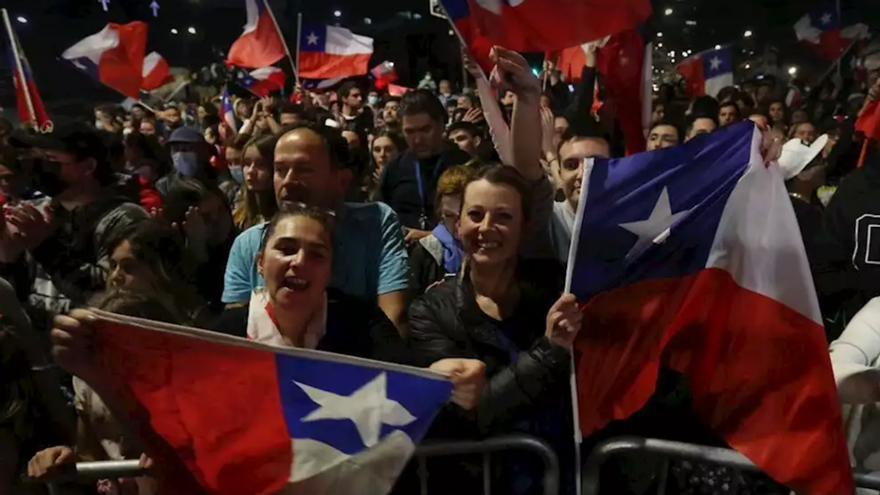
Supporters of the “Rejection” option celebrate the result of the constitutional plebiscite, in Santiago de Chile. (EFE/Elvis González)
14ymedio, Juan Izquierdo, Havana, 5 September 2022 — The rejection by Chileans of the draft Constitution endorsed by President Gabriel Boric hasn’t taken the Cuban pro-government media by surprise, but it still provokes resentment and bitterness.
This Sunday, the proposal was defeated, with almost 62% of the votes, and Chile chose to maintain the current text, written in 1980, and reformed after the fall of Pinochet and the establishment of democracy.
Meanwhile, in Cuba, several reports, articles and opinion pieces, programmed from the offices of the Central Committee of the Communist Party, spared no reproach or nefarious adjective against those who revalidated the “Constitution of the dictatorship.”
An analysis by journalist Oliver Zamora, broadcast on Noticiero Nacional de Televisión, described the approval of the project as “the most important political event in Chile” since the end of the government of Augusto Pinochet. Enthusiastic about the continental turn to the left, no matter if it’s grotesque or outdated, the reporter doesn’t hide his dismay at defeat.
Chileans were supposed to vote to “delete the legacies of the dictatorship,” and achieve the “real, not apparent, change” that only socialism can offer. Zamora points out that Chile rejected the possibility of a “stronger state,” which would guarantee rights and not allow itself to be “conquered” by neoliberalism.
They threw away, in the opinion of the journalist, a “superior” Constitution because of the media campaign of their enemies, which is a sign that Chile is a “polarized society, trapped in the past.” continue reading
Once the result was known, another of the voices of officialdom, the journalist Talía González, insulted the text of the current Constitution, “written during the military dictatorship.” “The Chileans,” she lamented, “denied their support for a text written by leftist and progressive forces,” to which President Boric had given his “total support.”
Both the State newspaper Granma and Cubadebate took advantage of euphemisms so as not to admit the defeat of the preliminary draft. Metaphors, circumlocutions and extensive paragraphs were intended to cover up the “Rejection option.”
“The option of maintaining a Constitution inherited from the time of Augusto Pinochet is announced as the winner,” admitted the national organ of the Communist Party. “Several experts agree that this result is the consequence of a wide campaign of disinformation regarding the new Constitution; and of an incentive, with a lot of money, to reject the text or deliver invalid votes,” it simplified.
“The most likely thing,” the editors said with disdain, is that Chileans will “wake up without the possibility of having a Constitution” with guarantees in health, education, the environment and pensions.
For JuventudRebelde, the opportunity was missed to crystallize “the popular claims of the decades under the laws left by the dictator Augusto Pinochet.” Its previous articles warned, with alarm, that all polls pointed to the “possibility of the triumph of Rejection.”
But the “newspaper of Cuban youth” reassured its readers: “There are totally different forecasts and mathematical prediction studies” based on readings from social networks, which “have predicted that the triumph will be of Approval.”
However, there is something that all the official Cuban media agree on. Despite not understanding the mechanisms inherent in democracy and that it seems inconceivable that the government of a country doesn’t have absolute authority over the approval of the laws it intends to propose, as happens on the Island, each comment about Chile ends up predicting Boric’s triumph by any means.
It doesn’t matter if it is the direct one, which has just failed; or the more subtle and slow one, calling a plebiscite again. “Boric needs it,” say the Cuban newspapers, in order to consolidate the socialist reform in a complex country like Chile, which will not easily give up freedom to choose its future.
Translated by Regina Anavy
____________
COLLABORATE WITH OUR WORK: The 14ymedio team is committed to practicing serious journalism that reflects Cuba’s reality in all its depth. Thank you for joining us on this long journey. We invite you to continue supporting us by becoming a member of 14ymedio now. Together we can continue transforming journalism in Cuba.
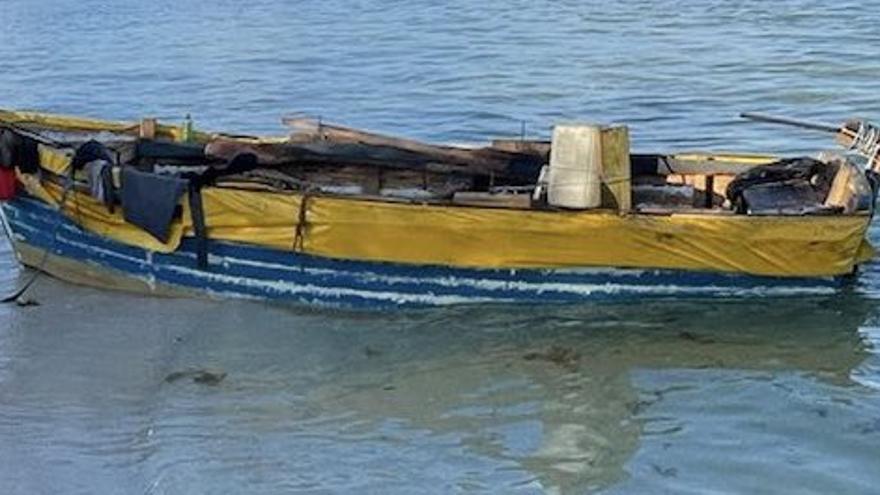
One of the boats in which Cuban rafters were traveling this August. (Twitter/@USBPChiefMIP)
14ymedio, Madrid, 5 September 2022 — The U.S. embassy in Cuba warned on Sunday of the increase in surveillance in the Straits of Florida in the face of the unstoppable flow of people trying to reach the United States by that route.
“The Joint Task Force of Homeland Security increased its operational position to deal with a recent increase in irregular maritime migration. Agencies are increasing patrols and law enforcement by land, air and sea, day and night,” the institution said on Twitter.
“People who try to enter the country illegally by sea will be intercepted and must wait to be repatriated to their country of origin, or to the country from which they left, in accordance with the laws, policies and obligations of the international treaties of the United States,” it added in a second message.
The warnings were issued a day after the Border Patrol detained 42 Cuban migrants off the coast of Florida. Walter N. Slossar, chief agent of the corps in the Miami sector, explained that 21 rafters made landfall in the Dry Tortugas, and another 21 arrived in Islamorada.
That same Saturday, the Coast Guard had suspended the search for a Cuban who disappeared in Islamorada after overturning a boat. With him were 20 people who were rescued and will be repatriated to Cuba, and four others who managed to make landfall. continue reading
Operations of this type do not cease, in any case. On Friday, September 2, the Coast Guard repatriated another 37 people from the Island, and in the third week of August the Border Patrol intercepted 96 Cuban rafters.
In total, from October 1, 2021 until last Friday, 5,113 Cubans have been intercepted. The figure is close to that of 2016, when the last major migration crisis occurred. In that period, 5,396 arrived in the United States, a number that could be exceeded in by the end of September, which will mark the end of this fiscal year.
In the last five years, the number of Cubans intercepted at sea by the U.S. authorities had decreased progressively, especially during the pandemic. In 2017, 1,468 arrived, in 2018, there were 259; in 2019, 313; in 2020, 49 and in 2021, 838.
“The Miami Sector of the U.S. Border Patrol is committed to working together with our federal, state and local law enforcement partners in an entire government-wide effort to prepare for and address any potential increase in irregular maritime migration or threats to border security in Florida,” Slosar said.
In addition, Brendan C. McPherson, director of the department and commander of the Seventh District of the Coast Guard, stressed that “illegal maritime travel in the Caribbean is always dangerous and often deadly.”
“The smugglers exploit vulnerable migrants for profit while putting their lives at risk on board overburdened boats that are unfit to sail. These dangerous trips should not be attempted. Safe, legal and orderly migration saves lives,” he added.
Translated by Regina Anavy
____________
COLLABORATE WITH OUR WORK: The 14ymedio team is committed to practicing serious journalism that reflects Cuba’s reality in all its depth. Thank you for joining us on this long journey. We invite you to continue supporting us by becoming a member of 14ymedio now. Together we can continue transforming journalism in Cuba.
14ymedio, Carlos Alberto Montaner, Miami, 3 September 2022 — Mikhail Gorbachev has died at 91 years old. Not that bad. The life expectancy of Russians in 2019, just before the pandemic, was eight years less than the average of people in the Organization for Economic Cooperation and Development (OECD). If you decide to be from Korea, a member country of the institution, I advise you to be born in the furiously capitalist south, and not in the gloriously socialist north. On average, you will live 12 more years (80.5 vs. 68.8) and will be three centimeters taller (168.6 vs. 165.6). But I want to write about Gorbachev, “Gorby” for his friends, which he didn’t have too many of in Russia.
I visited Moscow three or four times during Gorbachev’s last period in the government and Boris Yeltsin’s first tenure. At that time, I was traveling as vice president of the InternacionalLiberal — in the sense that term has in Europe — and as president of the Unión Liberal Cubana. I didn’t meet Gorbachev, although I had friends who did establish a certain friendship with him. Instead, I met Aleksander Yakovlev, his anti-totalitarian conscience and the person who most influenced him. So I can assure that the changes that took place in that tortured region of the planet were due to Yakovlev’s advice.
Yakovlev was a hero of the USSR. He lost a leg during World War II at the Battle of Leningrad, the largest siege in history (900 days). He was barely 20 years old. He was born in 1923 to semi-illiterate, albeit communist, parents in the small town of Korolyovo. He joined the Communist Party at 21 and rose to become the Central Committee’s head of National Propaganda. He knew every last detail of Marxism and began to suspect the Party. It led to the creation of parasitic structures that only served to sustain the leadership, and to give life to ridiculous attitudes such as chauvinism and nationalism. He published an article in 1972 in Literatunaya Gazeta denouncing these attitudes. Brezhnev, who ruled at the time, felt alluded to, and he got rid of Yakovlev sending him as ambassador to Canada. There he would not “harm” the “true” communists, the ones akin to Brezhnev.
Except that in 1983 Gorbachev visited Yakovlev and was dazzled. He was in Canada. He was a lawyer who was simultaneously an agricultural technician. He was the theorist he needed, Gorbachev thought, but he didn’t tell him at the time. There were several days of endless conversations allowed by Aeroflot’s everlasting failures. He articulated like nobody else the defense of glasnost, transparency, because all the economic reforms had already been tried: the New Economic Policy (NEP) in the era of Lenin until 1924, and Stalin until 1929, with few real results, except the initial ones. The virgin lands had been brought into production in the decade under Khrushchev’s rule, more than 300,000 square kilometers (1954-1964). The terror of public discussion and the consequences of popular debate had to be suppressed. In Canada things worked differently. It was a huge and frozen territory, similar to the USSR. Really, glasnost made the difference!
They were two idealistic communists. Both wanted to reform the system without destroying it. Yuri Kariakin, a philosopher and thinker, husband of economist Irina Zorina, an expert in Cuba’s issues, had told me that there was a type of communist, resistant to violence, among whom were Mikhail Gorbachev and, indeed, Aleksander Yakovlev. They wanted to convince their opponents, not defeat them. The history of Russia was full of men and women drenched in blood who had created the myth of the inability of Russians to be obedient to anything other than the threat of punishment. continue reading
Was Kariakin’s story true? I believe it. It’s a matter of time. I have already said that Gorbachev has died without the esteem of the majority of Russians. He is loved abroad. At the same time, Russian society is not willing to go back to collectivism and the one-party system without being tortured.
I read that Vladimir Putin will not attend Gorbachev’s funeral. He is a KGB man beyond redemption. He prefers to convey an image of a fierce man, an image of everything that Gorbachev and Yakovlev hated.
____________
COLLABORATE WITH OUR WORK: The 14ymedio team is committed to practicing serious journalism that reflects Cuba’s reality in all its depth. Thank you for joining us on this long journey. We invite you to continue supporting us by becoming a member of 14ymedio now. Together we can continue transforming journalism in Cuba.
Like an anthill, the people of Santa Clara hunkered down during the early hours at the junction of Cuba and Tristá streets. (14ymedio)
14ymedio, Juan Diego Rodríguez and Juan Izquierdo, Havana, September 5, 2022 — The night begins to cool off over Santa Clara and, after having a bite to eat, the coleros [people standing in line for others, for pay] cross Vidal Park on their way to the currency exchange (Cadeca). The custom is new but the method is as common as poverty and underdevelopment on the island: hold on all night to guarantee one of the first places in line.
The booty: the hundred dollars “per head” that the Government promises to sell to anyone who has a place. Like an anthill, the people of Santa Clara hunkered down during the early hours of Friday at the junction of Cuba and Tristá streets.
It’s a central corner and a crucial one for the movement of the city, interrupted, however, by a long zinc fence, which slows down traffic. The inhabitants of the city are accustomed to going around the obstacle, which “protects” them from the ruins of the old Florida hotel, to reach the Cadeca and the branch of the Bank of Credit and Commerce.
“A tremendous show broke out that night,” one of its readers in Santa Clara tells 14ymedio. “More than a hundred people waiting, and everything is a disaster. A guy started shouting that it was a shame and that he couldn’t take it anymore.”
At ten at night, the man says, the atmosphere was already “heated.” From afar, in the park, the police didn’t lose any time in harassing the coleros. “It’s normal that they patrol that area and, from time to time, intercept a drunkard or an unsuspecting university student and ’invite’ them to enter the guasabita,” he adds.
The guasabita is the name that the people of Santa Clara give to a small gray bus where the officers improvise their “interrogations.” “People leave there on a stretcher,” says the man, “that’s why the coleros also avoid it.” continue reading
But not even a hypothetical beating or an unforeseen arrest stop those who have to exchange their dollars. In the Cadeca, the mechanisms of a gear that no one fully understands and that works based on traps, tricks and bribes, begin to rotate.
The fundamental rule: maintain your ground and be aware of the movements of others. The euphemism par excellence, “taking care of the line,” is the ace up the sleeve of those who appear and disappear, exchange places with someone, or duplicate their place under all kinds of pretexts.
The “dollar line” is confusing and exhausting, with the additional danger of knowing that everyone who goes in or out carries money in their pockets, which tempts the city’s bandits and assailants.
“I’ve even been afraid of standing in line,” admits the man, who says he feels the same neurosis in the Cadeca as in a line for chicken, coffee or cigarettes. The overnight sale of foreign exchange has become another business in the informal market.
“But make no mistake,” he adds, “this is a small business; it isn’t the ‘mafia’ of Santa Clara. This is the same thing that happens when people ‘struggle’ with their ration books for meat or some tobacco. The idea is to spend the time that others can’t or don’t want to spend. That’s why they [the coleros] take a percentage.”
At the moment of greatest agony, when there is no longer any desire to shout or protest, the sun rises. Cadeca workers, very calmly, open the door and start calling the first numbers. But there is no guarantee that there will be enough dollars to cover the demand.
“Everyone knows that you can spend the night here and that it’s a choice,” the man concludes, “but that’s what it is. This is the only country where you can live from standing in line for someone.”
Those who read the daily reports of the official press won’t be able to detect any abnormalities. With subtlety, the Government is recalibrating the balance of exchange: every day it sells the most expensive dollar, but demands to buy it at the lowest possible price.
Meanwhile, exchange rates have skyrocketed on the informal market. The dollar reached 150 pesos on Saturday, according to the monitoring of the digital media ElToque. Those who experienced the instability of the currencies during the Special Period soon recognized that this was the figure at which the dollar came to be valued during the previous crisis.
At exchange rates of 149 and 148 pesos, respectively, the euro and the Freely Convertible Currency (MLC) almost reached the threshold of the US currency. With these figures, phrases such as “recovering the purchasing power of the salary in Cuban pesos” or “single type of exchange,” formulated by Minister Alejandro Gil Fernández, are already terrible jokes of economic humor.
Translated by Regina Anavy
____________
COLLABORATE WITH OUR WORK: The 14ymedio team is committed to practicing serious journalism that reflects Cuba’s reality in all its depth. Thank you for joining us on this long journey. We invite you to continue supporting us by becoming a member of 14ymedio now. Together we can continue transforming journalism in Cuba.
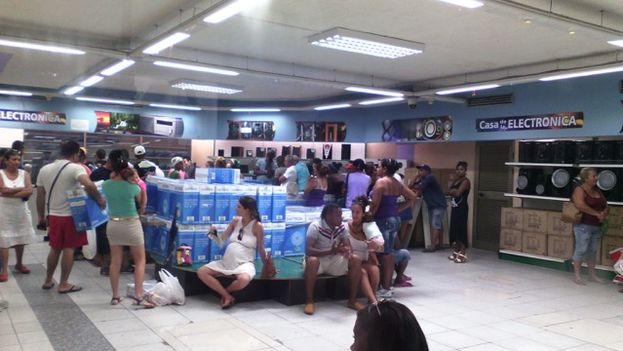
Customers in a Havana electronics store, in line to buy fans, to cool the night air and repel mosquitos. But the fans are useless when there is no electricity.
14ymedio, Elías Amor Bravo, Economist, 5 September 2022 — La Guiteras has been incorporated into Cuba’s national electricity system after overcoming the failures that caused its shutdown, news that in any other country in the world would be inconsequential. But in Cuba, in this agonizing summer of 2022, in which the alumbrones [a word coined to mean periods when the lights are on] have become a daily event in the difficult coexistence on the Island, it’s great news when a thermoelectric power plant produces electricity.
And as the communist regime enjoys the propaganda and the legendary narrative of the events that happen in the country, the article published in the State newspaper Granma is not wasted and says something like “after about four days of uninterrupted work, in which more than 200 maintenance actions were carried out, the largest unitary bloc in the country went online after ten o’clock on Saturday night, and on Sunday morning it exceeded 200 MW.” That doesn’t fool anyone and isn’t a heroic deed. This is a brief description of the usual operation in these cases, by the way, not exclusive to La Guiteras, since the rest of the plants are the same, or worse.
Granma added that “the operators solved the localized breakdown in the boiler and the vacuum damage in the condenser-turbine, and eliminated the causes that led to high water consumption, the origin of the problem that forced the plant to stop.” This is one more example of the work of informational monitoring by the regime so that Cubans understand the official version of the origin of the blackouts and attribute them to short-term or specific causes, which are resolved in this way, when the national electricity system is really a victim of the prevailing economic model, and its destiny is linked to it. That is, in order to enjoy quality electricity again and continuously, it is necessary to implement structural changes that the regime doesn’t even want to talk about. continue reading
And as the Guiteras problem will promptly return, Granma says that “to achieve greater reliability, it will be necessary, as soon as possible, to carry out the proper cleaning of the boiler and eliminate all the defects that limit its efficiency.” (so, what have they done?) and adds in this regard that “the washing of the boiler requires a shutdown of approximately ten days to increase the load to 280 MW and prolong its permanence in the system, without unforeseen exits.” Thus, a shutdown of Guiteras and a return to the blackouts are foreseen.
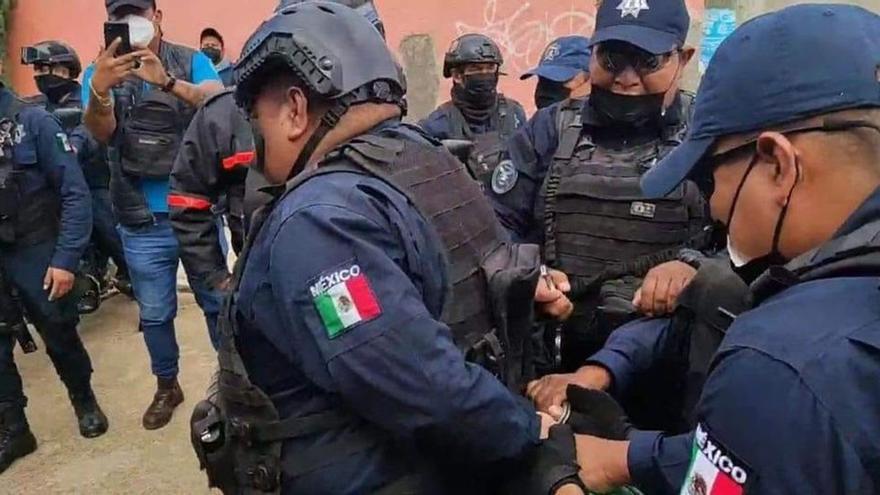
The moment when the handcuffs are placed on a municipal policeman in Oaxaca who was accused by the inhabitants of threats and extortion. (Screen capture)
14ymedio, Havana, 2 September 2022 — At least four municipal police officers from the Mexican state of Oaxaca were arrested for trying to extort money from coyotes, demanding 150,000 pesos (7,500 dollars) so as not to betray 25 migrants from Cuba, Guatemala and El Salvador who were crowded into a large house in the municipality of Pueblo Nuevo.
An argument between the officers and the coyotes alerted the neighbors, who realized that the civilians were not from the area. “They were arguing over a payment that wasn’t made,” a witness who identified himself as Felipe López told 14ymedio. “One of the cops threatened to take out his gun if they didn’t pay.”
According to the source, in the morning a patrol car was parked in front of the house where the migrants were hiding, which had been covered with sheeting the month before. “There was movement at night; they arrived in a van, but we had never seen the people who took them out,” López said. continue reading
“While these guys were arguing outside, we could hear some children crying inside, so we thought they were kidnappers,” the witness said. “With the support of drivers and neighbors, we surrounded the police and the coyotes, until the state security officers arrived. How could we imagine that they were migrants? The coyotes had put down cardboard on the floor for them to sleep.”
According to data from the Ministry of Public Security of Oaxaca, an investigation on the detained uniformed officers was opened for the alleged crime of extortion, but it will be the police unit that will define the punishment.
Oaxaca is a point of reference for Cubans. The Government of Mexico has detected several networks of coyotes in that region that charge between $4,500 and $10,000 for migrants going to the United States. In addition, the so-called central region is one of the main routes that traffickers exploit to transport the Island’s nationals in vans and cargo trucks.
The detained foreigners, including five children, were handed over to the National Institute of Migration of the state of Oaxaca. Their migratory status will be defined in the coming days.
In Ciudad del Carmen, on the Yucatan peninsula this Thursday, the National Guard arrested a group of 16 Cubans and Nicaraguans who were being transferred to the state of Tabasco in a van. A state security source confirmed to 14ymedio that these people would be expelled to their country of origin.
According to official figures, Mexico has repatriated 1,657 Cubans to the Island this year. This Friday, a group of 28 people arrived at José Martí International Airport in Havana.
Meanwhile, from the United States, the Coast Guard repatriated 95 rafters on board the ship WilliamTrump on Thursday, bringing the total to 5,086 Cubans returned since October last year.
These repatriations have not stopped the arrival of rafters from the Island. This Friday, the Coast Guard announced that a boat with at least 25 Cubans was shipwrecked in front of the Florida keys.
“Partners and crews of good Samaritans responded to the shipwreck of a boat and people in the water near Islamorada as a result of an adventure of illegal immigrants,” the Coast Guard said on its social networks. “Twenty migrants were placed in custody, four allegedly landed, and the search for one, reported missing, continues.”
The rescued rafters, the government agency said, are on board a cutter and will be repatriated to Cuba.
Translated by Regina Anavy
____________
COLLABORATE WITH OUR WORK: The 14ymedio team is committed to practicing serious journalism that reflects Cuba’s reality in all its depth. Thank you for joining us on this long journey. We invite you to continue supporting us by becoming a member of 14ymedio now. Together we can continue transforming journalism in Cuba.
The ground meat — what else to call it? — had an almost liquid consistency, a color like vomit and a nauseating odor. (14ymedio)
14ymedio, Juan Diego Rodriguez and Juan Izquierdo, Havana, 2 September 2022 — The street is Carlos III, in Havana. The place: a hovel that is part corner store, part market stall. It could be in any town on the island. A line has formed in front. Havana’s midday sun reverberates through the listless crowd waiting to get in.
With the thriftiness of someone who has the whole day ahead of him, the vendor puts on an apron and grabs a wooden palette to use as a counter. He is a tall, sweaty man for whom washing his hands before handling the food serves as a pointless formality.
“Let’s go,” he says quietly to the first customer, who opens the mouth of his bag, as wrung out and hungry as he. The store is a hodgepodge, which is to say that its shelves display plastic pots, kitchen utensils that will not last more than a week, thick strainers and dull knives. There are also some canned goods and products sold in bulk, like the one for which people are now waiting in line.
Most know what’s to come but no one has a real sense of it until they see it, smell it and feel its texture: some kind of ground meat — what else to call it? — with an almost liquid consistency, a color like vomit and an odor as nauseating as the rest of the street, for 65 pesos a pound. continue reading
One distracted customer makes the mistake of paying for it beforehand. He cannot hide his disgust, which turns his stomach and almost causes him to utter an expletive. “What’s wrong?” asks the vendor as he gently stirs the mixture in the muddy bucket before scooping out a portion of watery ground chicken with his hand.
Nothing,” says the boy as he approaches the makeshift counter in resignation. “Toss it here.”
“They mix it with water to stretch it,” explains an elderly man who is also in line. That’s how they make a little more.” “I remember they sold slop like this during the Special Period,” says another. “And they passed it off as goose paste. The goose is a bird related to the guanajo. Ask your grandparents,” he adds, laughing at his own humor.
Next to the bucket of ground chicken is a can advertised as tomato paste. “No one buys it anymore because people know what goes into it,” says one woman. “Haven’t you seen the online videos? They use guava, banana, some kind of peel, but tomato it’s not.”
After the stench of ground chicken, the air outside has the sweet aroma of syrup and the odor that permeates Cuban soup kitchens. Local residents recognize it as a syrup made in a factory on the same block. It is sold not only at the ground chicken stall but also by a string of elderly people and beggars along Carlos III.
Well-sealed in a backpack, it is now up to Cuban mothers and fathers, armed with their arsenal of tricks, to figure out the most convenient method for cooking it.
Oblivious to all this, however, is the ever-optimistic party newspaper, Granma. As though describing a consumer’s paradise, the Thursday edition allays its readers’ fears. It promises, perhaps in time, “deliveries of rice, beans, sugar, salt and cooking oil” as well as eggs, coffee and a packets of cigarettes of one sort or another.
“Milk is guaranteed” — the paper’s favorite word — “for children, pregnant women and those suffering from chronic childhood diseases, and is encouraged in some areas in liquid form.”
For those who enjoy a nice bath after preparing a banquet from rationed ingredients, a nice “soap made from nuclei, the bimonthly toothpaste and detergent” are promised.
Granma does not ignore, however, peoples’ greatest concern. That is the current shortage of flour, the key ingredient of bread, which they are guaranteed — that word again — as part of a basket of basic foodstuffs. Of course, officials are not responsible for the “changes in hours of operation due to power blackouts or the transport of the raw material.”
The Cuban who arrives home with the “merchandise” dispatched by the tall, sweaty vendor and reads this piece by the official mouthpiece of the Communist Party will, inevitably, have to laugh. If he had known that everything — breakfast, lunch and dinner — was guaranteed, he would not have wasted 65 pesos on the disgusting ground chicken he bought on Carlos III.
____________
COLLABORATE WITH OUR WORK: The 14ymedio team is committed to practicing serious journalism that reflects Cuba’s reality in all its depth. Thank you for joining us on this long journey. We invite you to continue supporting us by becoming a member of 14ymedio now. Together we can continue transforming journalism in Cuba.
Kempinski already has two establishments in the Cuban capital: the Gran Hotel Manzana, inaugurated in 2017, and the Gran Hotel Bristol, in 2020. (Twitter/Manuel Marrero Cruz)
14ymedio, Havana, 2 September 2022 — The Cuban Prime Minister, Manuel Marrero Cruz, foresees more “business opportunities” on the Island with the luxury hotel group Kempinski. In a meeting held on Thursday in Havana with Bernold Schroeder, president of the Board of Directors of the company, Marrero negotiated the expansion of the group in Cuba.
Qualified by Marrero as a “high standard” German company, Kempinski already has two establishments in the Cuban capital: the Gran Hotel Manzana, inaugurated in 2017 with five-stars plus, and the Gran Hotel Bristol, which opened its doors in 2020.
Despite the optimistic tone of the meeting, a recent 14ymedio tour of the hotel cartography of Havana revealed that the Manzana hotel was under repair, with excavators and without customers, while the Bristol, after a brief opening, was closed to the public.
Bernold Schroeder, the manager who met Marrero, has been part of Kempinski since 2017 and has been running the company since 2020. According to the company’s official website, Schroeder boosted the growth of the group in Asia and Europe, which earned him the promotion to his continue reading
present position, and has been responsible, to a large extent, for the rapprochement with Cuba.
In 2019, the Gran Manzana Kempinski hotel was included by Donald Trump in the List of Restricted Cuban Entities, an inventory of companies that could be sued by the U.S. justice system for profiting from properties expropriated after the 1959 Revolution, although several companies registered in the European Union have legal protections against this mechanism.
In the midst of the resounding crisis that Cuba is going through, the Cuban government’s link with a high-caliber hotel company such as Kempinski arouses several controversies. For example, why is government management concentrating on unnecessary projects, when there is a moderate number of tourists entering Cuba, in addition to the hotels being excessively expensive.
Marrero, who served from 2004 to 2019 as Minister of Tourism and was part of the administrative apparatus of Gaesa, personally manages the deal with large companies, while the owner of that portfolio, Juan Carlos García Granda, occupies a secondary place in these businesses.
Reproducing topics and tropical clichés, Kempinski announces Havana as a “city stopped in time, slow,” where people “take their time.” The Cuban government has not offered additional information about the projects that the German company intends to carry out or where they will be located.
The Kempinski group was founded in 1897 and today manages 79 five-star establishments in about thirty countries. On the island, in addition to the Manzana and Bristol hotels, with 246 and 162 luxury rooms, respectively, the company opened the Cayo Guillermo Resort Kempinski, located in the north of the province of Ciego de Ávila, in 2019.
Translated by Regina Anavy
____________
COLLABORATE WITH OUR WORK: The 14ymedio team is committed to practicing serious journalism that reflects Cuba’s reality in all its depth. Thank you for joining us on this long journey. We invite you to continue supporting us by becoming a member of 14ymedio now. Together we can continue transforming journalism in Cuba.
14ymedio, Partos Rotos – a Collaboration of Independent Cuban Journalists, Havana, 30 June 2022 — On August 12, 2015, at two in the afternoon, Paloma López called the ambulance that would take her to Ramón González Coro, an OB-GYN hospital in Havana. Early that morning, she decided to start her labor at home, as she had heard about women being ill-treated at the hospital.
When she arrived, she was six centimeters dilated but her water had not broken. “They took me to the gurney to monitor me, they lifted me and took me to a strange room. Then, without any warning, (the doctor) took out a pointy object, and bam! She stuck it in me, and it hurt. I screamed, ‘what is that!’, and it was to break my water.”
The obstetrician threw all her weight on Paloma’s stomach and used her forearm to press on the uterus to push the baby down. Paloma was startled and struck away the doctor’s hand. As she was leaning on her with her feet practically up in the air, the doctor fell to the floor.
“Look at this bitch, she doesn’t want to be helped! She’s going to kill the baby,” Paloma recalls the doctor shouting.
“Doctor, don’t say that! You have to ask me for permission.”
“No, you don’t have a clue.”
The physician tried to apply the maneuver several more times. Paloma reacted in the same way and continued to push her off. Moments later, while trying to overcome the pain, she finally allowed the obstetrician to climb onto her stomach. “They pulled me. I felt the tearing of my baby girl, how they pulled her out,” she says. “Now I know that it was premature, that it wasn’t an organic birth. And I got a huge tear from the baby down there.” continue reading
A problem in Cuba and around the globe
Over the last two years, an increasing number of Cuban mothers have shared their childbirth experiences on social media platforms and independent news outlets. Their stories have unleashed an obstetric #MeToo on the island.
Some mothers report feeling verbally or psychologically mistreated. Others said they were denied information about what was happening to them or were never asked for consent to perform harsh interventions. Many described their childbirth as a traumatic event in which they were treated as if they had no autonomy and felt that their well-being was irrelevant.
For some, the problem was that they suffered excessive medicalization or aggressive practices. One of these practices is known as the Kristeller maneuver, which involves applying manual pressure on the ribs and has been questioned by the WHO since 1996. Another common procedure is called an episiotomy. It is performed by making an incision in the perineum, a tissue located between the vagina and the anus, to facilitate childbirth. This is often performed without consent and/or when it is not required.
Other patients said they felt neglected or ignored.
Their testimonies have helped shed a light on a problem that happens in most countries, but which had remained especially invisible and naturalized in Cuba: obstetric violence.
This study, Partos Rotos (Broken Births), shows this is a systemic problem in the country. Over 400 women from all provinces participated in the study. They filled out over 500 questionnaires that asked them about their births. Most of the births described were performed either by C-section or vaginal delivery and took place in the last two decades.
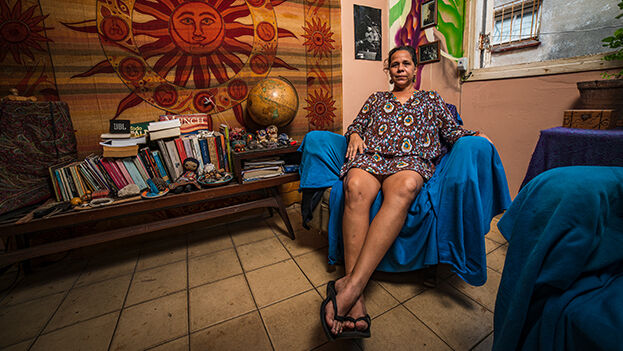
Rainys María Rodríguez. (Partos Rotos)
The research is not based on a representative sample and its results have no statistical validity. However, it is a broad enough sample to provide an overview of how obstetric violence is prevalent in the country.
The interviewees describe a health system in which their requests for pain management are ignored (86%) and aggressive procedures – that are no longer systematically performed in other countries – are still common practice in Cuba. Manual dilatation or tourniquet was performed in almost 50% of the deliveries, and the Kristeller maneuver was also applied in a similar percentage. On the other hand, episiotomies were carried out in three out of four cases.
Respondents also noted that lack of consent and ill-treatment were common. Nearly half of the women voiced that medical personnel acted without seeking their consent, which violates patients’ human rights, according to the United Nations (UN) Special Rapporteur on Violence Against Women.
In addition, 41% of the mothers interviewed reported suffering verbal or psychological violence, and that medical staff ignored their requests or even accused them of putting their babies’ lives at risk.
Cuba is not the only country where these and other violent medical practices against women are still common. This is a global phenomenon that originates in sexism and a patriarchal culture that permeates health systems.
According to Eva Margarita García, a doctor in Anthropology and author of the first thesis on obstetric violence in Europe, obstetric violence is the result of gender violence and medical malpractice. She defines it as the violence that health personnel exercises on women’s bodies and their reproductive life through dehumanized treatment, medicalization abuse, and pathologizing of their physiological processes.
García believes this violence is mediated by a gender bias that infantilizes women and serves as an excuse to treat them in a degrading manner. However, this is such a socially normalized practice that it is often difficult to identify it as a problem.
In Cuba, however, certain factors make this a particularly acute problem. For instance, according to health professionals interviewed for this research, the Cuban health system is a top-down organization in which physicians have little room for reform.
They are under strong pressure to maintain certain statistical indicators, especially regarding infant mortality, and have little incentive to improve the quality of care or consider the mothers’ well-being. Moreover, in a country that is regarded as a medical powerhouse and is under authoritarian rule, the scope for recognizing and addressing the problem is narrower than in other countries.
Sexist stereotypes
In carrying out this report, we interviewed eight medical specialists, four women, and four men, who are actively participating or have previously participated in the Maternal and Infant Care Program (Programa de Atención Materno Infantil, PAMI), a program that centralizes women’s reproductive health in Cuba. All eight specialists chose to remain anonymous for fear of reprisals, such as losing their jobs or being expelled from the Ministry of Public Health (Ministerio de Salud Pública, MINSAP).
Interviews with these physicians suggest that, in Cuba, gender stereotypes that influence how women are treated during childbirth are still very much prevalent in the health care system. For example, a general practitioner with decades of experience in the country’s central region justified several practices of obstetric violence, “especially in women with delayed labor or in women who are namby-pamby or stubborn.”
There is also an inclination to see women in labor as ignorant and/or expect them to be subordinate. Informing, asking for consent, allowing them to have companions, or simply walking around during labor is seen as an obstacle for the professionals to carry out their job. As the interviewed specialists stated, these are not common practices. “Priority is given to the baby, caring for the newborn, and that the mother does not bleed, forgetting the psychosocial being,” a gynecology and obstetrics resident in Holguín explained.
Some obstetricians also believe that childbirth is always painful, so alleviating suffering is therefore not a priority. In addition, patients who request C-sections are seen as seeking “comfort” and are “forced” into vaginal delivery.
The expectation that women obey medical indications without protesting is also common among health personnel. This notion is so deeply rooted that the women themselves have begun to tell each other that it is better to “collaborate” or “behave well” – expressions that were regularly mentioned in the questionnaires – to avoid worse forms of abuse.
Sandra Heidl, a psychologist and feminist activist who gave birth in Cuba when she was 19, believes that “the product, the fetus, is the most important thing” to the Cuban public health system, and women take a backseat as the recipient of the product. Women take or are unaware of this violence because they want the best for their unborn child, and they have been told that physicians must decide for the babies’ sake,” Heidl explains.
This subordination of the patient to the physician is a feature of what is known as the Hegemonic Medical Model (HMM). Daylis García Jordá, the author of one of the few studies on obstetric violence in Cuba, considers that the HMM tends to see the patient as ignorant or the bearer of wrong ideas, while knowledge resides only within the physician. García Jordá explains that, despite the recent criticism against this model, it continues to be in full force. As a result, it gives way to a childbirth experience in which the physician matters and the patient does not.
In fact, health systems in many countries are designed to meet the physicians’ needs, according to Dr. Matthias Sachsee, a German specialist in health care quality with experience in Mexico, and Thaís Brandao, a Brazilian researcher in sexual and reproductive health.
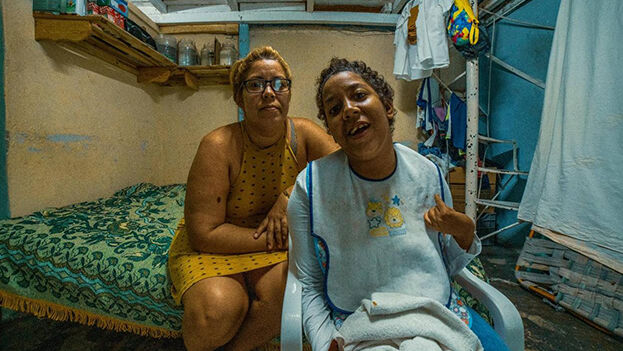
Yusimí Rodríguez. (Partos Rotos)
Cuban medical professionals acknowledged that certain violent practices are performed due to the physicians’ convenience, such as the indiscriminate use of episiotomy. “It’s the easy way for the specialists to perform the delivery, to do it quickly because they just want to get it over with,” said a Gynecology and Obstetrics in Holguin.
Other common practices such as prohibiting pregnant women from walking or having company, performing enemas, or denying them pain medication are also related to the needs of the system or the physician’s preferences, without consideration for women’s needs and suffering.
For all these reasons, researcher Brandao says obstetric violence has “institutional roots” and its main cause is the system’s unwillingness to address the problem. In her opinion, obstetric violence does not stem from a lack of resources. “You can promote healthy, non-violent births even without any resources, because (as a government or system) you understand that this is what’s important,” states Brandao.
A unique birth
Since 1975, almost 100% of births in Cuba take place in public hospitals. Unlike pregnant women in other countries, Cuban women have no say in where or how they give birth. They must give birth in the only existing system controlled by the Minsap. Thus, Minsap’s rules, priorities, and shortcomings broadly shape the experience of giving birth on the island.
That institution has shown that its main objective is to keep certain indicators low, especially infant mortality: the number of children who die during or shortly after childbirth. This is the rate that the authorities proudly present every year to showcase the success of their childbirth care system. “It is the best-kept statistic in the ministry,” assured one of the interviewed physicians.
“In Cuba, the system is structured in a way that responds more to numerical parameters and works in response to the professionals’ needs or those of Public Health as an entity when bringing a new life into this world, and not of the women and their families,” specifies academic García Jordá in her study.
The interviewed professionals agreed that the Minsap pressures them to deliver excellent statistics and comply with strict protocols, which discourages them from introducing changes or acting according to their medical judgment. It is also common for them to have to meet quotas, for example, on the maximum number of C-sections they can perform.
Many physicians condemn the pressure they are subjected to. Some feel the inflexibility of the protocols makes them mere executors of policies designed by bureaucrats who don’t know the reality in which they work.
“It is unacceptable that a program involving human management is based on meeting indexes and parameters. Physicians cannot be thinking about numbers, figures, or emulations while caring for a patient’s life. So, you work under a lot of pressure”, states a retired obstetrician who worked in the field for over 20 years.
A recently graduated physician agrees. “For me, (OB-GYN) is one of the specialties where you have to be most careful because heads are cut off at any moment for any reason.”
From the authorities’ perspective, the system works because they achieve the statistics they aim for. Fewer mothers and newborns die in Cuba than in most countries in the region, which allows the government to boast about its system. The infant mortality rate is very similar to the rates presented in countries such as the United States. In addition, maternal mortality, although much higher than in the countries in the Northern Hemisphere, is among the lowest in Latin America.
However, there no statistics are collected on obstetric violence or the absence of humanized childbirth. Despite the abundance of Minsap protocols, the professionals interviewed agreed that the principles of humanized childbirth, which some countries are now starting to apply, are little known in Cuba.
“If you refer to the international bibliography, you learn about it, but the practical course does not mention it. It’s not a topic that’s even discussed,” says a gynecology and obstetrics resident from Holguín.
In 2018, the World Health Organization (WHO) established a series of recommendations for labor. The first element it recognizes is that childbirth cannot be subject to strict protocols, such as those applied in Cuba. Instead, care should focus on the woman’s state and her baby’s, “their wishes and preferences, and respect for their dignity and autonomy.”
WHO recommends encouraging pregnant women to move around and give birth in an upright position. It also suggests allowing them to be accompanied, eating or drinking during labor, not separating babies from mothers right after birth, not applying techniques that artificially speed up natural processes, limiting vaginal touches to once every four hours, and performing episiotomies only if strictly necessary.
These recommendations not only respect women’s rights but also yield positive results from a medical standpoint. Multiple studies have shown that the more comfortable and accompanied pregnant women feel, the greater the probability that their vaginal delivery will be successful and, in turn, aggressive techniques will be required to a lesser extent.
However, questionnaires and interviews with professionals in Cuba show that these recommendations are blatantly disregarded in the country.
Not caring nor humane
Many women described giving birth in an environment that lacked empathy, warmth, or humane treatment. Others directly reported being mistreated, coerced, and verbally abused. Minsap professionals deprived them of the experience they wanted to have when their children came into the world. This contributed to the birth becoming a source of trauma.
Many interviewees stated that they experienced psychological sequelae after their birth. In 30% of deliveries, women were afraid of getting pregnant again or reported having repetitive images of particular moments when giving birth. In one of every four deliveries, women experienced mood swings, difficulty sleeping, or fear of confronting the health care system.
In addition, in 14% of childbirths, women stated they suffered from postpartum depression.
“You will rarely see (these sequelae) reflected as a diagnosis in the medical records,” explains one of the professionals. “These patients are seldom referred to mental health services for treatment, which ends up affecting the physical health and quality of life of the patients and their families,” they added.
The verbal or psychological violence, the lack of empathy, or the feeling of neglect described by the women in the questionnaires have deep causes related to the misogynistic culture and the Hegemonic Medical Model. The verticality of the Cuban health system only aggravates this context, according to the consulted physicians.
Several professionals admitted that they end up passing on the pressures and shortcomings they experience to the women they are treating. This issue can be expected to intensify as the country’s medical services have deteriorated due to a lack of personnel and resources.
Currently, medical personnel in Cuba earn between 190 and 320 USD per month, at the official exchange rate. To survive, some of them accept gifts or cash from patients and usually reserve the best care and the few materials available for their treatments.
“Obstetrics and gynecology are among the specialties that most rely on this informal exchange. If you don’t have your doctor and you ‘don’t go through the gutter’, as they say, you’re screwed,” a recently graduated doctor said from her own experience becoming a mother.
Despite the profusion of healthcare professionals in the country, interviewees described increasingly intense work schedules and shifts due to staff shortages. After shifts of three or four consecutive days on call, it is common for PAMI staff to have to work in health centers or make home visits.
At the same time, the demands to meet statistical targets show no signs of slowing down. “We have to produce results at the same level as countries that have services with all the proper conditions,” in the words of a specialist quoted in Lareisy Borges Damas’ thesis. Borges Damas is a doctor in nursing who has researched models of humanized childbirth.
Several professionals claimed to have lost motivation working with this framework, which negatively affects the quality of the care they provide.
As a gynecology and obstetrics resident from Holguín said, “Nobody wants to work here, so they let this violence happen as long as it doesn’t affect the statistics. There can be ill-treatment as long as the pregnant woman and the baby do not die. That’s more or less how it works.”
____________
COLLABORATE WITH OUR WORK: The 14ymedio team is committed to practicing serious journalism that reflects Cuba’s reality in all its depth. Thank you for joining us on this long journey. We invite you to continue supporting us by becoming a member of 14ymedio now. Together we can continue transforming journalism in Cuba.
 14ymedio, Havana, 8 September 2022 — Members of the Cuban opposition inside and outside Cuba announced their support for “D Frente,” a group of “coordination of plural Cuban civil and political actors, whose central objective is to achieve the refounding of the Republic, guided by José Martí’s idea of building a country ’with everyone and for the good of all.’” This is how the collective is defined in a message made public this Wednesday on their Facebook page, in which they informed the public about their founding.