
The Registry Offices on my planet have become human concentrations or people’s saunas. The long lines overflow to the outside of the building, most of them ending on the street, sidewalks and curbs, where those who aspire to be assisted hang around, waiting for the hoped-for moment. At lunch time, the office is closed and everyone must leave and wait outside. It should be noted that so far none of these sites has a computerized database.
None of them provides enough seats to accommodate everyone; insufficient ventilation is guaranteed. Of course, there is an exception that confirms the rule: the Central Havana Registry – perhaps the only one that works well, based on my personal experience.
I think I have visited almost all of them in the capital, including the one in Santiago de las Vegas, which like all of their species are located in houses and apartments, abandoned for several decades by their former owners and later by the State, which took possession of them without giving them any maintenance in all these years (including cleaning them).
The people who work there do not enjoy appropriate working conditions and generally display a very bad temper. They do their work as if they were doing a great favor to the applicant, even making an effort so that it will not go unnoticed. This forces many users to arrive at the place bearing some small gift. If not, sit down and wait! In the end, whether they do their work well or badly, they will receive the same meager salary.
After waiting for more than three hours to be helped, I was able to notice one of the possible causes of the delay: the long silicone nails, green and with small raised flowers, of the employee who took care of the applications. It was to be expected that she would take more than twenty minutes with each short four-line form to be filled out, in addition to the innumerable times that she would leave her work station for just a moment, to go deal with some small matter in another department, and not taking into account the friends who are allowed to go first, cutting into the line.
I was finally provided with a copy of my application on a recycled piece of paper, written exactly on the previously printed side, almost illegible, but even so I left the place relieved, and even happy to have been able to file my application.
Translated by: Espirituana
September 25 2011


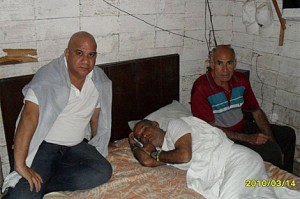 On Tuesday, June 15th, I ran into Juan Juan Almeida in the International Legal Office on 21 24, El Vedado. As we said goodbye, he told me he was starting a hunger strike on that day demanding the exit permit to continue his medical treatment outside Cuba. I visited him twice at his apartment on 41 and Conill before August 23rd, when he suspended his fast at the request of the Archbishop of Havana, who interceded on his behalf before General Castro’s government.
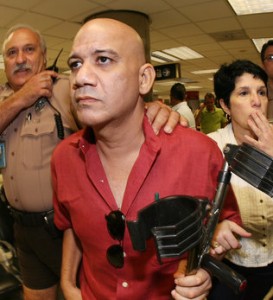 I don´t think he worries much about the conflicting opinions of those who judge him through a political lens. Juan did not distance himself from the power circle in order to climb in the opposition. As I listened to him on Monday, August 23rd, I thought that this charismatic and cheerful down-to-earth Cuban believes more in the smile and the handshake of those who greet him than in all the slogans and hallelujahs he heard since he was born.
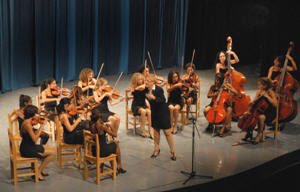 As in medieval times, when music, painting and other artistic expressions were under the wing of the Catholic church, in Cuba culture is sponsored by the State. But artists don’t knock on the doors of cathedrals nor present their projects to the despot, since there is a network of institutions that rule and control film, the performing arts, the plastic arts, books and literature, architecture and even the media.