 Rebeca Monzo, 4 July 2017 — Happy Anniversary to the North American Government and People.
Translated By: Alicia Barraqué Ellison
English Translations of Cubans Writing From the Island
Rebeca Monzo, 4 July 2017 — Happy Anniversary to the North American Government and People.
Translated By: Alicia Barraqué Ellison


A neighborhood dressed in blue.
At the time of the “accident” in 1959, Nuevo Vedado was the latest Havana neighborhood to be developed. Its residents included professionals and famous artists from radio and television. It was an elegant neighborhood, with any number of homes — primarily one or two-story single-family residences — noted for their striking architectural designs, many of which had garnered national and international awards.
Its principal artery, 26th Avenue, was lined with red and yellow acacias (now almost non-existent) and beds of pink and white oleanders, which gave the neighborhood an indescribable beauty. The properties there, now encircled by high fences and imposing ramparts, were demarcated only by perimeter walls not much higher than a foot and a half or borders of small shrubs.
These days the neighborhood is festooned in blue, the color of signs advertising hard currency rental properties. The houses’ current owners, mostly university professors who cannot live on their poverty-level wages and retirees, have resorted to renting out rooms in their homes and apartments. continue reading
Nuevo Vedado is home to one of the tourist market’s main transit hubs: Viazul station, whose buses leave daily for Viñales, Varadero, Trinidad, Sancti Spiritus and Cienfuegos. Due to limited parking available for buses in the area, the station cannot meet the high demand, so it is surrounded by private taxis, which offer the same ride for only 5.00 CUC more than the buses with the added advantage that tourists can be picked up at their respective lodgings.
Among the other big tourist attractions are the city’s zoo, Metropolitan Park (Bosque de la Havana), Civic Plaza (now Revolution Plaza), the National Theater, the Colón Cemetery and the newly famous Art Factory (formerly El Cocinero cooking oil factory), the “coolest” place in the city, where famous figures from the worlds of art and culture can regularly be seen.
In addition to all these attractions, we are surrounded by wonderful restaurants, bars and cafes with various options and prices points for every wallet. The result is a better quality of life for the area’s residents thanks to the increased and ongoing influx of tourists.
Rebeca Monzo, 31 March 2017

Rebeca Monzo, Havana, 16 June 2017 — Cuba is a distant planet. It has nothing to do with the rest of the world, because nothing functions there as in the majority of civilized countries. This “planet” is ruled by the whims of its ancient rulers who have spent almost 59 years doing whatever they please.
Now is when we were supposed to be doing better, thanks to the massive arrival of a tourist trade that for decades overlooked Cuba as a destination because of the innumerable restrictions imposed by the regime–and which now has no choice but to “loosen its grip” in this regard, because the country does not produce goods and is totally bankrupt. Curiously, almost all the tourists I talk with remark that they come to Cuba because they want to experience it before the great changes that are coming. It must be that they want to “feel” firsthand, rather than watch a movie about, a true Jurassic Park. continue reading
Nobody knows what is being done with the money collected via remittances [from Cuban émigrés abroad to their relatives on the Island] and tourism, being that the stores are practically empty, the public transportation service is worse every day, the city grows ever dirtier, and buildings continue to collapse–structures whose extreme deterioration is due to the government never having taken care of them adequately.
Yesterday at the the Panamericana chain store location on 26th Avenue between 17th and 15th Streets in Vedado, I was struck with consternation to see the huge line of people waiting to enter. I asked an employee who told me that they had only one cashier, because the other three had quit their jobs, as had the workers in the personal and household cleaning supplies department. Only one cash register, in the groceries department, was open to the public.
We go on floating in a state of absolute stagnation, where “nothing from nothing” is our daily reality.
Ed note: Rebeca has a room for rent on Airbnb if you are going to Havana. (Additional note: this “advertisement” has NOT been posted at her request or even with her knowledge.)
Translated by: Alicia Barraqué Ellison


Rebeca Monzo, 21 February 2017 — New bureaucratic regulations governing the routes of shared fixed-route taxis have led to the first tangible labor strike by drivers. Of course, strikes have gone on for many years in our country due to the poverty-level wages paid to workers in the bureaucratic and service sectors. As the old saying goes, “the government pretends to pay us and we pretend to work.”
The best known example of the current strike involves boteros (literally “boatmen” — the taxi drivers of cars from the 1940s and 1950s). After bureaucrats set the prices for certain short trips at 5.00 Cuban pesos, the so-called national currency, drivers refused to pick up short-haul passengers. continue reading
After paying a high fee to the government for a license to operate, it is not profitable for a driver to charge 5.00 Cuban pesos when 0.25 CUC* (roughly the same in the other currency) does not even cover the high cost of fuel. Furthermore, anytime a car brakes, there is wear and tear on the tires and battery. And whenever a car door opens to let a customer get in or out, more fuel is consumed. Consider that a tire in this country costs approximately 160.00 CUC, about the same the price as a battery, not to mention that spark plugs go for almost 3.00 CUC apiece.
Boteros are helping to solve the serious problem of urban transport in this country. These new regulations have led to an increase in the number of bus riders, which has in turn led to a deterioration in public transportation.
Why do these same bureaucrats, who say they have adopted these regulations to protect the pocketbooks of average citizens, not work to reduce to extremely high cost of food priced in the national currency and especially in the convertible currency? Obviously, the state guarantees them an auto, gasoline and spare parts, so they are not directly and personally affected by the needs and problems that the Cuban population faces.
In short, the botero is not forcing you to be his customer. It is the state which is forcing you by not attending to or solving, after so many years, the big transportation problems in our country.
Translator’s note: Cuban convertible peso, equivalent to about 6.63 Cuban pesos.


Rebeca Monzo, 20 January 2017 — Our media are filled with praise for the Cuban public health system. This is a subject that foreigners who visit our country pay a lot of attention to, due to the government propaganda and official statistics provided to international organizations, which tourists also show a lot of interest in.
There are two or three hospitals and policlinics shown off to visitors, which are “duly prepared.” Even so, and I know from experience, they are not in the optimal conditions that they should be.
I felt “fortunate,” when for the first time in all those years, I had to go to one of these “model” centers to receive physiotherapy treatment, due to two tremendous falls I took, thanks to the broken streets and sidewalks and in a terrible state, which proliferate in our city. continue reading
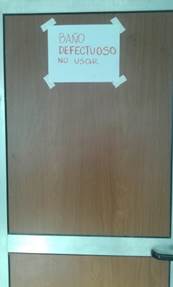
The staff in attendance in this department is good, friendly and prepared, but the conditions for delivering the best treatment don’t really exist. Numerous people come to this department, having suffered some kind of accident or simply suffering from the passage of years.
From the waiting room to the physiotherapy department there is a hallway through which all the patients have to pass, most of them old people with crutches or canes, and they must avoid a perennial puddle of water, where even the policlinic’s pets come to drink. Also, of the two bathrooms for the waiting room, only one is working, the ladies, which the gentlemen also have to use.
The different cubicles where physiotherapy happens are adorned with ragged and dirty curtains, some of them half off. Also, the furniture in the rooms is mostly covered in dust. It seems there are no cleaners or, simply, they are paid so little they don’t do a good job.
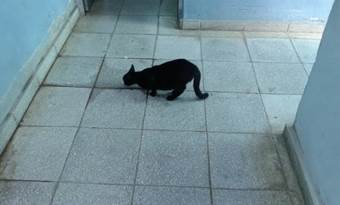
And if that wasn’t enough, the biological wastes are deposited directly into trash collectors, without being put in closed trash bags or incinerated as they should be.
Imagine, if this is the policlinic they show foreigners (only the best areas), you can imagine what the rest of the ones we ordinary citizens have to use are like. And don’t even talk about the hospitals, they’re worse.

Rebeca Monzo, 6 January 2017 — The leadership and the dissidence seem more and more the same to me. Is it coincidence or lack of experience?
At this very moment, if suddenly there were free elections on my planet Cuba, supervised by the United Nations or other countries, I would not know who to vote for.
Lately, what I see and hear most among the dissidents is about travels abroad and buying things cheaply and so-and-so “stayed.” I don’t hear much talk about organizing and meeting to raise awareness among neighbors and friends, with the goal of winning supporters. continue reading
The Cuban people, in general, don’t know any of the leaders from the many existing groups. Not even their neighbors know who they really are and what they do, unless State Security visits them to alert them against the dissidents and presents a false picture of them. Of course, the government takes full advantage of the lack of internet that it has intentionally imposed on us.
Increasingly, sadly, the dissidence is more divided. Everyone aspires to be the “head of the mouse” but they are not resigned to being the “tale of the lion.” The heads of the groups are those who receive economic support from abroad and distribute it how they wish, along with the courses and trips to different events in distant countries, the content of which is shared with no one.
This, without counting those who have a police file on their “dangerousness” and then, at the first opportunity, leave the country for good. Apparently, without realizing it, they are giving the government what it wants.
How is it possible to change the destinies of a country if the opposition groups within the island are distancing themselves from each other and, therefore, it is so difficult to effectively dedicate themselves to spreading democratic ideas among the people?
It is time to reconsider and smooth things over and try to become united, ignoring differences, then denounce the most acute problems suffered by the Cuban people, and try to find solutions to them.
Being divided pleases the government, whose policy from the beginning has been precisely that: divide and conquer.
Translated by Jim
Rebeca Monzo, 2 January 2017 — I wish the best for you in this year of 2017.
For several days I have been without internet, thanks to the “induced mourning” and the holidays. I look forward to the small government changes, which happen very slowly, as this year accelerates and shows the truth of the huge economic changes the country needs to get out of the stagnation and depression it is submerged in.
A hug for everyone and good health, peace and prosperity.
Translated by Jim

Rebeca Monzo, 16 December 2016 — After the nine days of national mourning, we thought we were going to be able to breathe a little peacefully with our Christmas celebrations among family and friends, because at the state level these are practically ignored.
Once again we were wrong, committing the mistake of getting the idea that the government would allow us to enjoy a little happiness at the end of the year, but this is not the case.
All the popular parties that are normally programmed have been cancelled, among them the largest and most anticipated: the traditional and extremely famous parrandas. continue reading
The TV continues on with its mourning and is supersaturated with obsolete ideological messages. The presenters and announcers continue to dress austerely in mourning, or half mourning, as do the signers and groups of officials, along with the extremist representatives of the culture.
The Cuban people, in general, have turned their TV sets into monitors, where they connect flash memories or DVDs with copies of the famous Weekly Packet, which has every kind of foreign program like movies, series, soap operas, competitions, and so on, because there is nothing agreeable or new to see on the state programming.
Now, to top it off, it is strongly rumored that the sale of alcoholic beverages will again be prohibited in stores and restaurants — as it was during the official mourning period — starting on the 21st of this month and running to 2 January 2017, with its disagreeable consequences, already experienced during the mourning period by those who disobeyed the edict.
So, without taking into account public opinion, as is their way, the government, which doesn’t feel secure, imposes on us after the 9-days of mourning, a grief that might last until January 2nd, a date on which they will celebrate with a military parade in honor of the fallen, who even after his death appears to be governing.
An added note: The webpage “compradetodo” (purchase everything) from the Cimex Corporation — the state company in charge of imports and exports — announced yesterday that the dinner and drinks packages sold would be cancelled, although the national TV news, last night, in contradiction to this publication, assured that these offerings are guaranteed.
Rebeca Monzo, 27 November 2016 — On Saturday 26 November of this year, my telephone rang at almost 2 in the morning. I picked it up with trepidation because normally at that hour one expects to hear bad news. The reality, however, was different: a friend was calling to inform me of Fidel’s death. I was relieved because, what with my family being out of Cuba, I had expected the worst.
The news did not stir any kind of feelings in me, neither pity nor joy. It was something that had been expected and that many of us wished would just be over.
What did surprise me was that Raúl so quickly made the event public knowledge. We had always thought that this would be something that would be kept hidden from us for a while and that we would find it out from relatives and friends outside the country. But the social networks and the immediate impact they cause made the current president react this way.
continue reading
They have decreed a national mourning period of nine days, which in my opinion is rather exaggerated. They say it is so that everyone can say goodbye and pay their respects before his ashes. I am convinced that the majority of those who will go to do so will not go spontaneously, but rather will be transported by the Young Communists Union, the University, the Cuban Workers Center, the Federation of Cuban Women, the Committees for the Defense of the Revolution and all the rest of the governmental mass organizations of which the country boasts (and which are under the direction of the government, even though it publicly declares that they are not, which is totally false).
The state-run television has all the channels lined up with programs broadcasting only images of the deceased, extolling the personality of a leader who died in full decline. Only his “successful” episodes are shown. There is not a single children’s program on the air, being that children, too, are obliged to observe an enforced mourning period.
They have prohibited all public and cultural spectacles. The greatly advertised and one-time-only concert by the Spanish tenor Plácido Domingo, who traveled to our country with 500 guests, has been suspended–which for him must have been “disconcerting.” Also, the sale of alcoholic beverages has been prohibited in state-run and private restaurants, as well as in all the stores throughout the country.
I have learned that they are visiting establishments that rent out private rooms, to investigate whether any journalists are among the guests.
The city is practically deserted at night. Is this, really, a period of mourning, or a curfew? You decide.
Translated by: Alicia Barraqué Ellison

Rebeca Monzo, 6 November 2016 — Anxiety on “my planet” over elections in the United States is out of control.
Many people approach me — they know I use “the good internet” two times a week, something extraordinary here — to ask very anxiously about the presidential poll numbers on Clinton and Trump. They do this because no one with any common sense pays attention to the Cuban media, or to the Venezuelan TV network Telesur, which is more of the same.
I could be wrong but my response is always the same: Neither Trump nor Clinton will change anything in Cuba. Nor should there be any worry if Donald becomes president. No one who occupies that office can do or undo anything on a whim, as is the case here, where there is a “command and control” mindset and the legislative branch is simply a rubber stamp that approves anything the authorities propose. There is respect over there for the House and Senate, which acts as a check on those in power. continue reading
Change in Cuba will depend on actions by the Cuban government and its citizens. As long as the authorities here refuse to consider democracy as an option and continue to hide behind lies such as the economic blockade and demands for reparations or the return of the naval base at Guantanamo — aspects of a broader “fig leaf” they use to camouflage their failures — nothing will change. As long as citizens are not active participants in demands for change, nothing will happen.
Instead of spending so much time speculating about American elections, something that should only be of concern to American citizens, we should spend our time telling our friends and neighbors about facts we discovered on the internet, the better to remove the bandages that have been covering our eyes for fifty-eight years. As my grandmother Maria used to say, charity begins at home.
What we should be worrying about is how to hold our leaders accountable, not lower our heads and applaud them out of fear. Otherwise, we will go on dealing with and suffering through these all too familiar problems for which, in one way or another, all Cubans — both those here as well as those in the diaspora — are responsible.
Don’t worry about Donald Trump. Or Donald Duck. They’re the same.


Rebeca Monzo, 31 October 2016 — Here on my planet, the government used the term “hornet’s nest” to name student groups at all levels, whose classes were suspended because they were forced to participate in organized protests against the so-called blockade, enlivened with musical and theater groups, putting on the whole circus to show the cameras with cheerful smiling faces, supporting the regime and rejecting the United States, the country we all dreamed of.
However, “hornet’s nest” was what we could also the horrible lines that form at the bus stops, where we have to wait almost an house, trying to get on board, if the driver even decides to stop and not pass on by without even saying goodbye.
It is certainly not the fault of the drivers because the buses are filled at three times over their design capacity, plus there are all the potholes, the broken sewer holes and enormous piles of broken up asphalt, that make the streets and avenues into little roller coasters.
We could also call the huge lines outside state bakeries “hornet’s nests,” in search of the precious and only bread of 80 grams per person under the decadent ration book. Or those that form at the rusty and abandoned shacks that were once recognized as the points of sale for seafood, where what it sold and most regularly available are the badly named “island croquettes,” popularly known as “what… whatever they are,” the most consumed food product of ordinary citizens who have nothing more than their miserable salaries to live on.
Finally, the same so-called “hornet’s nest” of students protesting against the US embargo imposed on our government, would end up being a real hornet’s next in from of the doors of the embassies of the United States, Canada, Spain, Italy, Ecuador, with the intention of getting visas to “take off,” although their vocal chords are still sore from shouting in the organized rallies against capitalism, which they dream of “clashing with” as soon as possible.


Rebeca Monzo, 24 October 2016 — The Peoples’ Powers and the Ministry of Internal Trade are mobilizing again against successful paladares — privately owned restaurants — using the excuse of corruption and drug sales.
To clarify, it is true that some of these establishments, sadly, are bars and discos and these crimes have occurred. Above all, because there are no licenses for these kinds of businesses, so they get licensed as paladares, and as a “cover” offer some culinary specialities. continue reading
Among the things that really annoy the Cuban state, is that these private establishments have proved very successful, exposing the ineptitude and inability of the administration of the regime to face competition. One of the main reasons for this state failure are the low wages and high political demands they make on their employees.
One of the regime’s pretexts to attack these restaurants is prostitution and drugs, but this has nothing to do with them, but rather with the bars and discos, which can only survive under a restaurant license. And it is here that inspectors and corrupt police “get fat.”
What is not said publicly, it is that many of these trouble spots belong to children of senior leaders of the country, while the attacks, unfortunately, are lodged against the most politically vulnerable.
However, the regime has a hard time officially acknowledging that the main dens of prostitution and drugs, have been and are those belonging to the state, the sites of the the biggest scandals of this kind, as happened a few years ago in the Old Havana Brewery and in the Commodore and Copacabana nightclubs, just to mention a few examples.


Rebeca Monzo, 26 September 2016 — It is a sign of lack of civility and decorum on the part of the Cuban regime to blame to the so-called US blockade for the shortages and difficulties, whose real cause is the inability and mismanagement of the economy, wealth and and riches of our country, by the leadership of the island. It is extremely well-known that they have “thrown everyone overboard,” dedicating their efforts and money to propaganda and proselytizing abroad, to present a completely untrue image of the internal situation. continue reading
When the Soviet “pipelines” were open to Cuba, in the media here, especially on television, there was an abundance of caricatures and ads where a popular character mocked the blockade, throwing all kinds of taunts at it.
Why now this exhausting campaign against the blockade, that exceeds all limits of popular assimilation and acceptance? Why not have the civility and honesty to recognize the inability to lead and the squandering of the income obtained from the government’s share of the family remittances from the United States and the huge business established by the government to “rent out” doctors and professionals to other countries, which bring juicy dividends to the regime and from which our doctors and specialists receive only a pittance?
In the face of this so-called “solidarity” it is the people who suffer the consequences of the lack of medically qualified professionals and specialists remaining in Cuba, in schools and hospitals. “Candle in the street, darkness in the house,” as the popular saying goes. That is, we put on a big show for the outside, while we lack everything at home.
They married us to a lie… and forced us to live with it all these years.
Translated by Jim


Rebeca Monzo, 29 August 2016 — In this city, incorrectly named Maravilla (Wonder), because in reality it is a nightmare, any ordinary person’s life is like that of María la O. You get dressed, eat, sell your car, tidy the house, wait an hour for a bus, or walk … and so on and so on.
I have some friends who, having got to a certain age, and having realised they don’t have enough money to improve their quality of life, have found themselves obliged to sell the family car, which they could hardly afford to run and used only for urgent trips, due to the high cost of gas in convertible currency (CUC), and the cost of parts and tyres.
Many retired professionals who were in senior positions in companies and organisations, and who sacrificed a lot to buy a Russian-made Lada car, have also found it necessary to sell it in order to be able to afford to do up a room in their house, rent it out to strangers, and so be able to live on this modest income, because their miserable pensions in Cuban pesos (CUP) hardly allow them to buy food. Now they worship María la O — you either walk, or you don’t go anywhere.
Translated by GH


Rebeca Monzo, 4 August 2016 — Private transport has been making a comeback in our country. With an enormous stable of almendrones (old American cars), it has been steadily growing over the last thirty years due in essence to the deteriorating and ever diminishing state-run public transport system.
During all these years of totalitarian dictatorship, the number of buses in every province of the country has been decreasing due to poor maintenance and a shortage of spare parts, not to mention bad roads. continue reading
Additionally, given their extremely low wages, many transport workers and public-sector employees have turned to fixing and restoring American automobiles from the 1940s and 1950s, as they previously did with Soviet-built Ladas, as a means of providing economic support their families. Even many medical professionals ferry passengers around in their old cars in their spare time because the salaries they receive barely cover the costs of their most basic needs.
So why this new persecution of self-employed taxi drivers if they are the ones who are finally alleviating the critical transportation problem, one the state has not been able to resolve in fifty-seven years? After all, no one is putting a gun to their customer’s heads and forcing them to pay the going rate.
If the government — instead of spending so much money on political propagandizing and overseas proselytizing — had invested those resources on improving public transport, bringing down fuel and gasoline costs and lowering the exorbitant prices for spare parts, these taxi drivers would have been able to reduce their fares. It all comes down to supply and demand. So why not put an end to all this harassment by addressing the cause and not the symptoms of this social disaster?