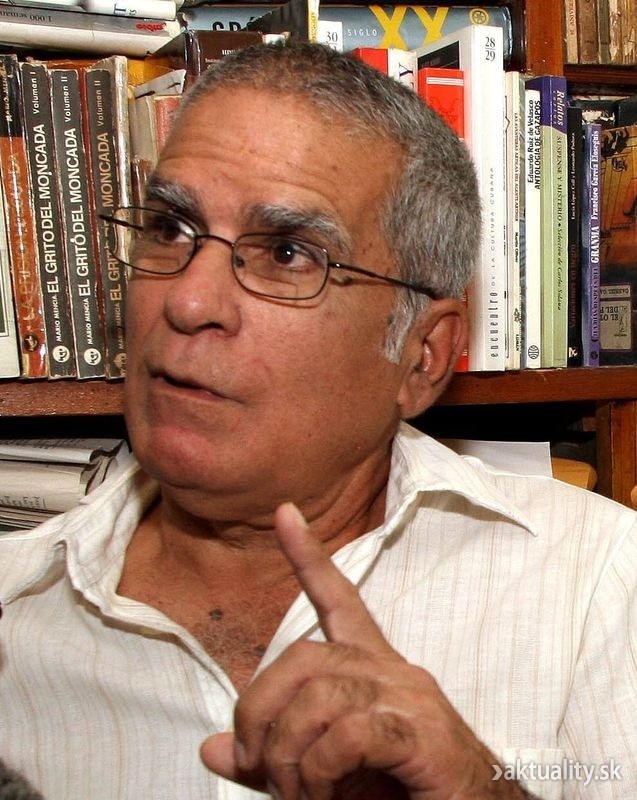
January 2013 / Rafael Leon Rodriguez

Former presidents Castro and Lula

Former presidents Castro and Lula. From noticiasvenado.com.ar

Cuba assumed the presidency of the Community of Latin American and Caribbean States (CELAC) during the Summit held in Santiago de Chile over the last days of January. Among the governments of the 33 member states, Cuba’s stands out for its lack of political pluralism, intolerance, repression against the opposition, and a longstanding dictatorship

Authoritarian leaders competing among themselves, on Sunday February 3, when the votes were held to elect deputies to the provincial assemblies and the National Assembly of People’s Power in which everything was pre-planned, even the results.

During the closing of the Third International Conference for World Equilibrium in Havana, the former president of Brazil, Luiz Inacio Lula da Silva, spoke about the achievements of his country in the eight years of government under his leadership, which now continues to expand under the leadership of Dilma Rousseff. He appealed in his speech for the integration of Latin America and the Caribbean and urged President Obama to advance, among other things, the end of the blockade on Cuba.

The U.S. president, meanwhile, told reporters that relations between the U.S. and Cuba can progress in the next four years and noted the importance of continuing to press for Cubans to have our own voices and to strengthen civil society in Cuba.

The Foreign Ministry quickly issued a statement declaring the island’s government’s willingness to work for the advancement of bilateral relations. At the end, the note states that Cuba is a country that is changing and moving. Now, if General President Raul Castro assured, publicly, that current changes were for more socialism, understood to more of the same, then the advance seems headed in the opposite direction.

So we Cubans started off 2013. Confirming the universal validity of the thought of José Martí on his 160th birthday; listening surprised in the midst of disaster to the story of Brazil’s progress; seeing the disinterest of democratic governments in Latin America in the oppressive situation of our people; observing another predetermined general election in our country; and hopeful that the interest of winning the North American market, will lead the totalitarian authorities to move towards democratic freedoms.

February 5 2013


Cuba 2013: Realities and Perspectives / Rafael Leon Rodriguez

Cuba Workshop 2013

Organizado por el Partido Demócrata Cristiano de Cuba y la Alianza Democrática Cubana, y auspiciado por la Fundación Konrad Adenauer, se desarrolló un taller en la capital mexicana los dias 28 y 29 de enero en el que participaron miembros de la sociedad civil cubana de la isla, de la diáspora e invitados de varios países. El Proyecto Demócrata Cubano, participante activo en el taller, envió el siguiente documento que compartimos con nuestros lectores. Continue reading


The New Cuban Novel / Rafael Leon Rodriguez #Cuba

Hallado en:

From radiorebelde.cu

In Cuba, as in the rest of the Americas, interest in the novels is proverbial. First simply as reading; then in listening t on the radio and late seeing on television. From these latter, the contemporary population borrowed some names to highlight certain developments. For example, private establishments that sell food are called “Paladares” (palates), a term from a Brazilian telenovela.

But it is not just ordinary citizens who have resorted to this practice. In general elections for the National Assembly, government authorities promote the candidacy for the highest single parliamentary investiture with the title novelistic “Todos Valen” (all are worthy), taken from another Brazilian soap opera.

This year, on February 4, there will be voting for the National Assembly. Candidates, 612, shall be elected under this novel-based consideration: Todos Valen. Half of them have been designated by a nomination committee that is not the least bit candid. The vast majority belong to the Cuban Communist Party or the Young Communist League. All will be parliamentarians grateful to their political benefactors. All of them should prepare to raise their arms repeatedly skyward in the most unanimous votes of the hemisphere. All will be new players in the novel of the Cuban legislature, which has repeated itself in every meeting of the parliament since its creation 36 years ago. Those who agree. Those who oppose. Those who abstain. Adopted unanimously.

Rafael Leon Rodriguez

January 8 2013


National Assembly / Rafael Leon Rodriguez #Cuba

La Asamblea Nacional del Poder Popular en sesión

Photo from site: embajadacuba.com.ve

The regular session of the National Assembly of the Seventh Legislature concluded, in mid-December, without showing any element indicating real changes in the country’s political categories. The ruling oligarchy of the islands continues to reflect their interest, only in matters of the economy. Underachieving the plan’s investment process by 19% and the calls to overcome inertia, superficiality and improvisation ,were the keys to closing statement read by President Raul Castro.

Announcements of a new Labor Code to be put to a referendum next year, the new law relating to the Tax System and the elaboration of a theoretical conceptualization of the so-called Cuban Economic Model, are new for the future 2013. In addition there will be elections next February 3 for delegates to the provincial assemblies and deputies to Parliament in which it is difficult to imagine surprises.

The rest, more of the same.

The  Cuban Democratic Project issued a statement on December 10 last year, 2011, the text of which, in full, except for a little detail regarding the permission to leave the country in the new immigration law, seems tailor-made for the today’s date. This proves the rigid immobility of totalitarian authorities in recognizing the political alternatives of independent civil society and their stubborn refusal to open spaces of transparency and of freedom of among other human rights.

The stated intention of the current leader of the Cuban government, to persist in a well-known course of his own devising, so as to create a sustainable and prosperous socialist society, seems more a chimera than a workable plan. So we approach year 55 of the so-called Revolution, facing a forced renewal of the past, rather than considering just changes toward political pluralism in the present, obviously there will be no future.

December 18 2012


Another December 10th / Rafael Leon Rodriguez #Cuba

Derechos Humanos

Image from bienvepaz.wordpress.com

Yesterday we commemorated the 64th anniversary of the signing of the Charter of Human Rights by the United Nations of that time, in the creation of which there was an outstanding Cuban representation.

The authoritarian authorities of our country, who already for more than half a century have appropriated and pretend that it really belongs to them, have set aside, according to their own interests, the importance of this date, accepting now a discreet approach from the media and organizations controlled by the regime at the celebration of the event.

On the other hand, they have undertaken coercive and punitive measures they think are necessary to prevent an independent civil society, the political and peaceful opposition and whoever opposes them from publicly demonstrating that day, because they know like the violators they are,that civil society not only will celebrate the date, but will demand the recognition and implementation of these violated rights of the Cuban people.

Arbitrary arrests, demonstrations of rapid response paramilitary groups, public parks occupied by government activists, the phones of people related to the opposition have been cut off, police visits to the homes of opponents with the intention of intimidating them, are some of the measures implemented by the repressive police organizations to discourage and prevent these citizen actions.

Meanwhile, the working committees of the National Assembly is meeting on the eve of the great and last annual day of this 2012. The attempts to create an economy the works, that is sustainable, while at the same time ensuring the dynastic succession and perks seems nothing more than to progress towards discouragement, corruption and vested interests of the government bureaucracy. In addition they remain silent on changes that need to be made in the field of human rights that are based on the ratification and implementation of the Covenants on Civil and Political rights and on Economic, Social and Cultural Rights of the United Nations.

The need to realize real social and political changes is more than obvious if we really aspire to retain a sovereign independent Nation in the near future for all Cubans. This necessarily should include firm respect for diversity and plurality of the citizenry, and from it, project the imperative and urgent National Rule of Law, endorsed by a new and plural Constitution of the Republic of Cuba.

Human rights belong to everyone and each one is like an indivisible beam and only with this can the Cuban nation be reborn in the true virtue and the necessary hope for the future of the country of all.

December 17 2012


Bitter November / Rafael Leon Rodriguez #Cuba

Noviembre de 2012The penultimate month of the year ended passing on to December, the final one, the most important inheritance received from October: the aftermath of Hurricane Sandy in the eastern provinces of the country. This weather phenomenon, whose final forecast of wind speeds offered by the Institute of Meteorology at the time it entered the province of Santiago de Cuba from the south, was on the order of 119-130 km/h, registered winds exceeding 175 km/h in the city, and recorded gusts of up to 240 km/h at the Antonio Maceo airport in that locality.

Obviously something did not work in terms of predictions. In this same vein with regards to the reports of total damage, fatalities and injuries, the official reports have been scattered and confused. But, the disaster must have been so great, because the authorities permitted the organization of collecting material assistance in the country’s capital,always through the political and mass organizations. They have also been receiving donations from several countries and as is seen, the government will encourage and accept these, leaving aside earlier and inconsistent positions with regards to foreign aid.

November already brought its own agenda for its short 30 days. The U.S. presidential election, won by Obama, to the relief of the Cuban authorities. The vote in the General Assembly of the United Nations on embargo against Cuba by the United States, which favored the islands for the twentieth time. The proposal to revise the European Union Common Position on Cuba by Brussels. The XXII Latin American Summit in Cadiz, Spain, which had a modest media coverage. The constitution of the 168 municipal assemblies of People’s Power, which are neither the people’s nor do they have real power, nor will they as long as there is a National Commission on Candidacy shaped and directed by the authorities with the power to promote up to 50% of the candidates de facto to the municipal, provincial and National Assembly levels the elections will continue to be a fraud. Adding to this the Machiavellian and undemocratic one-party rule.

Also on the November agenda was the new Law on the Tax System, which is considered general and special by the State; the planned law does not apply on remittances from family assistance received from abroad, so it seems that, when it comes into force next January , stop penalizing those with the abusive 10% to which they are now subject. And the changes of ministries and agencies, extinguishing some and creating others, even recreating some, such as the Ministry of Industries which already existed at the beginning of this long process. This approach is reminiscent of the former Soviet Union, where they spent the entire lifetime of the Marxist regime centralizing and decentralizing the economy to finally conclude that the problem is the system itself: it does not work.

Among the new laws passed this month is the Decree-Law 300 which replaces number 259 on the issue of the ownership of land in usufruct by private producers and State entities. Now you can own up to 105 acres of land but they must, on a mandatory basis, be linked to State agricultural enterprises like the UBPC, CPA, and State and Cooperative Farms Credit Union. A step backwards in favor of agrarian bureaucracy. The issue is continuing to exercise state control over independent farmers.

The fear of freedom and the need to control everything impede the progress of any positive economic development plan. The same thing happens with politics; if we don’t recognize it and pluralize the alternatives we are doomed, sooner or later, to failure. That is our fate.

December started with a new nod to U.S. companies, with the Cuban government repealing a decree-law of 2000 on communications between the United States and Cuba. Now it will be about 24 cents cheaper per minute; still it will remain the most expensive in the world, sending a nice message at the end of this 2012, one of the most unfortunate leap years that we Cubans will remember for a long time.

December 4 2012


Lessons and Elections / Rafael Leon Rodriguez

Source: “Wikipedia Kiwix”

A few days before the elections in the United States, on November 2, the newspaper Granma published a statement by Cuba’s Ministry of Foreign Relations, where it again castigated the United States Interest Section — SINA — in Havana, accusing it of interference, for offering support to civil society and the Cuban peaceful opposition.

The issue of access to the Internet and providing free information at the embassy, which goes against the exclusionary policies of the totalitarian authorities of the archipelago, returns to the public arena. The invalidation of the Cuban opposition, by calling it mercenary, is repeated. The rejection of the proposal by President Raul Castro to hold talks with the U.S. government is put forward as a practice of the past Cold War.

And finally, the threat: “The Foreign Ministry denounces the illegal, meddling, offensive and provocative activities of the United States Interests Section and demands an end to its permanent incitement to carry out actions aimed at subverting the constitutional order that the Cuban people have chosen in a legitimate and sovereign way. The Foreign Ministry confirms that Cuba will not give ground to interference and will use every legal means at its disposal to defend the sovereignty won and to enforce respect for the Cuban people and the country’s laws.”

In Tuesday’s U.S. elections, on November 6, the Democratic Party candidate Barack Obama was reelected for a second term. The current Cuban leaders appear to take a deep breath following the results of these elections. Now it is not about apologizing to the free world, perfectible democracy and the American dream.

It is about asking ourselves, beyond any other consideration, how it would have been it we could not count on the solidarity and support of the people of the United States as represented by their leaders.

We must remember that, after furtively imposing a totalitarian system, alien to our culture, our traditions and the most legitimate interests of the Cuban nation, the totalitarian authorities could not care less about the fate of those not communing with their purposes. “We don’t want them, we don’t need them.”

Under this core belief of the Castro regime, more than two million compatriots were forced to emigrate, the majority to the United States, which welcomed them and where today the Cuban-American community is among the most significant.

And the emigration continues, even supported by the continuous requirements of the Cuban rulers to U.S. authorities, from whom they demand compliance with the immigration agreements and the granting of twenty thousand visas annually.

Ah! Because currently those who emigrate are classified by the authoritarian government of the islands as… economic migrants.

Some elderly say that to protect is one of the first responsibilities of a leader. Now, when we review the letters exchanged between Fidel Castro and Nikita Kruschev during the October Crisis of 1962 — five decades ago — published in Granma, with the same paper and the same ink as the declaration of earlier times, we understand how close we were to that improvised nuclear holocaust.

The Soviet premier said, in his letter of October 30, 1962:

“We have experienced the most serious moment, in which we could have triggered a world thermonuclear war. Clearly, in a such a case, the U.S. would have suffered enormous losses, but the Soviet Union and the entire socialist camp would also have suffered greatly. With regards to Cuba, it’s difficult even to say to the Cuban people that this could have been the end for them. The first flames of war would have incinerated Cuba.”

It seems a temperature overtook our environment during those days that still has not cooled after fifty years. And with reason. The United States government renews its government team every 4 or 8 years. In Cuba it remains the same and the exact same for over half a century.

The Cuban authorities propose talks with the Americans, when they have not been able to recognize, much less carry out, a dialogue with their own peaceful national opposition.

Raul Castro’s government already has a fiber optic submarine cable from Venezuela, which multiplies the internet capability. Yet Cuba remains among the countries with the lowest connectivity on the planet. And so the list of abuses of authority goes beyond reason.

We hope that the rulers of the archipelago take into consideration all that we lack here at home, in order to create reliable bridges to the outside.

It is useful to repeat that the ratification and implementation of the United Nations Covenants on Civil and Political Rights and on Economic, Social and Cultural Rights is the unobjectionable starting point for the necessary and urgent changes for the Cuban nation. Hopefully these  free, democratic and pluralistic elections held in the United States will serve as a useful lesson.

November 15 2012


Fiftieth Anniversary of the Missile Crisis / Rafael Leon Rodriguez

Image from “http://www.bbc.co.uk”

The final days of that October were grim. At the beach, the rough seas spilled over the sand blowing in the wind. The militia dug trenches, so close to the coast, that their walls caved in. Guanabo was desolate, more so than normal for that time of year, and the locals who stayed after the evacuation of the last few hours did not understand the magnitude of the drama that was evolving in our archipelago. The Cuban rRevolution, the one that claimed to the world that it was so pure, independent and mighty like the palm trees, had just been undressed by the spy planes from North America. The photos of soviet specialists secretly installing the nuclear missiles around the island were seen by the entire world.Fifty years have passed since that monumetal blunder that placed humanity in the fringes of a nuclear hell. Now that there is only a handful of the principle actors of that crisis left, we ask ourselves who really gained anything, and who lost. The answer, coincidentally, is in the published text from Fidel Castro on October 21, 2012 at 10:12a.m. “When Kruschev proposed to install mid range projectile missiles similar to those installed in Turkey by the United States — in the need for solidarity, Cuba did not hesitate to take the risk. Our conduct was pure and ethical. We will never ask for forgiveness from anyone for what we did. It is true that half a century has passed, and we are still here holding our heads up high.”

It was not important then that Cuba was not at all consulted in the dialogue between the United States and the USSR which resolved the conflict. Nor that the Cuban authorities, which are the same as today, found out via the shortwave transmission in Radio Moscow the decisions that had been made. It did seem to bother some when the newspaper Revolución, the official  paper predecessor of the Granma, published the headers: “The USSR orders the removal of missiles from Cuba”. Today the world around us is different, it has changed: the Soviet Union no longer exists. The cold war ended. The missile crisis is history. But, for Cuba there are still remnants of those days; because, lamentable but true, after half a century of economic, political and social disaster, they are still here.

 Translated by: Marina Villa

October 24 2012


Two Fall Events / Rafael Leon Rodriguez

Taken from: lapupilainsomne.wordpress.com

Hugo Rafael Chávez Frías won the Venezuelan elections as was expected, but only by 10 percentage points; translated to voters figure is assumed he will have to govern with an opposition that showed support from the 45% of the electorate: six million one hundred and fifty thousand electors against approximately seven million four hundred thousand Chavistas. And the 20% of the citizens able to vote didn’t do so.

In the previous election in 2006 the opposition got the 37% of the votes. This means either these are the last elections won by Chávez or these were the last Venezuelan elections at all. Anyway the totalitarian formula is always win-win and the so called XXI Century Socialism won’t be the exception.

Two days before these elections, in Granma Province, the trial was held against the Spanish citizen Ángel Francisco Carromero Barrios, charged with murder while he was driving his vehicle on the public way. Carromero who was driving the car that crashed last July 22 when Oswaldo Payá Sardiñas and Harold Cepero lost their lives, remains under arrest until the sentence. Scarce or none information of the trial was known by the Cuban people, only reports from some who tried to get near and weren’t allowed, including Payá Sardiñas’ children. Others were detained to keep them away.

Both events, close in time, have something in common, a thread, which is the lack of information or disinformation with which the officials despise their citizens. Nobody knows the details of the trial against Carromero as no one knew the characteristic of the Venezuelan opposition’s proposal. In Cuba we only heard Chavez’s speeches in his political campaign. Not the ones of the opposition leader, Capriles. The conspirators of silence didn’t give details of the resolution adopted by the Council of the American Christian Democratic Organization (ODCA), on August 31st and September 1st in Chile, where an investigation of the deaths of Payá and Harold Cepero was asked of the competent organization the United Nations, with the support of the four Cuban organizations of the ODCA. Not by chance do totalitarian regimes understand freedom of the press as a contradiction of the democratic system, as for them the information is nothing more than a tool for control and repression.

Translated by: @Hachhe

October 16 2012


Corruption / Rafael Leon Rodriguez

Graphic downloaded from “consultajuridicaenlinea.blogspot.com”

In another of the many meetings of recent days, the XI International Criminal Sciences Meeting 2012, the General Controller of the Republic, Gladys Bejarano Portela, urged, from ethics and professionalism, the confrontation of economic crimes and illegalities.  Again the obligatory topic of corruption, focuses the interest of the participants on a legal event.

The fact is that, during so many years the sweeping of these systemic phenomena of Cuban socialism were swept under the rug, that now its effusion covers all spheres of society.  Now the General-President had called attention again, during the last extended Cabinet meeting, ending September, to work with rigor and discipline in order to eliminate the disorganization that drives the waste, theft and negligence.

He referred to delinquency in the collections and payments between enterprises and agencies and the increase in the string of defaults.  The fact is that there is no custom of respecting contracts or budgets or schedules, because for many years  they directed the country by command, by means of government directives.  And those rains brought this mud.

The Attorney General of the Cuban Republic spoke in the Meeting about the respectful vocation of the law and the legality of the revolution during its historical evolution.  This contrasts with the aphorism that the revolution is the source of law because it was the revolutionary power that upset even the country’s judicial symbols.

They appropriated from the designated buildings those which impart justice, like the building that today is occupied by the State Counsel and the Central Party Committee: the current Palace of the Revolution.  This building, which they inherited from the past regime, was intended for the Palace of Justice.  The headquarters of the Pines Island Tribunal in Nueva Gerona, for example, was converted to an ice cream shop in the second half of the 1960’s and so, through all the national territory, the semiotics of what is legal suffered inherently with respect to the law.

Enemies of the old law and obedient to the new, they headlined themselves the powerful debut.  But they have been the first violators of their own laws.  A recent example:  article 57 of the Constitution of the Cuban Republic expresses that correspondence is inviolable.  It can only be used, opened and examined in cases previewed by the law.  Matters irrelevant to the purpose of the examination will be kept secret.  The same principle will be observed with respect to cable, telegraph and telephone communications.

On a television program last month, they made public a telephone conversation of an opponent who was on hunger strike in her home in the capital. The arbitrary detention of dissidents; the deportations to their provinces of all who are where it does not suit the authorities; the known acts of repudiation against opponents and dissidents, organized by the same authorities that supposedly should prevent them, finally, the stigma that we are all guilty before the law, until we prove otherwise.

Also talked about at the event was the comprehensive analysis of the country’s Criminal Justice System that is being carried out, which will generate, according to the Attorney General, important modifications to the Penal code, the Law of Criminal Procedure and other legal norms.  By now, the Lady of Justice, with eyes blindfolded and scales in hand, gives a suspicious wink to  Cubans, observing everything, hiding behind the dark glasses of totalitarian power.

October 16 2012


New Law: Remake and Part I / Rafael Leon Rodriguez

From “Cubadebate.cu”

Yesterday, October 16, the Official Gazette of the Republic of Cuba finally published Decree/Law No. 302, which modifies the previous “Law on Immigration,” No. 1312, from September, 1976. A text of the law appeared in the same edition. As a good friend of mine would say, “More of the same with the same.” Nevertheless, the fact that it approaches the subject of emigration with the obvious intention of unlocking structures designed thirty-six years ago makes it somewhat different. What seems more important at this point is that Cuban authorities are introducing into the geopolitical and electoral landscape of Florida an expectation of how they will deal with the subject of Cubans in the diaspora. Not coincidentally, the official press — which, as we all know, is the only press — stated that these modifications are part of “irreversible” process of normalization of emigration from the homeland.

For the casual Cuban observer, what is most significant are the advantages, principally the elimination of the letter of invitation, a document necessary before any ordinary overseas trip can begin, and the despised exit permit, issued by the Ministry of the Interior. Like the documents one receives after completing a prison sentence, they confirmed, or confirm, that as citizens we are all hostages to the dictatorship. Now the passport will become the means of police control. We will see in ninety days, when the law is scheduled to take effect, and after the the election results in the United States are final, who can request and receive a passport in Cuba and who cannot.

The really timid measures applied to the emigration law are useless if they are not backed up by the guarantees provided by a national democratic state, as we all know. The modified article itself leads us to consider the obstacles that are still present, and how our rights as citizens continue to be violated, and not just in issues related to emigration. This unites us once again in continuing to work for the ratification of the United Nation’s Conventions on Civil, Political, Economic, Social and Cultural Rights as the real point of departure for recovering all our liberties as citizens.

October 18 2012


Forward Flight / Rafael Leon Rodriguez

Picture from: lapupilainsomne.wordpress.com

In recent days Havana has stood out as venue of countless events, most of them of an international nature and assorted disciplines. International Labiofam Congress 2012; International Law Congress 2012; VII Course on Tools of Control and Prevention Against Administrative Corruption; Orthopedics Congress 2012; Nanosciencie and Nanotechnolgy IV International Seminar, among others. The titles themselves give a feeling of development and resolution in the diversity of subjects and plans for the future. How far from the daily Cuban society! It seems like another Cuba, a virtual one, that only exist for a privileged group, the palace court and company guests.

Nothing to do with the real Cuba, which despite being an small country with 11.2 million inhabitants has the fifth largest prison population in the world in relation to the number of individuals. The one where each citizen’s share of the national debt is valued at six thousand dollars, owed to a group that includes Paris, Russia, China, and who knows how many more countries, whom the Cuban government owes, on balance, the ballpark figure of sixty billion dollars.

The country that is aging at such a pace that it is predicted that by 2035 a third of its population will be over 60 years old. The one where the workers earn miserable salaries not exceeding twenty dollars a month on average, in a dollarized economy. The one where retired men and women are forced to survive through all kinds of tricks to eat and dress badly. The one with a two million person diaspora that grows exorbitantly. The impoverished Cuba that has been exhausted of wealth along with its dreams and hope.

The heirs of the new class seem to behave as if in forward flight, to ignore the sad reality of this island anchored in the past. Convinced of the powers and privileges inherent to their lineage, they flaunt plans, capacities and projects. Meanwhile, the gap continues to widen between them and the majority of citizens, who trapped in the trick of a single party system and the negation of their fundamental human rights, as set out in the United Nations Covenants on civil and political rights and on economic, social and cultural rights, confirm that there can’t be any communion with the oppression.

Translated by: @hachhe

October 2 2012