An Indecent Proposal / Jeovany Jimenez Vega

In response to an article published by Jean-Guy Allard in the newspaper Granma on November 12, in which Yoani Sanchez is accused, for the umpteenth time, of being “a mercenary working for the United States.”

Clearly the theme “Generation Y” has escaped the hands of those responsible for calming the troops, and I presume this has upset the dream of countless government operatives, real and virtual, at all levels of Cuban counterintelligence.

As in my role as a doctor I’m obliged to look after the physical as well as the mental health of every Cuban, today I am trying to convey to the author of this article and to State Security — including its Section 21, that maintains a very intense romance with this young woman in Havana — a doubt that assails me: if the U.S. government and/or the CIA have contracted with this “mercenary” and this is what motivates her, financial payments, she works only for this, then the solution to their insomnia is extremely simple: why don’t they bribe her? Why don’t they pay her more and call it good?

If there is something that history has amply demonstrated, it is that the mercenaries, without honor and flag, serve the highest bidder; then the solution is easy: if the people to the north have paid her some miserable half million euros, then pay her, let’s say, a million, or five, or even ten, and surely her eyes will jump out of her head at such an irresistible offer. After all, in this heart vacant of principles there is nothing more than greed, so now it’s time to raise the stakes on this out-of-control woman and you’ll see how fast she changes sides and sinks into an absolute silence, as such a contract would require.

Although I have been to her house many times, the only life of Yoani’s that I know is the publicly visible one. Despite the cordiality with which she treats everyone there, along with her husband — that also irredeemable soul, Reinaldo Escobar — there are barriers that respect and prudence presuppose. Because of this I don’t aspire in this post to offer an apology, not to mention that’s not my personal style, it’s about something much more elemental: someone who has managed to feed a blog that receives, according to Wikipedia, 14 million visits a month — making it the most visited page in the Spanish language network — doesn’t need it.

As for me, I don’t seek anything personal from Yoani either, and what’s more, having never flattered or bowed down to absolute power and the onerous owner of everything around me, capable of ruining my life with a snap of his fingers, then I’m not going to do it before anyone.

But it fries my bacon that in the official Cuban press, which is scandalously silent about the high level corruption overrunning my country, everything is reduced to the old story of money money money — as evidenced by the fact that absolutely every Cuban political opponent, from the oldest and most recalcitrant to the latest upstart, without exception, is accused of this.

So fine, back to the point: paying this “depraved” woman more would be a solution, right? And given that, thanks to the blockade, budgets for repressive activities are tight, something unlikely, say 500,001 euros ought to be enough. After all, for these out-of-control people, according to the official accusation, the difference of a single dollar ought to be enough to make them collapse, drooling, at the feet of their new master.

In a country where millions keep their mouths shut and fake it for a leadership position, for the assignment of a State-owned car, for a little work mission abroad, what wouldn’t this libertine do before such an offer. I think, I suppose, I am saying, the best thing to do with this trifling sum — which would be worth extracting, with due prudence, from the secret account of some tycoon who’s robbed millions from this little country — would be enough to rid the general staff of such a pain in the testicles.

I do want to note, though, that I acted here only from the professional point of view, from an analgesic vocation to relieve the discomfort caused by this chick with iron balls — undoubtedly the largest and most powerful on the island, nobody questions it — and all would be carried out in the most secretive and strict confidentiality.

After all, we doctors work for free in Cuba, it’s nothing to me, but it’s amazing, I remain concerned that the genitals … I mean the genial… strategists of State Security never thought to follow such an elementary strategy.

November 27 2012


Why Estado de Sats Must Not Die / Jeovany Jimenez Vega

Where art and thinking come together. State of Sats.

About two weeks Antonio Rodiles was arrested by State Security. First he was charged with resisting arrest, then they concocted a charge of undermining the authority when nearly a dozen witnesses deny the police accusation. It is not anything unusual, because in Cuba long arbitrary detentions are part of the repressive praxis. This time it’s someone with undeniable charisma and whose authenticity is demonstrated with concrete events: In a short time Rodiles has converted Estado de Sats — against all flags and with modest resources — into an important space when it comes to probing the Cuban reality.

Several factors contribute to our atmosphere today of alternative aromas. In this regard, the extensive possibilities of the Internet, which open a digital breach to the world for the restless gaze of the island’s bloggers and twitterers, to which are added the lack of ethics in the official press to denounce the shamelessness of the corrupt, the ineptitude of the leaders and the constant violation of our civil rights. In this context we have inserted alternatives like VocesCubanas.com and Estado de Sats.

Bit this latter space is not only a virtual peculiarity: in Rodiles’ home, during the presentation of the programs, there is a frequent assiduous and physical convergence of around a hundred irreverents, and we know what that means to the powers-that-be in Cuba.

This modest but clear capacity to call people together, ended up worrying the general staff, and so Rodiles presented himself in front of State Security’s Section 21 on the afternoon of November 7, and the leadership saw the awaited opportunity to book him and decapitate his project. But those who reason this way underestimate a civil society that is not disposed to cede an inch of space conquered at great risk.

We are a people saturated with promises that sound like mockery, words belied by the demagoguery of a bourgeois elite that demands austerity from us, while their table overflows; we are a people forced to face unjustifiable hardship and shortages that generate a deep social immorality, which have turned theft, simulation and lies into “trifles,” and what is worse, sincerity and civility into a crime.

We are looking at a youth that is definitely different, and wants to open itself to a world it suspects is out there, a youth that knows it is imprisoned, but that now knows the name and the password of its jailer and is increasingly less afraid. And the jailer knows this and represses every birth, tries to mutilate each new shoot, stuffing the cracks so that the cell never receives the dangerous rays of the sun.

Rodiles is accused of assault, and yet, in Estado de Sats, Rodiles’ home, I never saw anywhere a club or the tip of a trigger, never heard plotting of attacks of sabotage, never heard a threat or a call to violence. I heard nothing more there than ideas and arguments, reasonable or not, but launched from the perspective of tolerance, respect for the opinions of others.

As far as I know, no Cuban opponent ever stopped a delegate of the National Assembly of Popular Power in the entrance of Parliament, or any member of the Communist party to prevent him from participating in the last Congress of the Party, nor conducted any “operation” to boycott their last National Conference.

However, from the other side, it’s a different matter: the raids and arbitrary detentions perpetrated by state security against any dissident when, how and where they want, without due process and even without charges — including many who went to Estado de Sats — is their daily practice, reported thousands of times by bloggers, twitterers and by the same project now want to shut down.

If despite the deafness strongly imprinted during the last decades by the dissidence against the all-embracing State power, this has been no more than a few turns of the screw, one can only imagine the scene of these gentlemen didn’t know they were installed by the select share of Cubans who dare to speak while the rest remain silent.

Alternative spaces like the monthly Voices Magazine and projects like Omni Zona Franca, and Estado de Sats itself, are at this time so necessary for this people like the miracle of the loaves and fishes, and must not disappear simply because some gorillas consider this country remains the same jungle as in the ’60s and ’70s.

But they had to take Rodilies because every brave person is one less slave, because each front raised is an act of vindication, because every mask that falls away is a triumph of human dignity, one of those miracles that are the work only of able-bodied men.

For all this, by reality and necessity, spaces like Estado de Sats must be preserved. The barbarians must understand once and for all, that it is useless to incarcerate a many when his dreams fly free.

Rodiles conceived this project, now ours, and dedicated his efforts, assumed all the risks and put into it the same hope and the same faith that is put into a child. For this we must care for Estado de Sats — we owe it to him and to ourselves — because whatever problems appear on the horizon we will never abandon the child of a friend!

November 19 2012


Letter of One (?) Cuban Doctor / Jeovany Jimenez Vega

These heartfelt words come, crisp, clean and sincere, to our mailbox, written by a colleague I don’t know; I never saw his face, never shook his hand, I don’t even know if Eider exists, but here are the words, complete. / Jeovany Jimenez Vega

————————————————————————————————————


Days ago I had the opportunity to read an open letter issued by the General Surgery Department of the Calixto Garcia Hospital denouncing the deplorable working conditions they face every day.

The letter addresses issues extremely important points and says: … “the government is responsible for all this, and not only to know it, but also to solve it.” This letter has high levels of courage and I believe that it’s purpose is to make an emergency call to focus once and for all on the growing disgust of the Cuban doctor.

We must demand that our government has to differentiate us from the rest of the working people. We are doctors and we handle the gift of life and that deserves respect. We can not remain the hindquarters of this system where anyone deserves to win a medal or play a conga drum. Cuban doctors want to have dignity in our country and be respected by the people: the dignity must begin at home.

We are wandering the world to show how worthy we feel as Cuban doctors and when we return to Cuba we blush for what we are because no one appreciates what we do. We are miserable in our own country and cherubs in the world; we are gods to the rest of the world and fallen angels in our beautiful country. We don’t relax with the tourists, but we heal them; we don’t disseminate culture but we dictate sentences that save lives; we don’t break world records but be bring down percentages and this is worth a lot and more like life because that’s what we do every day.

We don’t have to wait for the Olympics, nor an annual contest nor an opportune invitation to emigrate to reach the summit. No, our competition is the daily doing of our duty; all the craftsmanship that leaves our hands is so that the unfortunate enjoy it; all the energy we expel in our daily cravings is for others to be happy. We provide happiness, records, songs and poems, and that is also art. Why not reward us if our fruits are sweeter than those of others.

We can do both things: be valued abroad and valued in our country. We can bring life to those abroad and guarantee the lives of our own. We want and demand attention to provide our people with the same efficiency that is provided abroad; we need our work to be valued and to be paid with the same fairness that it is valued and paid in those foreign missions.

How can we live in penury and on the contrary give opulent attention to our patients? It is not a question of conscience and trivial ideas. It’s a question of dialectical logic. It’s not possible that our own drown while we are saving others; it is not possible that we are incapable of supporting our families with our labor and paradoxically have an obligation to support, sometimes with old pitchforks, other families.

We are doctors as well as humans, as well as Cubans and the needs of many should not be of everyone. Indeed, we live more in spirit the more souls we save but the gift of wisdom surrenders before the privation. We cannot feed our children with slices of morality nor dress them in clothing of the finest rejoicing.

Our president said on July 26 this year that he knew that doctors earn very little but so it is with everyone. Excuse me, Mr. President, but with all due respect, we are not everyone. We are the specialty of the house with regards to the inequality you refer to. In the center of the crisis we can be an exception to the rule and earn a fairer salary and have working conditions that are not only fairer but dignified, corresponding the humanitarian and immeasurable work that we do.

We know of the magnanimous investments being made to support the Cuban health system and its institutions but to not invest in the human being, the doctor, is like forcing a homeless man to live in a palace. Cuba has an army of coveted and unbeatable white coats but already the white is turning yellow: purity… changes color.

Eider Valdés

24 September 2012

Posted to Citizen Zero: November 1 2012


Upgrade of Cuban Migration Policy? / Jeovany Jimenez Vega

It is already a fact: the awaited “migration reforms”, announced by Raul Castro a month and a half ago, arrive with a lot of noise — much ado about nothing. Published “casually” five days before the elections for delegates to the Municipal Assemblies of Popular Power, the modification to Law No. 1312 “Law of Migration” of September 20, 1976, was again the plastic carrot hung in front of the herd. Some simpleton might believe his opportunity in life has arrived, but the disillusionment — I really wish I were wrong on this point — sooner or later will reveal the true intention behind a decree where they repeat the verb “to authorize”too much which has ruled the destinies of a people confined to their borders for more than half a century.

According to my understanding of Decree-Law No. 302, issued by President Raul Castro October 11, 2012, and published in the Official Gazette last October 16, nothing changes for the professional Cubans — including thosefrom the Public Health, needless to say — we continue dragging that cross that the government became by havingdevoted ourselves to the cultivation of knowledge. Once again it pays us so: leaving us at aclear disadvantage, violating our right to travel, depriving us ofany opportunity to meet the world. Articles 24 and 25, subsections f, make it very clear when they exclude from leaving the country all those who lack “the established authorization, pursuant to the strict rules of preserving the qualified work force…” which with one blow leaves millions of Cubans out of the game.

One does not have to be really smart to notice that articles 23, 24 and 25, added entirely to the former Law of September 1976, give fullpower to the authorities to refuse passport, to refuseentry and equally to refuse exit from the country, respectively and according to subjective criteria, to any person inside or outside of Cuba, all of which serves to leave bare the true, hypocritical and deceptive nature of this law. Too much ambiguity leaves open Article 32, subparagraph h — and by extension the same subparagraph of Article 25 — when they establish that some clerk can refuse the award of the passport and/or exit from the countryto anyone, “When for other reasons of public interest the empowered authorities determine…”, ambiguity which will serve to continue detaining millions of Cubans under this blue sky every time the Cuban Government feels like it. These articles and subparagraphs will be hanging, like the sword of Damocles, over all Cubans.

The other invidious facet of the matter: Article 24, by means of its subparagraphs c, d and e, establishes as “. . . inadmissible. . .” for entry into the country — because they put them into the same category as terrorists, human and arms traffickers, drug dealers and international money launderers — those accused by the Cuban Government of “…Organizing, encouraging, managing or participating in hostile actions against the political, economic, and social fundamentals of the Cuban State“, “When reasons of Defense and National Security so suggest” and also — this is the little jewel in the crown — all those whom the Cuban Government considers must “Be prohibited from entering the country for being declared undesirable or expelled.” If one wants it clearer, pour water on it: it is a given that those Cubans with politicalstandards divergent from the Government lines will continue being deprived of travel, and in case they do manage to leave the country, they assume a high risk of not being permitted to return, and this includes, of course, the millions of Cubans and their descendants who live outside of their country.

Something remains clear: as long as one authority might prohibit those of us living in Cuba from leaving freely, and also prohibitthat anyone of the millions that live outside return unconditionally to the embrace of their homeland, no one will be able to speak of realfreedom of travel; this is an individual’s exclusive decision and will never be a clerk’s because, right to the end, it is inalienable. As long as they make us leave our families here as hostages as a prerequisite to travel abroad, freedom of thought is abridged with an exit blackmail, if even one Cuban is denied his right to freely come or go as his birthright, nothing will have changed in Cuba. Time will have the last word, but for now everything seems pure illusion; for the moment, on the balcony of Havana, this little room is just the same.

Translated by mlk.

October 25 2012


In Regards to the Letter from the Cuban Doctors to Raul Castro / Jeovany Jimenez Vega

Calixto García Hospital.

Every day in this world, in one site or another, clearly or covertly according the dignity of each person, Cuban Public Health Professionals express their opinions about the calamitous situation they face. But this time it is not one more conversation in the hallway, rather this September 20 the site Cubenecuentro published a letter that circulated on the Internet, via emails and hand to hand, where a presumed group of surgeons in the Calixto Garcia Hospital in the Cuban capital, openly exposed to President Raul Castro the depressing structural and functional state of this institution.

It is sad but true, a document is not backed up by specific names, which obviously casts doubt about its authenticity, but it appears connected to the Surgery Department of the hospital. It will always be my precept to back up with my name and signature what I write as a testament to my character and the conviction of my opinions, and further evidence that I have the courage to defend them, so do not despise the detail of anonymity when it comes to something as tricky as bad working conditions and living standards of professionals in my sector.

But beyond that questions about whether the text has come from the hands of surgeons or not, one thing is certain it is even more important: that whatever is said there, no matter who says it, is an absolute and painful truth , fully extrapolated to the rest of health care centers in the Cuban Public Health system.

Although undoubtedly there will always be worse cases, don’t forget that we are speaking here of one of the most emblematic of the country hospitals, the former No. 1 Military Hospital founded in the late nineteenth century, so let’s put things in perspective: if the trunk from which the rest of our medical schools and hospitals emerged in the capital’s mecca of hospitals, has endured for decades in the aforementioned state of disrepair, and it may have already led to the situation in the separate municipal hospitals and the network of polyclinics and dark doctor’s offices scattered across the Cuban geography, constantly lauded with praise by an unscrupulous triumphalist press incapable of telling the truth.

The chronic inattention and the neglect to which Public Health professionals are subject; the worst working conditions, the rest and meals; the medical shifts up to 24 hours completely gratis “in a country where entitlements are ended…”; the palpable deterioration of most of our assistance centers; the scarcities, if not the constant lack of usable material, of medications and diagnostic tools; the workload not remunerated to cover for colleagues who have left on medical missions abroad; the miserable salaries that they pay us, the disrespect this implies for the sector responsible for income of more than 10 billion dollars a year* in hard cash, and the humiliation involved in our being subjected to poverty despite this; the mental and physical exhaustion from not being able to feed our families in the midst of a chaotic economy while we know well that “… the destructive traces of corruption pass with singular debauchery…”; the supremely demonstrated indifference of the ministry, party and government officials to listen to us with respect, the great frustration this generates and the absolute lack of objectivity in the official press to face, with courage and ethics, a problem that is not solved — plain and simple — because of lack of political will. All this was said before and is repeated here, others with words, or with hands that sign, but it is the same authentic truth that you are hearing.

Taking the bull by the horns, who wrote bluntly blamed the Cuban government for this situation and demanded they resolve it. The document does not carry a tone of submission, but it is written with clarity, respect and pride — a combination scarce in these times — reportedly by professionals who every day save new lives and feel extremely neglected, if not betrayed by a government, a party and a Ministry of Health that do absolutely nothing to rescue us from the abyss.

To have allowed a hospital as prestigious as the Calixto Garcia to sink into such neglect to the point of seriously risking its very reason for being, should be sufficient to dishonorably expel from office Dr. José Ramón Balaguer Cabrera, who has been the Minister of Public Health during most of the time referred to in the letter, and the one maximally responsible, therefore, for the scandalous disaster at the Havana Psychiatric Hospital in early 2010, which killed dozens of mental patients.

But instead of getting his sell-earned punishment, that gentleman was chosen, with honors included, to lead the Ideological Department of the Central Committee of the Communist Party. While acknowledging, in his defense, that Dr. Balaguer was much more engaged with disabling the doctors who expressed their opinions than in resolving their problems, so maybe he never heard about the dramatic deterioration of institutions such as the Calixto Garcia.

At this historic medical school for which I still have strong feelings because I trained there in the early ’90s under the tutelage of eminent professors like Dr. Mercedes Batule and Dr. San Martin, living professors I had the privilege of meeting and who, since then — it’s been more than 20 years — have long suffered this ancestral neglect that our colleagues even mentioned to Raúl Castro.

I clearly remember that my greatly admired professor would occasionally accompany us to the main dining room, and while he talked amiably about every trifle, it hurt my soul to see him eat that tasteless slop. Unfortunately those professors are no longer with us, but I live convinced that today they would admire the dignity of the brave who are not resigned to bowing down to ignominy.

Now it only remains to see what will be the reaction of the Ministry of Public Health and the Cuban government, accustomed to furious intransigence against any gesture that questions them. Suddenly, where there is only a group of physicians who ethically address their authorities, some dunce could see a “counterrevolutionary faction,” or perhaps an attempt by the CIA, or a faction of the “mercenaries in the service of empire”; I have many experiences regarding this, believe me.

But these times are not the same. I’m just saying that if this document was authentic and unleashed a hunt for the perpetrators, this time my colleagues would not be alone: I, Citizen Zero, will not stand by with my arms crossed and would run every risk until the end and engage in any battle to redeem them, because it is our silence that keeps us at the bottom of this abyss; because confronting the indolence of any controversy will be better; because it is worth anything to try to rescue the country from the absurdities that “… will compromise the future …” and because each step taken, however small, will definitely improve the world.

*Translator’s note: Payment/grants in oil and cash from Venezuela; in exchange Cuba sends doctors and other workers.

October 1 2012


There Should be a Bridge / Jeovany Jimenez Vega

It’s not their best song but the theme cuts me to the bone. I listen again to the Arjona clip and again I shiver, I get up and punish the keyboard with a pain that hurts me, a pain that I try to put into words but can’t, because 50 years already seems like too much time and too many dashed hopes, scattered, promised and postponed, shipwrecked in the Straits even today.

First and core cause of each and every one of the deaths suffered by the rafters in the narrow gap, the travel ban was always a slap on the cheek, my only people divided in two, more than by the Gulf Stream, by the storms of intolerance. Due to this vilifying the professional and the athlete as a “deserter”; citizens served up a la carte, Spanish or Mesopotamian, who suddenly take advantage of their distant pedigree; the hookers who leave trafficking their bodies; selling their spit of the silence of cowards who fake it for crumbs; I see how the dignity of so many Cubans is prostituted.

Family separation caused by migration policy which the Cuban government has imposed for over half a century deserved to be categorized as a crime against humanity in whatever forum is respected. No other arbitrariness, among those held by the Cuban government during this time has been so traumatic and harmful to the people who experience it.

I say the people, because their selective nature strengthens their outrageous nuance: while depriving the people of their genuine right to travel, senior politicians and government wander the world, along with their children, wives, and — why not? — their lovers; they leave and return openly under cover of official missions or as managers of phantom firms and no one know what they do, and if these enjoy their scholarships in Europe, while those pass through Cancun, while I and mine have never gone farther than Matanzas.

It’s been over a year since Raul Castro publicly announced that his government would implement changes, which he did not specify, and the travel and immigration mechanisms, but already we are looking out from our subtle autumn and he gives the impression he doesn’t care, that they still have an entire lifetime to achieve the reunification of the Cuban family.

Every day that passes without the doors opening will be a shameful day and a new temptation for disgrace. Rarely was a leader at such a crossroads having in his hands, so clearly, the power to fix it; today the responsibility rests on his shoulders for every new death in the Straits as until yesterday Fidel Castro was responsible for implementing and maintaining intact for half a century this monster that causes so much pain in my people, that has essentially caused the most dramatic exodus in Cuban history.

There they tell of the mourning of the mothers and the absences and the look of the orphaned and dead children. Now is the time to vindicate, unconditionally, this right of the Cuban people! Anyone who opposes it at this time will be tried inexorably before history and found guilty for this slow genocide.

But while the power calculates in the shadows, I live with a recurring dream: in the midst of a vast and peaceful sea, on a bridge without borders or tolls two children gaze with clear eyes, offering diaphanous smiles, embracing without fear and forgetting everything. Sitting on a pile of new dreams they contemplate a warm sun that comes close to the edge of the common horizon, “The dawn is here brother,” they say, “the dawn!”

September 27 2012


Customs Regulations or a Rogue Swindle / Jeovany Jimenez Vega

Customs Regulations. What Every Traveler Should Know.

The new customs regulations, which took effect on September 3, will require the Cuban people to pay a progressive tax of 10 CUC– or 240 pesos at the current exchange rate– for each kilogram of “miscellaneous items,” including food, and between 100% and 200% of the value of any household electrical appliance or other hardware received from overseas.

We should be accustomed by now to such measures, which are considered trivialities by those who issue them, but are felt as tremendous hardships by those who must suffer because of them. This time the new regulations appear a little more than a month after Raúl Castro’s public announcement that he would not raise salaries. This follows the massive rise in the official price of consumer goods, the approval by the trade unions of the dismissal of hundreds of thousands of workers, the exorbitant increase in the price of electricity just as liquid gas service was cut off, the elimination of “gratuities” for workers, the decision to retain workers in the medical sector who want to travel overseas, and a long list of other issues.

All these decisions have something in common. They are completely at odds with the interests and well-being of the people. Issued by officials who lack absolutely nothing, these measures would appear to have been come from the very offices of the CIA itself. If their purpose is to foment discontent, complicate our lives and arouse hostility and resentment towards those who issue and/or allow them to take effect, then they have been completely successful.

Now, the elderly woman who receives a package will have to pay an extortionist’s fee to retrieve it from customs. This means she will have to pay more than twice what it cost her son to buy and send it. There will be no way to persuade either of them, and by extension the Cuban people, that this is not a blatant shake-down cooked up by customs authorities, or that the government has even the most minimal concern for their well-being. After this apparent armed robbery– there is no other way to describe it– every word or pronouncement will feel like salt and vinegar being poured into a wound.

Aimed at a people who are suffering from inconceivable shortages, these measures are suspiciously in sync with the interests of the corrupt leadership of the Cuban customs service. It is a secret to no one that, when the screw is tightened, the pathway to robbery, blackmail, bribery and extortion becomes easier, enriching these officials who, with rare and honorable exceptions, will be millionaires within a few years. History provides thousands of such examples.

The stated rationale–- that similar measures have been effective in preventing smugglers from supplying the black market–- falls apart in light of factual evidence. Smugglers will undoubtedly continue their operations because they already have contacts with corrupt officials within the customs service, which issues guidelines to make sure it gets its slice of the pie. To presume that this will dry up supplies to the black market is like grabbing the wrong end of the stick. To achieve this would require setting reasonable prices in government-run hard-currency stores and eliminating their expensive yet shoddy products and poor quality goods. To deal with those who break the law, there are already existing legal means and the National Office of Tax Administration (ONAT). Its team of inspectors, along with inspectors from other agencies, should confront the situation by making the sinners pay up rather than dealing with it in a generalized way, as is the case now.

It is measures such as these that indicate that we are completely unimportant to them. It is one more coup de grace aimed at the back of the neck of the people, their sole victim. This causes no harm to Obama, nor to the extremist oddballs in Miami. Nor does it have any relationship to the American embargo, nor to anything else that is not in tune with the purposeful desires of customs authorities, who are in open collusion with the country’s leadership, which allows this to go on, making out lives more difficult every day. There is no stone left to unturned. This is simply a premeditated attack and a deliberate blow by the diseased hand of the Cuban government.

September 17 2012


The Cry of a Mourner / Jeovany Jimenez Vega

The architects of the quagmire that is the Cuban economy now claim that the country will not be in a position to raise workers’ salaries until there is first a convincing increase in the level of worker productivity. At first glance this would seem reasonable. Anyone unaware of the island’s economic twists and turns would think, “Well, of course!” But ask any Cuban who has witnessed the decades-long economic chaos, or the erratic political path followed in the management of the country–a marathon course subject to the changing whims of its leaders–and you will undoubtedly hear some enlightening responses.

It is up to academics to figure out what are the causes and what are the consequences, whether the chicken came first or the egg. There is one thing about this issue, however, that is crystal clear. The Cuban workforce has shown a stubborn tendency towards little or no productivity, specifically because of excessive centralized control mechanisms that have been kept in place for fifty years–in spite of their proven ineffectiveness–by those same long-term leaders who now ask why we Cubans here below are so irresponsible and lazy. One might answer by raising the classic example of crops rotting in the field because transport from the state trucking company did not arrive on time since the state – in its war against the middleman – has a monopoly on this activity. And this is happening at this very minute even after thousands of discussions, conferences and congresses.

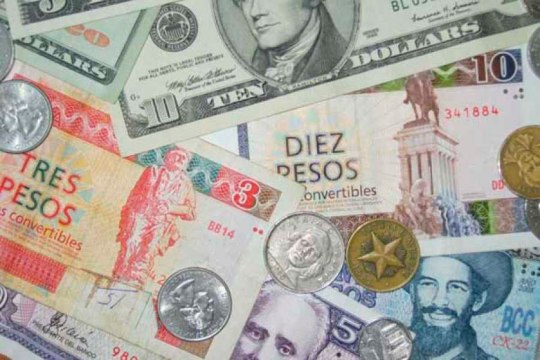
They say that it is impossible to raise salaries, but I would suggest that, at the moment, this is not necessary. Since I am not an economist, but rather one more mourner at this funeral, I would like to humbly suggest to authorities that their attempt to raise the dead begin by diametrically changing focus with respect to the lucrative pricing policies set by the Ministry of Finance and Prices for all retail commerce, especially in the chain of hard-currency stores (TRD’s), whose prices are denominated in convertible pesos (CUC’s)–a currency twenty-five times the exchange rate of the peso in which my ostensible salary is paid*.

Since there has been absolutely no discussion of monetary unification — that is doing away with the system of two currencies — our government must assume a more responsible attitude with respect to the outlandish prices with which it punitively taxes the lives of the people by implementing this pitiless policy of pricing even food and essential consumer goods at 500% to 1,000% of their cost of production. This has caused the Cuban GDP to grow at a 10% annual rate for the last decade–not as a result of an increase in the production of goods and services, but rather through an exorbitant and extortionate rise in prices.

So here is my proposal: lowering prices to a sensible level would be a good first step towards the desired recovery and would give the government the moral authority, which it does not now have, to require the same of the private sector, which is killing us in the private farmers’ markets as well. So far we have only seen the official press repeatedly attack independent producers while never questioning the other speculative slaughter taking place behind the shop windows of the TRD’s.

If I were in charge–please allow me this mental exercise–I would first gradually cut all the prices set by the state in half. This would occur progressively over a period of three to five years to a level more in line with salaries which, in light of current conditions, have lost all relationship to common sense. This would provide indisputable initiative for increasing worker productivity, and would bring some common sense to salary levels and a greater sense of humanity to people’s lives. All this would be in line with Raul Castro’s policy of not raising anyone’s salary by as much as one centavo, which, if this strategy were adopted, would be unnecessary.

But I am not the one who makes these decisions. That would be the slackers who care nothing about the well-being of the people, the ones who charge 10 pesos for a soft drink that only costs 30 centavos to produce. All indications are that this situation will persist as long as those who set these prices are not the mourners at the funeral, the ones getting screwed.

*Translator’s note: There are two currencies in Cuba: Cuban pesos, also called National Money; and Cuban Convertible Pesos (CUCs). Wages are paid in Cuban pesos, but many items can only be bought in hard currency stores where they are priced in CUCs.

September 10 2012


A Summer Night’s Nightmare / Jeovany Jimenez Vega

This has been a rainy year in Cuba, and as if to do justice to the energy of this season, in Artemisa last Saturday afternoon it rained buckets including a concert of terrible thunder. An hour after having cleared up, around 5 PM, the guest who didn’t make it was seen approaching: the blackout. The strange part of it was that the presumed break waited an hour after the last ray of sunshine to make its appearance on the scene. The hours passed, with midnight the terrible certainty arrived: this would be a long day, we slept without electric current in the midst of this horrid summer. It wasn’t the first time, nor the end of the world nor much less, but in this country of timid advances and serious setbacks, I couldn’t help shuddering at the thought that these nightly blackouts would return to be a part of the daily landscape.

But if we speak fairly, we have to recognize that we haven’t had power outages for years, at least in my and neighboring towns, they stopped being habitual only to convert themselves into real news, then the strategy of getting better autonomy in the territories by installing generators gave, seemingly, the hoped-for results. Today, the blackout occurs only in the case of breakage, and is generally short. But when it comes, it does it with the aggravating factor of finding most Cuban homes enslaved to electrical service, then together with the sensibility of selling us electrical appliances — it must have something to do with an idiosyncratic problem — the insensitivity of shutting down our liquid gas service, by which more than one Artemisan saw themselves dark in the afternoon-night of this Saturday.

Inevitably, my mood soured by the intense heat made my thoughts fly back in time and I remembered — how could I forget? — those summer nights of 1993 and 1994, those tortured nights of neighbors sleeping in doorways, and at the heat of the roofs, at the mercy of the mosquitoes, to flee from the suffocating heat. In those days the “alumbrones*”, because the daily blackouts lasted between 16 and 20 hours, even whole days, they were, together with the scarcity of food and the virtual absence of transport, the most palpable evidence that we had hit bottom.

Although the morning came, it wasn’t until almost Sunday mid-afternoon, after 17 hours that seemed too long for fixing a break, that the service was re-established and I breathed a sigh of relief. Over the kitchen, like witnesses to an involuntary vigil, stood the burned-up remains of the candles and the memory of this nightmare of a summer’s night.

*Translator’s note: “Alumbron” is a Cuban word coined to mean when the electricity is ON. The existence of the word is testimony to the fact that at certain times in recent Cuban history the electricity being ON has been the unexpected state of affairs, while blackouts were the common and expected state of affairs.

Translated by: JT

August 10 2012


Footnotes to a Speech / Jeovany Jimenez Vega

I re-read the version in the press and what grabs me are the footnotes, meditations scattered at the margin of this reality we live in that has so little to do with speeches. In his brief words at the recent central commemorative event for the 26th of July in Guantanamo, our President Raul Castro spoke indirectly about core issues while omitting others completely, which is inexplicable given their day-to-day importance and the high expectations generated from the moment they were publicly announced by Raúl himself, though at this moment they seem to elude him.

He spoke briefly about wages, but only to make it clear that despite their being low and spurious, for now no one can dream of a centavo more. The President knows well that teachers and doctors in Cuba are the last links on the food chain — we earn “… very little…” but a period and then he goes on to state, scandalously… “… but so do we all…”

We will have to investigate the senior management circles in the firms and joint ventures, in the hotels and privileged tours lived in convertible pesos, ask the legalized thieves at Customs in Cuban airports, the mafia politico-financiers who already have their booty well and safely hidden in discrete foreign banks, and the corrupt directors, the generals who never lacked for anything, indolent during the darkest years of the Special Period feeding good meat to their dogs while my parents had one frugal meal a day of rice soup and bread.

We will have to ask my President to investigate to see which of those guys tries to feed, clothe, put shoes on their feet and educate their family and children with a salary like mine, equivalents to $25 U.S. a month. Definitely, and we are not all, and it would be nice if my President, if he doesn’t know it, finds out.

This time President Raúl completely avoided mentioning important topics for our people, like the announced “update” of the country’s travel and immigration policy, or the very necessary free access to the Internet, and when will we have that? What about the also announced constitutional reforms, when will they happen, or what finally resulted from the investigations undertaken — according to the same man’s words when he referred to misappropriation in high finance, several scandalous cases of “white collar crime”?

These are questions that so far my President has left unanswered. This does nothing to stimulate the imagination of the people on the street who, in the absence of seriousness in the Cuban press to report clearly or to denounce something even if it’s an open secret. People can not help but speculate and spread rumors, which ends up being more harmful to everyone. Meanwhile, today these footnotes are waiting patiently to see if the next speech reveals some of these mysteries, after all I ended up getting used to the fact that in this country changes are produced… “… without haste… little by little… little by little…”

See: Letter to Raúl Castro.

August 1 2012


The Fallacy of Internet in Cuba / Jeovany Jimenez Vega

Cubans waiting for the internet under Fidel’s watchful eye. Source: Global post, from: Photographer: STR / Source: AFP/Getty Images

Not to slam Granma, but it happens to be the only publication I subscribe to and I, like millions of Cubans, do not have access to the Internet so here’s my revenge. I couldn’t help reading in the International section of the July 6 edition the unfortunate way in which the Latin Press Agency scored another miscue, this time with the statements of its president Luis Enrique Gonzalez who just said at a world summit on mass media that in Cuba, “… more than 30% of the population has access to the Internet, and another 30% to the new technologies, through social services that now exist on the World Wide Web.”

Guys like Luis Enrique leave me flabbergasted, publicly putting out this lie in the crudest way. On hearing this anyone would suppose that Cuba has a connectivity rate comparable to any other country in the region, when the reality is quite different. This gentleman knows that the political authorities and the Cuban government has been doing everything humanly possible to keep their people in absolute cyber-darkness; that in my country only a privileged few can access the Internet, and even they with dagger of censorship threatening to oust from their jobs anyone with the temerity of post some “inappropriate” comment, because the Party that oversees everything is not going to make an exception just for something as strategic as information.

If the selected journalists, rancid Roundtable panelists, managing directors of foreign companies, diplomatic personnel, high officials or exceptional public figures ideologically aligned with the Cuban government are permitted to connect from home, or the students who make up the pathetic cybernetic response brigades from the University of Information Sciences join the count of this 30%, it would still be a count that this Cuban would greatly doubt, and we must always take into account, that in order to be on line the sine qua non is always absolute submission to the rules established by the inquisitors.

I hope that Mr. Director of the Latin Press, when he speaks of the other 30% who have “access” to the new technologies, is not referring to the declining network of “Youth Clubs” or the misnamed “surfing rooms” in some post offices, places from which, with great luck, you might barely be able to write an email and where, inexorably, the censoring eye of the Party and the Political Police are looking over your shoulder, which is no secret to anyone.

I also hope that they are not referring to the most select sector which has the affluence required to pay the extortionate fee to connect in hotels — between 6.00 to 12.00 Cuban convertible pesos (CUC) for one hour (which is $6.60 to $13.20 in US dollars, or, if we look at the average monthly salary of 400.00 Cuban pesos, the cost is 150.00 to 300.00 Cuban pesos) — which is fixed by Resolution No. 146/2012 of April 27, established for our workers by the Ministry of Finance and Prices, all of which would make one die laughing if it weren’t so serious.

Regardless of what this head-in-the-clouds director says, I do know something very specific: it may be pure chance (?) but I don’t know a single Cuban doctor in my entire circle of relationships who connects to the Internet, nor a single one of my neighbors in the many streets around, nor one of my family members, nor any friend, who can connect freely from their home which is also true for me and every blogger I know.

There are no two ways about it: the Cuban government deliberately keeps its people deprived of Internet access because it fears the free flow of information and desperately needs to maintain the most absolute monopoly on it to preserve its power without jumping through hoops. More than once I’ve said: I maintain with absolute certainty that if the powers-that-be in Havana considered it convenient for the maintenance of their status, our people would be able to access the Web regardless of any economic or political obstacles, including the United States embargo.

Thus, I would suggest that Mr. Luis Enrique, a complete professional of the press, at least learn to lie with more subtlety for the sake of the brand new agency he represents.

July 22 2012


Open Doors and Loose Ends / Jeovany Jimenez Vega

After the hunger strike I went on last March, which led to our being reinstated to practice medicine, I once again began to practice my profession in Guanajay on May 7. Now, more than two months after starting work, there are still a couple loose ends: if it is true that they paid us the entire salary from those 66 months and allowed me to begin from the third year of my specialty in Internal Medicine starting in September, it’s also very true that there is still no evidence in our work files that they paid us that sum and that it derives from those five and a half years being regarded as work years, which is what they told us they would do and what was legally stipulated in Decree Law 268-2009 (amending the labor regime) in its Chapter V.

Also this Decree Law states that if an unjust administrative penalty is revoked, the worker who suffered such prejudice must be publicly vindicated before the assembly of partners in their workplace and this is, in our case, a meeting convened by the administration, the party and the union, as public as those that were held in 2006 to gratuitously vilify us, where they set out why it was a mistake that they punished us why they decided to overturn that ruling now.

This meeting, still not convened — which does not have to result in anyone’s hara kiri because, in particular, I do not need it — would find me more mature than then and also, I hope, a little wiser. So no one should expect that this mouth would speak a single word of hatred and resentment, but I believe this exercise would be very healthy for everyone and would speak more opening about the real position of the political entities in this case.

A meeting of this kind, conducted with colleagues in an atmosphere of quiet respect, would say a lot about the tolerance our government publicly advocates today, because the lack of humility in recognizing its errors has been one of the great scourges and this would open the door for stories like ours which are repeated over and over again at any time and place on this little island of ours. This would be an act to vindicate us all. Meanwhile, Citizen Zero now patiently waits.

July 17 2012